Ebonridge Sable House: A Forgotten Mansion’s Murmuring Halls
The Threshold of Ebonridge
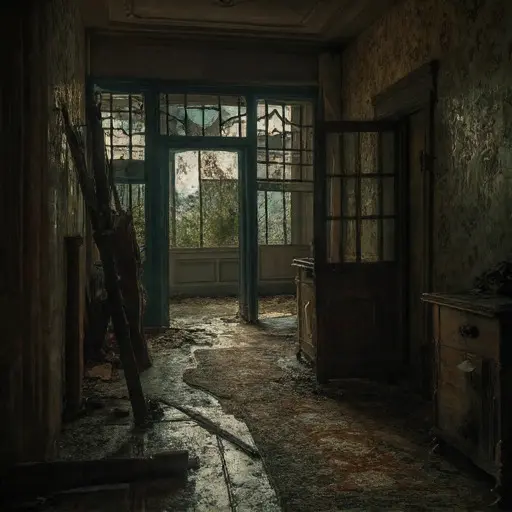
The abandoned Victorian mansion called Ebonridge Sable House looms like a half-remembered dream—its stone façade breathing out cold mist, its windows watching with a patience born of decades in silence. The moment I step into the foyer, the scent of aging timber and wilted lace fills the space around me. Dust floats in lazy spirals, stirred only by my breath, as though the house itself exhales in response. It feels less like entering a home and more like disturbing a place that has been waiting far too long to be seen again.
Rooms That Hold Their Breath
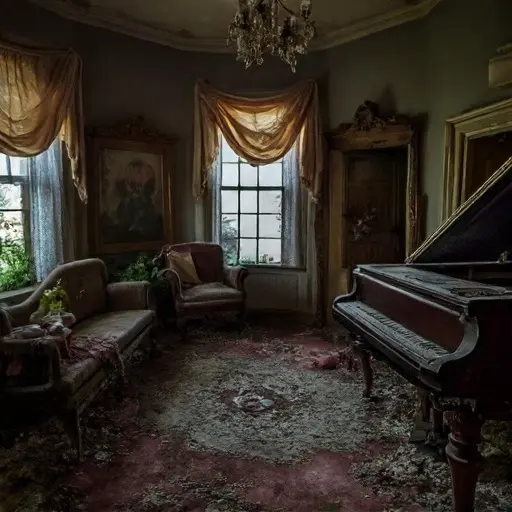
Each room of Ebonridge Sable House carries the sensation of thoughts left unfinished. Wallpaper patterns fade into melancholy shadows, and portraits stare with varnish-clouded eyes, capturing expressions too vivid to ignore. The parlor in particular feels suspended in a moment just before someone spoke—a sentence frozen in the air. A single page of sheet music curls on the piano’s edge, the ink feathered by years of settling dust. When a faint vibration trembles through the strings, I cannot tell if it is the wind or something older.
It is here I discover the mansion’s most devoted inhabitant: The Cartographer, Adrian Lorne, a wanderer of distant continents whose world shrank mysteriously into these crumbling walls. His maps—ink-stained, intricate, and maddeningly detailed—cling to the plaster like brittle leaves. Some trace real landscapes. Others depict coastlines that never existed.
The Cartographer’s Quiet Madness
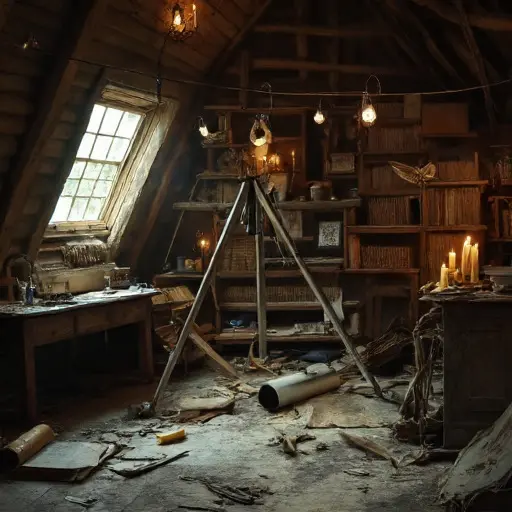
Adrian’s journals reveal a mind both brilliant and unraveling. He wrote of hearing “the house shift its weight,” and of corridors that changed length when he walked them at night. His final entries grow fragmented: sketches of spirals, compass roses twisting in impossible directions, notes insisting that Ebonridge Sable House rested on a “faultline of memory.”
Secondary hints of others surface—a housemaid’s hurried confession tucked inside a drawer, a reclusive heir’s unsigned letter warning Adrian to leave, and a child’s drawing of the mansion with too many windows. These traces feel like fingerprints pressed into the woodwork, preserved by the mansion’s stubborn will.
Where the Walls Remember
In the attic, a soft draft pulls at the edges of the Cartographer’s last map. It shows the mansion itself, drawn from above—but the rooms do not match the floor plan I walked through. Some are missing. Others have appeared where none should be. The ink glimmers faintly, as though still drying after all these years.
Ebonridge Sable House does not offer answers. It never needed to. Instead, it lingers—alive in its hushed way—holding the memories of those who tried to chart its secrets, their unfinished stories drifting like dust in the cold, patient air.
