Cursed Silence of Ashwood Manor
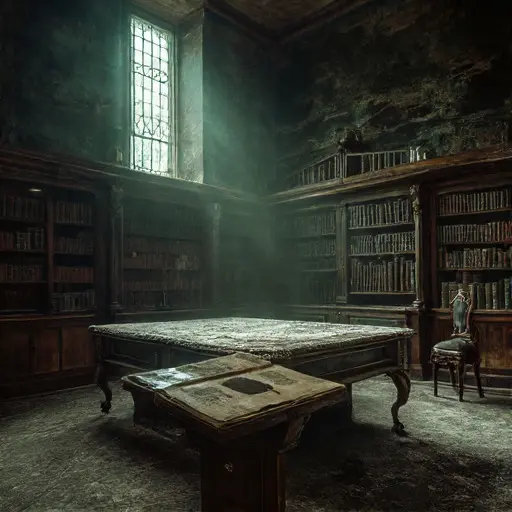
The front door, heavy and bruised, gave a soundless sigh as it fell open, inviting the faintest breeze to stir the deep, velvet folds of a twenty-year silence. Here, in the forgotten core of Ashwood Manor, time was not measured in hours but in the deepening layers of dust that muted every surface. The sun, filtered through panes grimy with the sediment of seasons, cast long, golden aisles across the parquet floor, illuminating an atmosphere thick with wood decay and the faint, sweet scent of long-dried potpourri. It was as if the air itself held its breath, and every floorboard creak felt like the house observing, patiently waiting for the intruders to leave.
The Architect of Light
The manor’s last resident was Elias Thorne, a celebrated architect and amateur astronomer who moved into Ashwood in 1898 to escape the clamor of London. Elias was a man defined by two passions: the cold logic of geometry and the unpredictable mystery of the night sky. He saw light and shadow as tangible materials, and his designs were legendary for their brilliant use of skylights and sun traps. Ashwood Manor was to be his masterwork—a machine for capturing the cosmos. Yet, his final, all-consuming obsession was not with celestial bodies, but with the unseen space between them. He grew reclusive, his face becoming a mask of gaunt intensity.
The Starfall Chamber
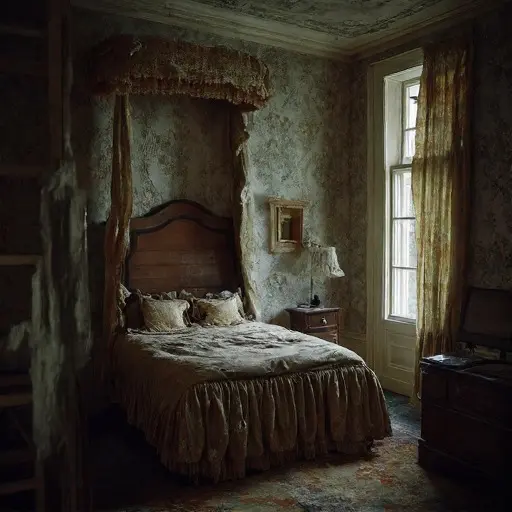
We found his study untouched, a room dominated by a massive, mahogany drafting table still bearing the faint, chalky lines of an unfinished blueprint—the final, most ambitious design for a soaring glass dome he called the Starfall Chamber. But the true heart of the discovery lay in a hidden compartment beneath the floorboards. Inside was a stack of sketchbooks and a small, ivory-backed hand mirror. The sketchbooks weren’t designs; they were frenzied drawings of Ashwood’s interior, each room meticulously rendered, but with subtle, terrifying distortions. Windows were slightly off, doors opened to walls, and faces in portraits were replaced by blurry, accusatory voids.
The Lingering Presence
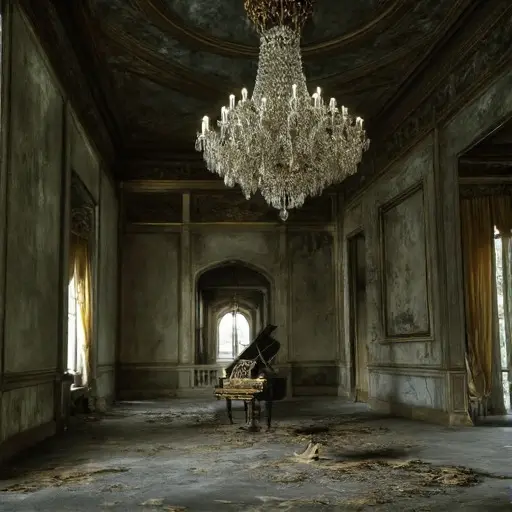
The diary offered only cryptic clues. Elias had become convinced that the house was consuming the light he brought into it. He wrote: “It is not the dark I fear, but the hungry silence that follows the day. I see myself in every polished surface, but the self looking back is forgetting my name.” His final entry, scrawled in an unsteady hand, mentioned the locket and the mirror: “The last connection. The only way to see what Ashwood wishes me to be.” Elias Thorne vanished from the manor on a clear summer night, leaving no trace but his paranoia etched into the woodwork. The locket was empty.
The house preserves his presence not in sound, but in the oppressive weight of observation. Stand still for long enough in the Starfall Chamber, and you begin to feel the chill of his gaze from the unlit, empty corners—the quiet anxiety of an architect who designed a home so perfectly that it swallowed its creator whole.
