Crowmere Abbey House and the Quiet Accumulation of Its End
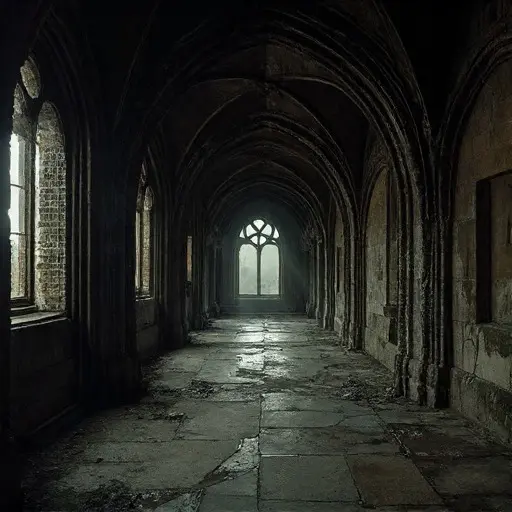
Crowmere Abbey House was commissioned in 1887 by Sir Alistair Wrenfield Crowe (b. 1839, Gloucestershire), a land magnate whose wealth came from coal leasing rights and forest boundary arbitration across northern estates. By the time construction began, Crowe had withdrawn from public business, preferring long periods of residence in isolated properties tied to his holdings.
The house was designed as both residence and private archive for boundary disputes and estate maps. Early records describe it as carefully balanced in proportion, built to reflect stability and inheritance continuity across generations.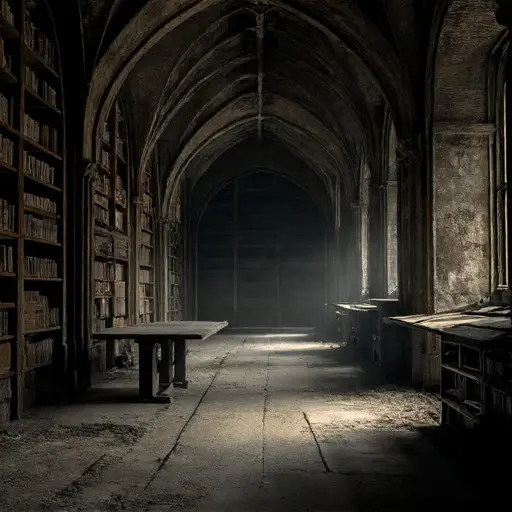
The first documented irregularities appear in estate surveys from 1896. Surveyors noted that the right wing of the building had extended by “non-uniform bay replication,” where window spacing remained consistent while additional bays appeared without recorded construction phases.
By 1901, correspondence between Crowe and the original architects had ceased. Maintenance records continued, but repairs were recorded in contradictory ways—some referencing duplicated sections of corridor, others ignoring them entirely. The household staff remained unchanged in number but reported difficulty mapping interior routes consistently.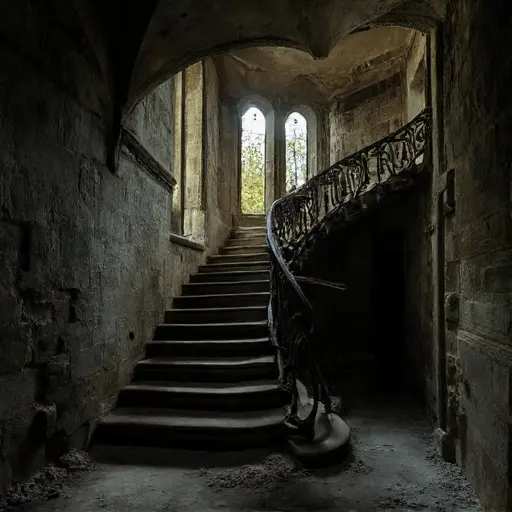
By 1908, Crowe’s personal records cease entirely. The last entry describes the house as “complete in form, but still adding itself in places not yet agreed upon.” No further explanation is given.
Crowmere Abbey House remains standing within the forest hollow, fully intact and abandoned. Its geometry continues to accumulate quietly, as if the structure has never decided how many versions of itself it is allowed to contain.