Cedar Knot: The Withered Vision of the Textile Specialist
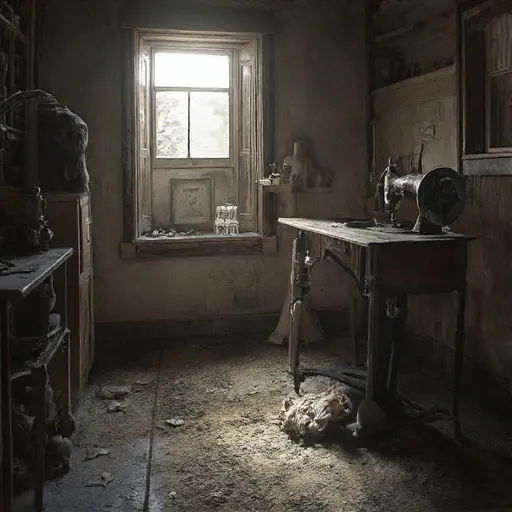
Cedar Knot, a manor built on generational wealth derived from the Manchester mills, was the workplace of Miss Clara Beaumont, the family’s Textile Specialist from 1890 to 1915. Clara’s role was crucial: she managed the acquisition, care, and repair of the manor’s extensive, high-value collection of aristocratic garments and household linens, requiring specialized knowledge of fabric science and preservation. Her workroom, a sunless annex to the main linen press, still contained the tools of her trade. Along one wall, a rack of heavy, wooden clamps and specialized shears sat idle, their blades dulled with rust. The pervasive atmosphere was dry and cold, imbued with the sharp, acidic smell of aged chemicals used for stain removal and preservation. The most immediate sign of Clara’s sudden absence was a detailed Withered length of Belgian lace, half-stitched to a piece of muslin, left precisely threaded onto the needle of her sewing machine, suggesting a swift, mid-stitch departure.
The Specialist’s Inspection Guide
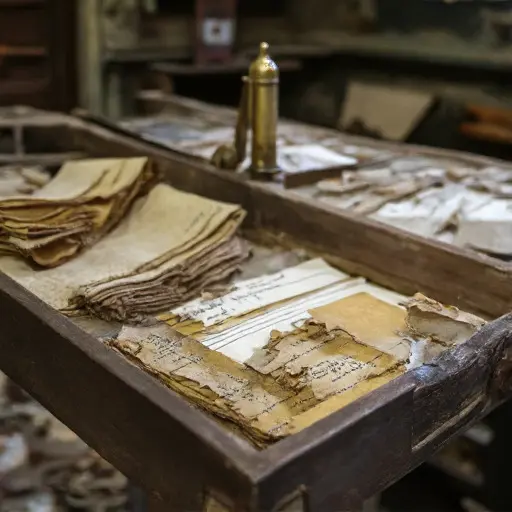
Clara Beaumont’s personal Inspection Guide, recovered from the wooden tray, contained more than just condition reports; it was a comprehensive record of origin and provenance. The index cards cross-referenced the manor’s textiles with documents detailing their purchase and manufacturing. The later entries, starting around 1912, revealed a growing professional alarm. Clara began noting severe discrepancies between the high-value textiles the family claimed to possess and the inferior, mass-produced fabrics she was asked to repair and preserve. Her notes chronicled the systematic, covert replacement of genuine antique silks and tapestries with cheap, contemporary copies. The notes culminated in a final entry, dated May 1915: “The fraud is comprehensive. I have identified the source of the Withered substitutions. The manor’s reputation rests on a deception I cannot support.”
The Small Box of Proof
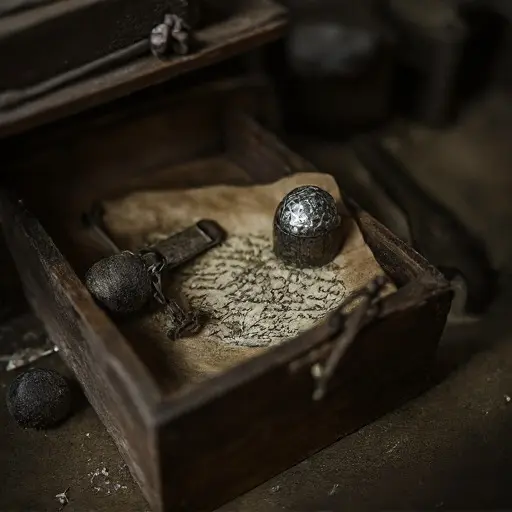
The final, compelling clue was found inside the wooden box. The contents were the absolute proof of the manor family’s organized theft and liquidation of their own historical assets. The receipt and the inventory, placed side-by-side, documented the private sale of three generations of heirlooms, replaced by the cheap imitations Clara had been forced to mend. Tucked beneath the thimble was a small, sealed envelope containing three one-way steamship tickets to Quebec, dated June 1915, addressed to Clara Beaumont and two unknown relatives. Clara Beaumont, having secured the paper trail documenting the family’s descent into financially motivated fraud, did not remain to face the consequences. She made a silent, calculated escape, leaving behind her Withered workroom and the irrefutable evidence of the Withered integrity of Cedar Knot.
Would you like me to generate the Next article following the strict guidelines?
