Carnivorous Silence Remains Inside the House Where Danica Gathered the Voices of Dusty Books

The pages are tied shut.
Not locked.
Not hidden.
Tied.
Thin silk cords loop around hundreds of aging volumes throughout the room, each knot different, each binding deliberate enough to feel personal.
Danica believed books aged like people.
The townhouse belonged to her for nearly forty years.
She lived alone and practiced a profession so obscure even librarians rarely used its true name.
Danica was a page acoustics conservator.
Her work involved studying and preserving the sounds produced by aging paper—how pages whispered, cracked, sighed, or resisted turning. Archives, collectors, and restoration houses once consulted specialists like her to understand paper fatigue, humidity damage, and material history through sound.
She listened to reading itself.
The archive room still carries her attention.
Humidity bells rest beside magnifying lenses. Threaded bookmarks remain pinned near worktables. Sound journals lie beneath shelves crowded with manuscripts labeled by paper grain, age, and turning resonance.
The room feels attentive.
Almost embarrassed to be silent.
At the Quiet Folio Hollow
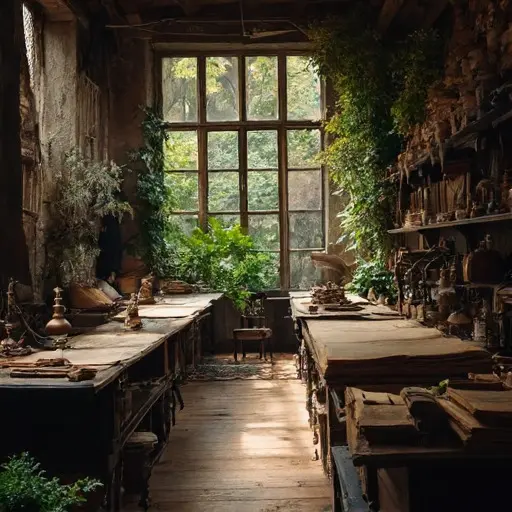
Danica worked most often at the Quiet Folio Hollow.
The recessed reading niche beneath the western shelves held stable humidity and allowed her to isolate the subtle sounds of fragile paper without outside disturbance.
One unfinished conservation record still rests there.
The manuscript stabilized.
The acoustic profile missing.
Danica inherited neither estate nor profession.
She learned through restoration houses and private archives where elderly conservators taught her to identify damage by ear before sight confirmed it.
Visitors remembered her asking them not what they read, but how their books sounded.
For decades the work survived.
Historic libraries and collectors still valued sensory conservation shaped through patience and physical intimacy with materials.
Then reading dematerialized.
Digital archives, scanning technology, and electronic preservation steadily displaced physical interaction with books. Paper survived, but its sounds became increasingly irrelevant to institutions focused on access and storage efficiency.
Danica embraced preservation.
She mourned disembodiment.
Still, she continued cataloguing paper acoustics long after commissions faded.
Then the insects arrived.
Rising temperatures and expanding paper-boring infestations spread through old collections across the district, accelerating deterioration and contaminating archives Danica spent decades studying.
The books remained.
Their voices weakened.
Already living with severe temporal lobe epilepsy and deteriorating hearing, Danica spent longer evenings inside the archive room recording sounds she feared would disappear entirely.
One damp autumn night she remained working beside the niche after fumigation efforts failed in part of the collection.
A shelf weakened by infestation collapsed unexpectedly above her.
She died beneath the books she refused to abandon.
The funeral gathered archivists, teachers, and aging collectors who still remembered Danica turning pages as carefully as others held hands.
The townhouse remained afterward.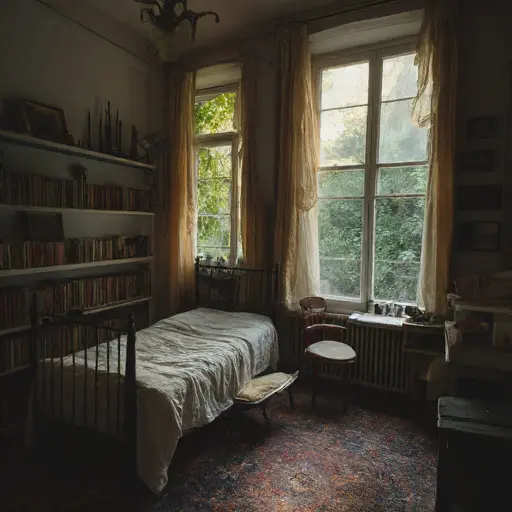
The silk cords remain tied around the volumes.
The journals still rest beneath the shelves.
And at the Quiet Folio Hollow, Danica’s unfinished page record continues waiting in silence—holding the last unheard sound of a book she never returned to open.