Bleak Reverence Hangs Over the House Where Tenzin Measured Sleeping Stone
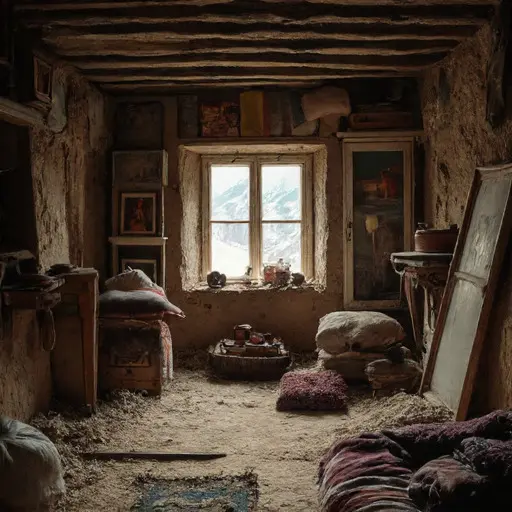
The hammers are smaller than expected.
Visitors imagine heavy tools.
Instead, thin wooden mallets rest beside bowls of powdered chalk and strips of folded paper marked with symbols few people now understand.
Tenzin preferred restraint.
The mountain house belonged to him for almost forty years.
He lived there alone and practiced a profession built around listening to what refused movement.
Tenzin was a seismic tone reader.
Not a scientist in the modern sense.
His work involved striking stone surfaces and recording tonal variation believed to reveal internal stress, groundwater shifts, and structural fatigue in mountain monasteries, bridges, and ancient walls. Long before electronic sensors reached remote regions, communities relied on specialists like him to diagnose danger through resonance.
He listened to pressure.
The inner chamber still preserves his method.
Stone diagrams remain pinned beneath bone clips. Chalk dust gathers beside tuning rods. Listening journals lie stacked near shelves carrying carefully labeled rock samples collected from different elevations.
The room feels attentive.
Almost watchful.
Beneath the Echo Bone Arch
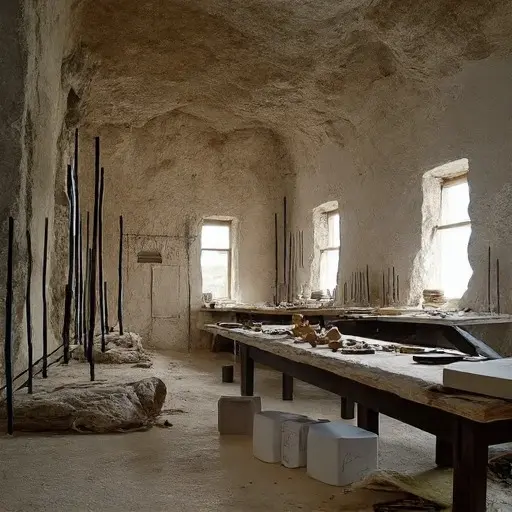
Tenzin worked beneath the Echo Bone Arch.
The curved support crossing the chamber produced stable resonance and allowed comparative listening free from outside vibration.
One unfinished reading still rests there.
The strike sequence marked.
The conclusion absent.
Tenzin inherited fragments of the profession through monastery builders and wandering stone diagnosticians who traveled dangerous routes long before paved roads reached the high valleys.
People remembered his silence more than his explanations.
For decades the work survived.
Remote communities and heritage structures still depended upon tonal inspection where engineering access remained limited.
Then sensing digitized.
Portable scanners, structural imaging, and remote seismic monitoring steadily displaced manual resonance reading. Officials trusted instruments more than ears and fewer apprentices sought the patience required.
Tenzin did not reject technology.
He rejected forgetting.
Still, he continued visiting old walls and recording tonal histories.
Then the blasting began.
Expanding mineral extraction and road tunneling destabilized nearby slopes and filled valleys with artificial vibration that corrupted the subtle resonance patterns his work relied upon.
The mountains still spoke.
Their voices became crowded.
Already living with advanced hearing degeneration and worsening respiratory illness from altitude and dust exposure, Tenzin pushed himself through increasingly difficult journeys.
One spring he remained inside the chamber comparing tonal records after weeks of nearby blasting activity.
During the night, a secondary tremor weakened part of the old structure.
The collapse was small.
But fatal.
The funeral gathered monks, shepherds, and stonemasons who still remembered Tenzin tapping walls before entering them.
The house remained afterward.
The chalk remains beside the rods.
The journals still lean against the shelf.
And beneath the Echo Bone Arch, Tenzin’s unfinished seismic reading continues waiting in silence—holding the final question he never returned to ask the stone.