Björkman’s Eerie Music Room and the Unkept Measure
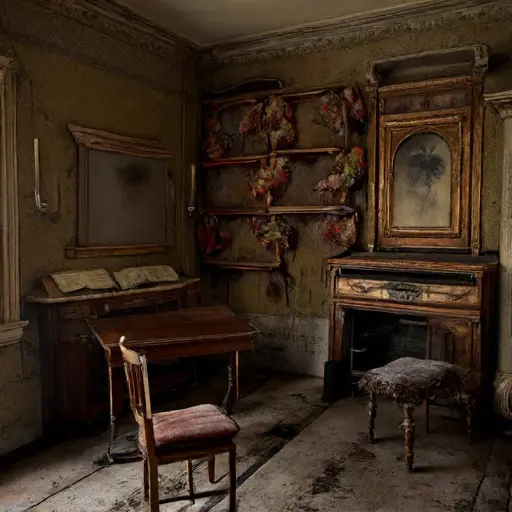
The music room holds its quiet in exact proportion, as though sound itself paused and never returned. On the piano’s shelf rests a brass metronome, wound but never started, its needle fixed in a middle position. The air smells faintly of resin and coal ash.
This metronome marks the beginning of the unease, a device meant to regulate time now serving only to prove its absence.
A Life Measured by the Metronome
Karl Henrik Björkman, professional piano tuner, was born in 1862 in a northern port city whose interiors favored tiled stoves, pale woods, and Lutheran hymnals. His training is evident in felt strips trimmed by hand, tuning forks wrapped in linen, and careful annotations tucked inside scores. A conservatory certificate lies framed but crooked, the glass cracked. His wife Elin Björkman is suggested by a mended shawl draped over a chair and a tea cup with a woman’s initials worn thin.
Karl’s temperament was exacting, patient to the point of strain. His routine began here each morning: scales tested, intervals adjusted, tools cleaned and aligned. The house depended upon his ear.
When the Ear Failed First
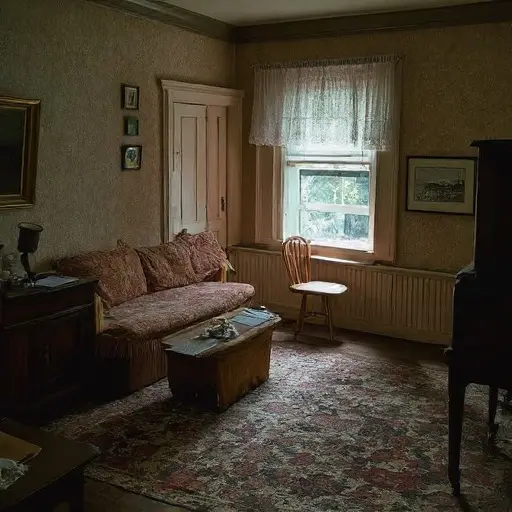
The decline is recorded indirectly. A notebook lists complaints from clients, written in Karl’s hand but crossed out as if disputed. Forks of certain pitches are separated from the rest. A chair has been moved closer to the piano than acoustics require. Gradually, the margins fill with recalculations and apologies never sent. Whether his hearing faltered from age, illness, or something unspoken is left unresolved.
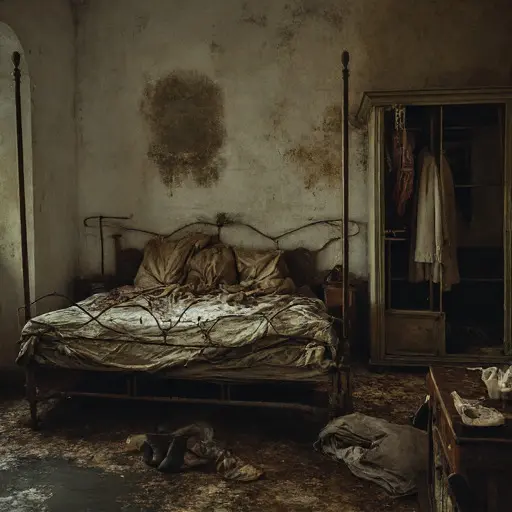
Karl did not take his tools. Elin’s shawl was never moved. The piano remains tuned to a compromise pitch, neither correct nor wrong. The metronome never ticks again. The house stays abandoned, its measures unresolved, waiting for a sound that does not come.