Arcane Quiet Settled Over Yelena’s Courtyard Long Before the Snow Returned
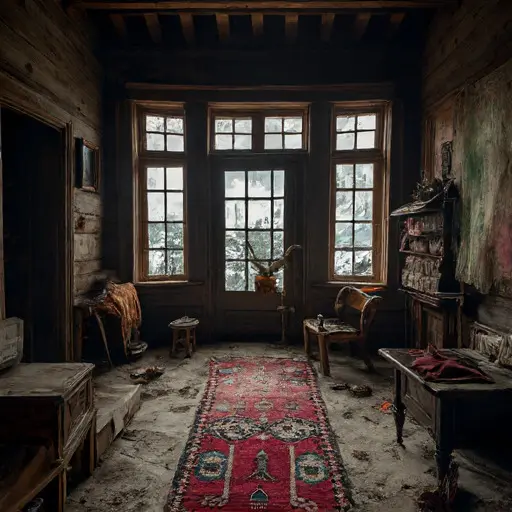
People claimed the courtyard froze differently after Yelena died.
Not colder.
Slower.
The basin at its center held ice longer than neighboring homes, even when roofs had already begun dripping and pathways softened beneath afternoon sun.
No one proved this.
But the story remained.
Yelena Marku lived inside the residence for nearly forty years. The house wrapped around a square courtyard paved with worn stone and bordered by narrow wooden galleries where steam once drifted from copper kettles every morning.
Most villagers knew she worked with ice.
Very few understood how.
The room she used stood above the courtyard stairs and smelled faintly of pine resin and mineral water long after her death. Frosted panes softened the light. Thin chisels remained arranged beside warming cloths. Small wooden frames sat stacked near shelves carrying jars of powdered salt and crushed crystal.
Only later did outsiders learn the name of her profession.
Yelena was a frost inscription conservator.
Mountain communities once commissioned specialists like her to preserve temporary winter markings carved into ice panes and frozen basins during memorial gatherings and seasonal observances. These inscriptions were not decorative.
They recorded names, blessings, weather histories, and family remembrance meant to survive only through winter.
Her task was paradoxical.
She prolonged disappearance.
Where Winter Stayed Longer
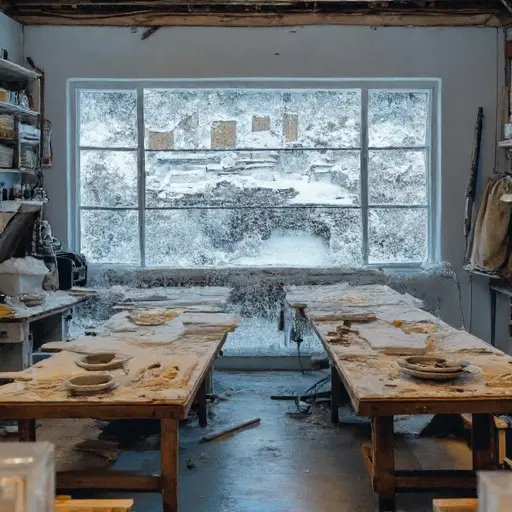
Yelena built her work around the Frost Ledger Stair.
The narrow landing remained coldest throughout the house. Meltwater drained naturally there, and drafts moved gently enough to protect fragile surfaces from sudden collapse.
A final inscription still rests near the stair.
Or part of one.
The ice itself vanished years ago, but faint scoring survives inside the supporting frame—a pattern of incomplete curves no one fully deciphered.
She had once traveled widely between upland settlements carrying insulated boxes and folded preservation cloths. Families waited for her during hard winters. Children followed her through village lanes because she always carried tools wrapped in blue felt.
What ended the work was not indifference.
It was heating.
Government modernization programs and improved indoor climate systems transformed winter life throughout the region. Homes became warmer, windows better sealed, and frozen interior traditions disappeared almost accidentally. The conditions her craft depended upon no longer lasted long enough to sustain it.
Yelena adapted badly to comfort.
She continued preserving ice panels inside an increasingly warm world, relying on colder rooms and shorter seasons.
Then the springs changed.
New geothermal drilling in surrounding valleys altered groundwater temperatures feeding nearby mountain channels. Winters remained cold, but the old freeze patterns grew unreliable. Ice formed thinner. Basins cracked earlier.
Yelena recorded every change.
By then she was already living with worsening circulatory illness and refusing help she considered unnecessary.
One late season, determined to stabilize an inscription before thaw reached the courtyard, she remained working through the night beside the stair.
She died there quietly before dawn.
The funeral gathered shepherd families, teachers, and older villagers who still remembered winters when names survived briefly in ice.
The house closed afterward.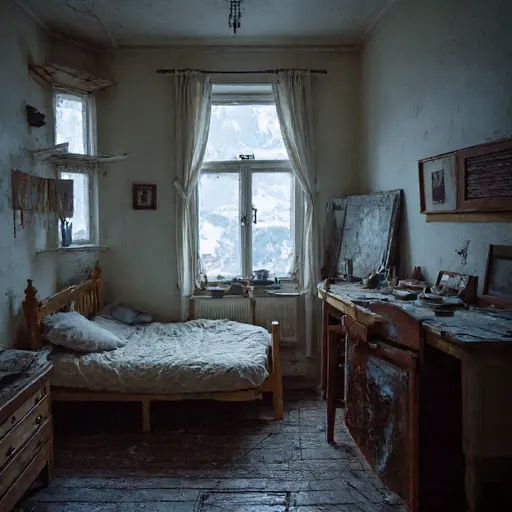
The chisels remain beside the cloths.
The crystal jars still line the shelf.
And near the Frost Ledger Stair, Yelena’s unfinished frame continues waiting for a winter capable of holding what she never finished preserving.