Abyssal Quiet Never Left the House Where Noura Arranged the Memory of Sandstorms
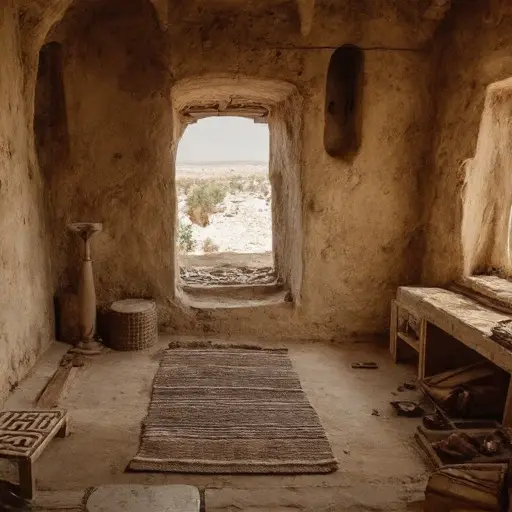
The jars are sealed with wax the color of smoke.
Inside them sits sand.
Not decorative sand.
Not ordinary sand.
Each jar contains dust gathered after storms that crossed different territories and seasons, layered carefully according to grain size and wind temperament.
Noura called them weather reliquaries.
The mudbrick house belonged to her.
She lived alone and practiced a profession once valued by caravans and desert settlements before modern forecasting flattened its relevance.
Noura was a storm sediment archivist.
Her work involved collecting, preserving, and comparing airborne sand deposited after major wind events. Caravan guides, settlement planners, and environmental observers once relied on specialists like her to understand shifting dune behavior and atmospheric migration through sediment composition.
She preserved movement after impact.
The archive room still carries her precision.
Sieving cloths remain folded beside weighing bowls. Drift notebooks lie beneath sandstone weights. Wax-sealed jars line shelves marked by direction, visibility, and storm duration.
The room feels suspended in aftermath.
Behind the Dust Vein Cabinet
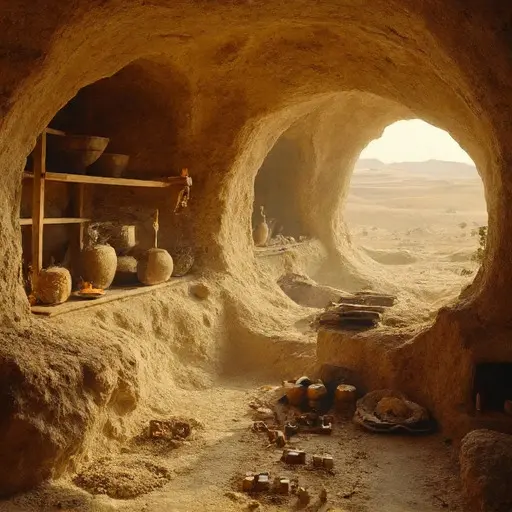
Noura worked behind the Dust Vein Cabinet.
The narrow recessed cupboard stayed cooler than the surrounding room and protected delicate grain layers from disturbance during comparison.
One unfinished archive still rests there.
The sediment layered.
The migration source unresolved.
Noura inherited fragments of the profession from caravan families who believed storms carried geographical memory.
People remembered her brushing sand across her fingertips before speaking.
For decades the work survived.
Remote crossings and desert communities still valued sediment reading tied to navigation and environmental warning.
Then routes disappeared.
Paved highways, aerial transport, and satellite navigation steadily displaced caravan movement and the localized knowledge systems surrounding it. Fewer people cared where storms had traveled.
Noura never argued with progress.
She grieved abandonment.
Still, she continued cataloguing storm residue long after commissions ended.
Then the quarries expanded.
Large-scale mineral extraction and blasting altered regional dust patterns, contaminating natural storm deposits and obscuring the sediment distinctions her work depended upon.
The storms remained.
Their signatures blurred.
Already living with advanced silicosis and chronic chest weakness from decades of exposure, Noura spent longer evenings inside the archive room trying to separate quarry dust from authentic storm layers.
One severe wind season she remained working after sunset beside the cabinet while comparing unusually contaminated samples.
A respiratory collapse struck before help reached the house.
She died among the jars.
The funeral gathered drivers, elders, and former guides who still remembered Noura identifying distant storms before they appeared on the horizon.
The house remained afterward.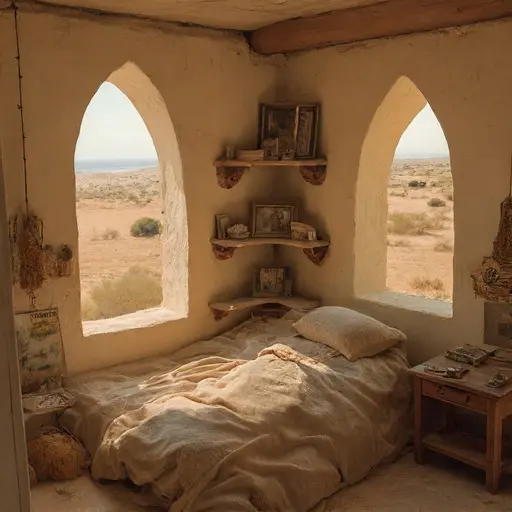
The sieving cloths remain beside the bowls.
The notebooks still rest beneath their weights.
And behind the Dust Vein Cabinet, Noura’s unfinished storm archive continues waiting in silence—holding grains she never returned to teach the desert how to remember.