🏚️ The Cursed Silence of Blackwood Manor
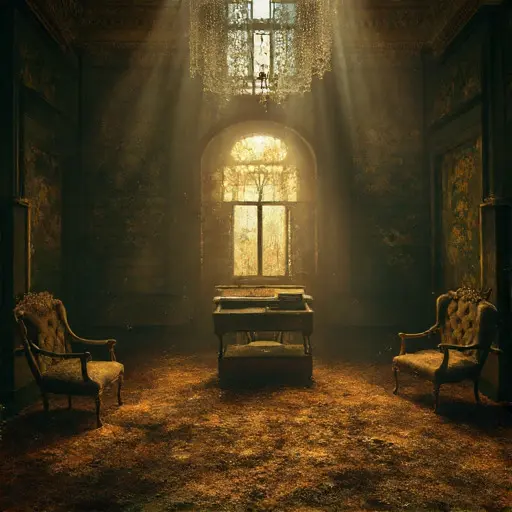
The sun, low and jaundiced, struggled to penetrate the grime-caked panes of the library’s colossal window. Inside Blackwood Manor, the air was not merely stale—it was heavy, a suffocating blanket woven from wood-smoke, leather, and the faint, sweet scent of decay. Every inhale tasted of history. Here, silence was not an absence of sound but a palpable, deep pressure, occasionally ruptured by the groan of the settling foundation, a sound that made the house feel less like a structure and more like a great, sleeping beast. One could feel the unseen eyes of the place, observing the intrusion. It felt as if any moment, the house itself might sigh.
The Architect’s Gaze
The former master of the house was Silas Blackwood, an architect renowned for his eccentric, light-obsessed designs—including this sprawling, beautiful, and ultimately untenable manor. He did not merely build houses; he engineered stages for life, incorporating hidden niches, strange angles, and windows positioned to capture the sun’s passage at precise, dramatic moments. Silas, a man of profound melancholy and driven ambition, saw his work as the only true path to immortality. He lived only for the line and the curve, neglecting all else, including his family. His life was consumed by Blackwood, and in the end, his fate was sealed by it.
The Journal in the Solarium
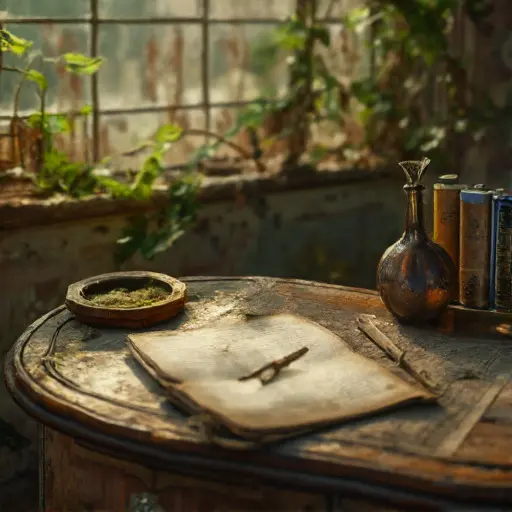
Beyond the library, a small, glass-walled solarium remained unnervingly bright. Here, in a space designed for life and bloom, the final acts of Silas’s tragedy were recorded. Tucked inside a crumbling, cast-iron birdcage was a leather-bound journal. The final entries were not about architecture but about light. “The light here is wrong now. It has stopped moving. It only settles. The great house, the perfect engine, is stalled.”
Silas had begun to believe the very light he cherished was being trapped by the manor, held fast in its walls. He was last seen exactly one century ago, on a day when the light was deemed perfect—the Autumn Equinox. He simply vanished, leaving behind only the blueprints for a secret chamber, still undiscovered, and the chilling, scrawled note: “I have become a pillar.”
A Lingering Presence
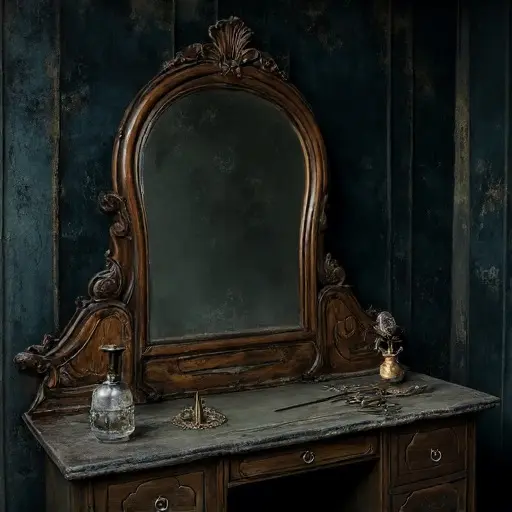
The chamber remains a myth, but his presence is not. Climb the main staircase, its banister exquisitely carved with scenes of mythological beasts, and you will find the master bedroom. Here, on a four-poster bed draped in white sheets that seem to have never been cleaned, lies a single object: a drafting compass, its brass dulled to the color of dried blood.
Sometimes, when the wind whistles through a broken pane just right, a sound echoes down the hall. It is not a groan or a sigh. It is the faint, dry scratching of a pencil, followed by the sound of a ruler tapping against a drafting table—a sound that has no earthly source in the current, empty rooms. The ambition of Silas Blackwood, the architect who loved light and line more than life, still works within the walls he built. And the light, trapped here, is waiting for something—or someone—to finally let it out.
