🎼 The Hushed Music of Greystone Court and the Silent Tuner’s Score
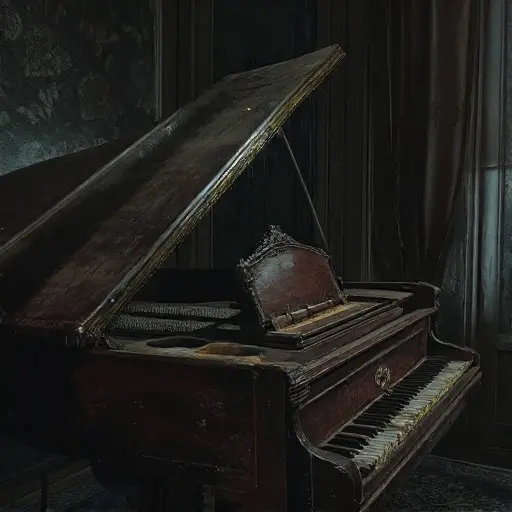
Greystone Court was a house built for sound. Its large reception rooms were designed to host grand musical soirées, centered around the magnificent, custom-built piano in the main parlor. The custodian of this instrument, and the manor’s sonic equilibrium, was Mr. Tobias Crowe, the dedicated, live-in piano tuner and maintenance worker. Tobias lived in a small, acoustically isolated room behind the ballroom, his life dictated by the subtle physics of tension and pitch. In 1912, immediately after completing a major, difficult overhaul of the piano’s action, Tobias vanished. He left behind his entire suite of specialized tools, suggesting a quick and unplanned departure from his life’s rigorous routine.
The Broken Hammer and the Perfect Pitch
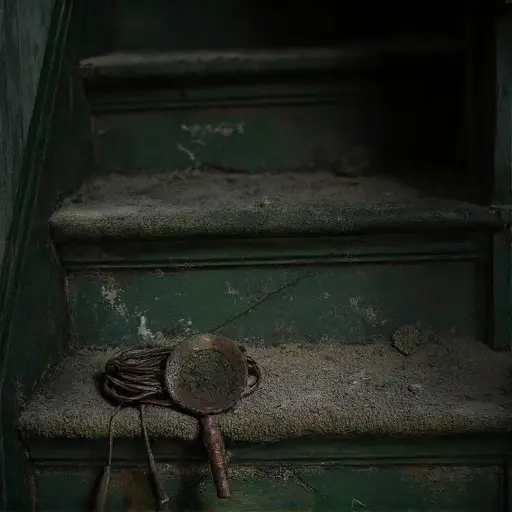
Tobias’s workspace was small and focused, dominated by a heavy, custom-made wooden workbench. On it, his tools—tuning hammers, voicing needles, and calipers—lay neatly arranged. However, the most telling object was not a tool, but a small, delicate felt hammer from the piano’s internal mechanism. The hammer was carefully placed on a piece of clean blotting paper, and its wooden shank was snapped cleanly in half, suggesting it had failed under extreme stress during a crucial tuning session. Next to the broken piece was a small, spiral-bound notebook. It contained only columns of technical tuning data and frequencies, but on the very last page, Tobias had written a single, bold entry, underlined three times: “The perfection required is impossible. A4=432 is not the final answer.”
The Forgotten Composer’s Score
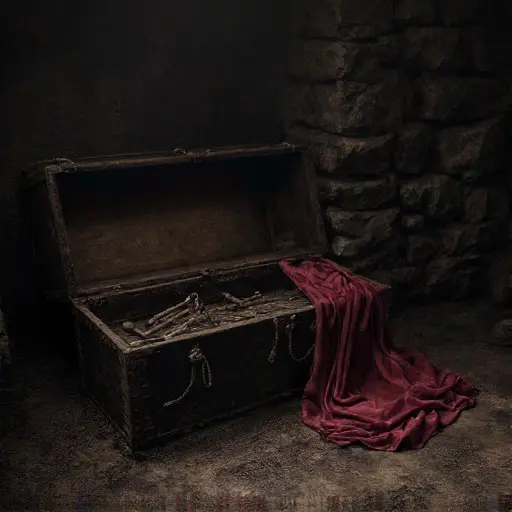
Inside the grand piano’s bench, which was covered in a thick layer of green velvet dust, a collection of published sheet music was found. Underneath Beethoven and Chopin lay a single, unpublished manuscript. It was a complete, hand-copied musical score—a slow, complex Nocturne—written by the previous owner’s young daughter, who had died tragically years before. The score was immaculate, but Tobias had added his own minute notations in the margin: not corrections to the music, but small, meticulous pencil circles drawn around certain recurring, dissonant chords. On the final, melancholy page of the Nocturne, he had drawn a small, complete staff and written out a single, perfectly rendered, silent chord—a withered forgotten harmony that resolved the piece’s central dissonance, a beautiful final intervention that he chose not to share or play.
The piano tuner, whose life was dedicated to achieving a hushed perfection of pitch, left behind a broken tool and a solved musical riddle. Tobias Crowe’s final act was not a chord played, but a harmony written down and concealed, a single, perfect resolution that now rests in the hollow silence of the house, perpetually unheard.
