The Waverly Residence Beyond Blackwater Marsh
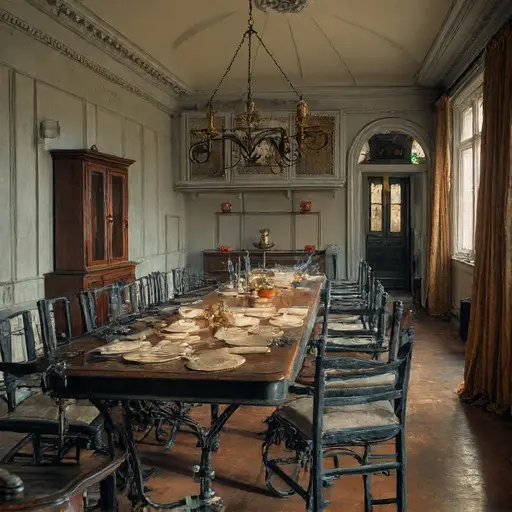
The Waverly family arrived at Blackwater Marsh in 1909 after Edward Waverly inherited the isolated residence from his maternal uncle. Three generations lived there: Edward and his wife Clara, their three children, and Clara’s widowed mother, while Edward managed the household and surrounding farmland. Their income came from cattle, hay, and drainage contracts connected with the marsh.
County records describe steady production before the First World War, with several farm workers maintaining the fields and conservatories. The house remained occupied year-round, and its extensive rooms were regularly heated, repaired, and furnished.
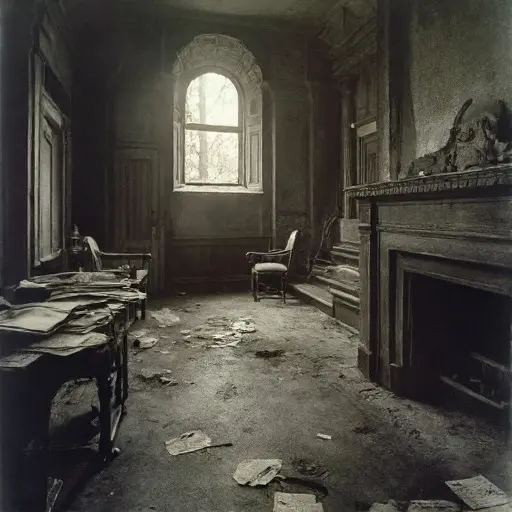
The first warning appeared in 1922 when the Waverlys received an overdue notice for drainage taxes and livestock feed. Two failed hay seasons followed, while falling cattle prices reduced the farm’s income. Edward dismissed two workers and stopped maintaining the conservatories, whose heating costs had become difficult to meet. By 1925, three upper rooms were closed, and repairs to the roof and iron balconies were postponed. Edward died in 1927, leaving Clara with farm loans and an inheritance disagreement between the children. The bank began foreclosure proceedings the following year, and Clara moved with her youngest daughter to relatives in town.
{img: Interior of the abandoned circular entrance hall after final closure. Dust covers the tiled floor, a fallen account ledger, unopened legal correspondence, and a rusted brass lamp beneath the domed ceiling. Damp has darkened the plaster, iron fittings show corrosion, and reeds are visible through broken conservatory glass beyond an a