The House That Waited Behind The Hedge
For decades, the mansion at the end of the quiet residential avenue was simply known as the place nobody entered. Neighbors remembered seeing lights glowing behind the tall windows when they were children, but over the years the blue-grey brick walls became silent, the garden disappeared beneath weeds, and the grand home slowly became a forgotten landmark hidden among ordinary houses.
Built during a period when American families competed through architecture, the Second Empire and Colonial Revival residence was designed to display elegance and permanence. Its tall slate mansard roof, sandstone detailing, and carefully balanced three-story façade once represented wealth and refinement. Yet time transformed the mansion into something stranger — not a ruin, but a preserved memory of another era.
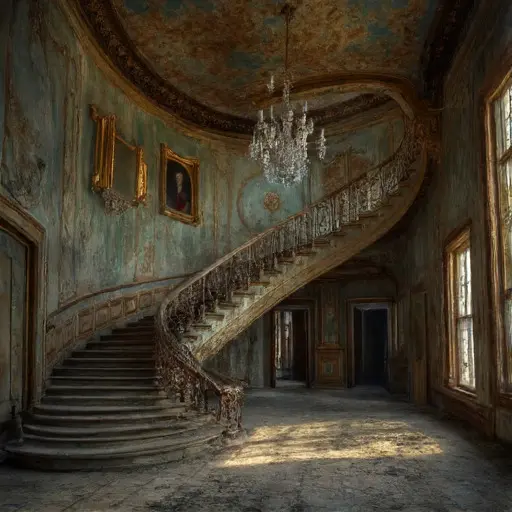
Inside, the house remained almost untouched. The entrance hall still contained the traces of its former owners: antique furniture covered in layers of dust, carved wooden details darkened with age, and decorative objects left exactly where they had been decades earlier. The silence inside felt less like abandonment and more like the final moment of a family leaving without ever returning.
The most unusual part of the mansion was the curved glass conservatory attached to the eastern side of the house. Unlike typical additions, the conservatory seemed to merge naturally with the original architecture, wrapping around the structure in a graceful arc. Overgrown plants had taken control of the space, growing between broken tiles and climbing across the aged iron framework.
The neighborhood changed around the property while the mansion stayed frozen in time. Modern families moved into nearby homes, streets were repaired and repaved, and new buildings appeared beyond the old avenue. Still, behind its weathered hedge and rusted gate, the mansion remained almost exactly as it had been when its doors closed for the last time.
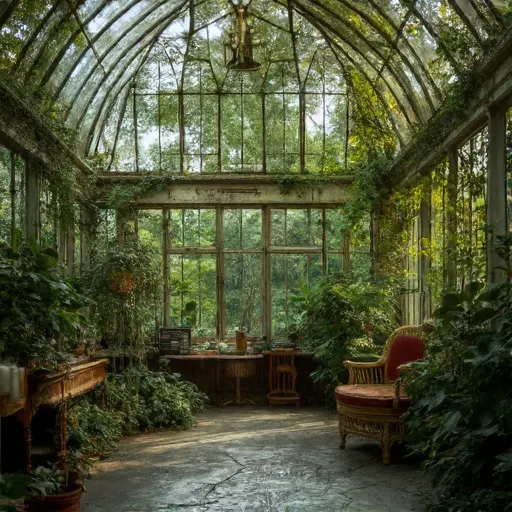
The exterior showed the slow effects of decades without care. The blue-grey brick walls carried stains from countless seasons, sandstone window surrounds had softened from rain and frost, and the tall mansard roof collected years of fallen leaves and moss. The ornate iron balcony above the entrance remained intact, though rust patterns revealed its long battle with time.
A narrow driveway still led toward the front entrance, though weeds had pushed through every crack between the stones. Near the doorway sat an old rusted bicycle and a forgotten wicker chair, small reminders of ordinary life that contrasted with the mansion’s grand scale.
The rooftop pavilion became the subject of local stories. Some claimed it was built as a private observation room, while others believed it was added later by a family member who wanted a quiet place above the neighborhood. Its slightly leaning structure and unusual design gave the mansion an almost unreal appearance, though every detail remained believable and connected to the craftsmanship of the original home.
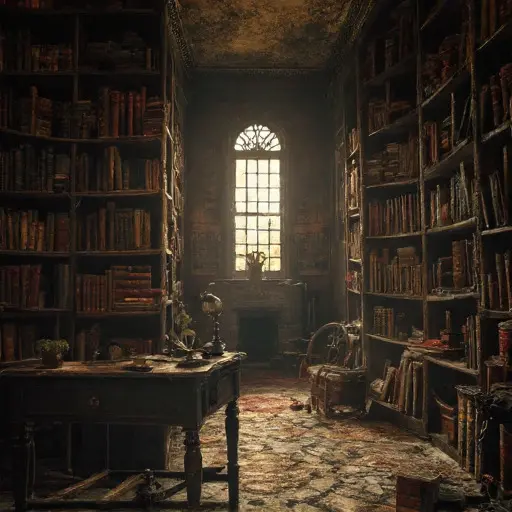
When photographers finally documented the property years later, they discovered a house that had aged beautifully rather than disappeared. The peeling surfaces, faded colors, and weathered materials revealed a history written slowly through nature and time.
The mansion was not a place of decay. It was a preserved piece of American architectural history, standing quietly between the past and present. Behind the overgrown hedge, behind the cracked sidewalk, and behind the silent windows, the house continued to hold the memories of everyone who once called it home.
Photographed as a full-frame architectural documentary study, the mansion reveals the beauty of forgotten craftsmanship: blue-grey brick softened by age, sandstone details shaped by weather, curved glass reflecting years of changing seasons, and a residence that remains elegant even after decades of silence.