The Last Summer at Hollowmere
High above the coastline, where the cliffs meet endless fields of wild grass, the abandoned Hollowmere Estate remains hidden from the nearby villages. The grand Victorian Shingle Style mansion was once considered one of the finest private seaside residences in the region, built for a family who wanted privacy, comfort, and a permanent connection with the ocean. Today, the house stands silent above the shore, its weathered walls carrying the traces of a forgotten generation.
The mansion was completed in 1884 for Edward Whitmore, a successful shipping investor who wanted a countryside retreat away from the growing industrial towns. Unlike traditional formal estates, Hollowmere was designed to blend into the landscape, with flowing walls, curved balconies, deep porches, and natural materials chosen to age alongside the coastal environment.
The exterior still reveals the ambition behind the design. The rounded tower leans slightly beneath its moss-covered slate roof, while faded ocean-blue shingles cover the enormous structure like layers of old waves. Honey-colored stone foundations, cream marble columns, and dark mahogany details create a contrast that once gave the home a luxurious seaside character.
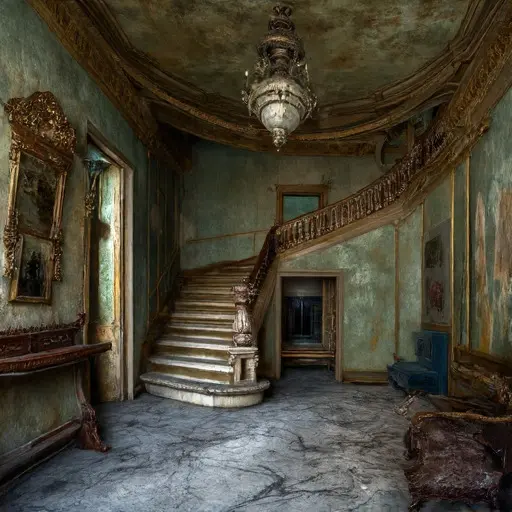
Inside, the mansion reflects the lifestyle of a family who once hosted long summers by the sea. The entrance hall remains filled with handcrafted wood details, although years of neglect have covered the surfaces with dust. The curved staircase still follows the unusual shape of the tower, leading toward upper rooms that have remained untouched for decades.
The decline of Hollowmere began after the family’s shipping business suffered major losses during the early twentieth century. Repairs became less frequent, servants were dismissed, and several sections of the mansion were closed. The coastal weather slowly damaged the exterior, while the gardens began returning to their natural state.
By the 1930s, only a few family members remained at the estate. Letters discovered years later suggested that rising maintenance costs and disagreements over ownership prevented the property from being restored. The final residents left quietly, leaving behind furniture, photographs, and personal belongings scattered throughout the rooms.
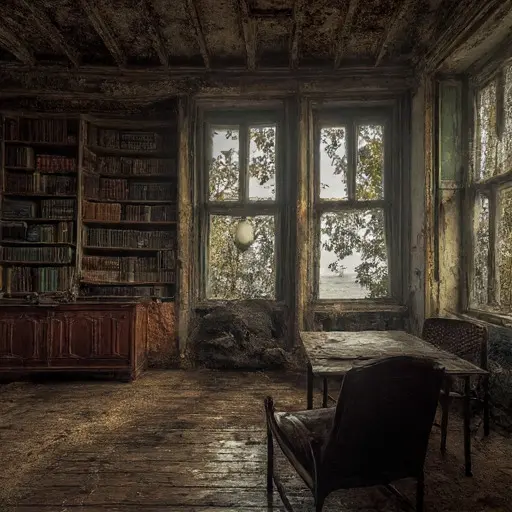
The library became one of the most preserved rooms in the mansion. Shelves still line the walls, filled with books softened by moisture and time. A large desk remains positioned toward the window, once offering views of ships passing along the coastline. The room feels frozen between abandonment and memory, as if someone simply stepped away and never returned.
Outside, the estate grounds have transformed completely. The old stone pathways disappear beneath wildflowers and tall grasses, while windswept trees surround the property like natural barriers. The forgotten wicker chair on the veranda faces the sea, becoming a symbol of the quiet life that once existed there.
Near the garden wall, an antique pram remains rusted and covered with coastal dust. No official record explains why it was left behind, but local stories claim it belonged to the youngest member of the Whitmore family, whose childhood was spent exploring the cliffs and gardens surrounding the mansion.
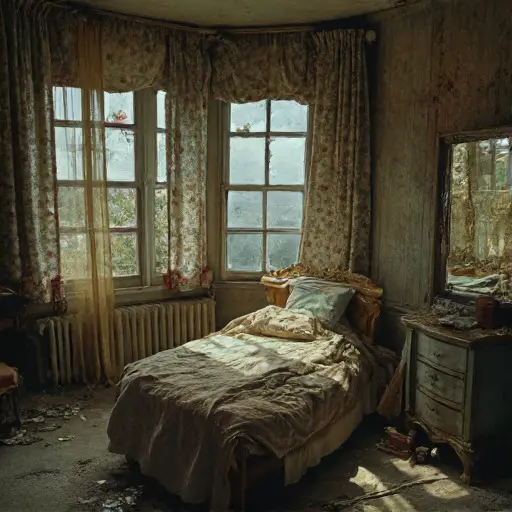
The upper bedrooms reveal the final chapter of Hollowmere’s history. Old furniture remains covered in faded fabric, walls show layers of peeling paint, and forgotten objects rest exactly where they were left. Among the abandoned rooms, the smallest bedroom contains traces of childhood, preserving the most personal memories of the estate.
For decades, Hollowmere Estate has stood above the coastline untouched. The ocean air continues to weather its shingles, the gardens continue to grow wild, and the mansion slowly becomes part of the landscape around it.
Although the family who built it is gone, the house remains a remarkable reminder of Victorian seaside architecture. Its curved towers, wooden craftsmanship, and faded elegance tell the story of a place created for generations of memories, now preserved only by the sound of waves below the cliffs.