The Harrow House at Birch Crossing
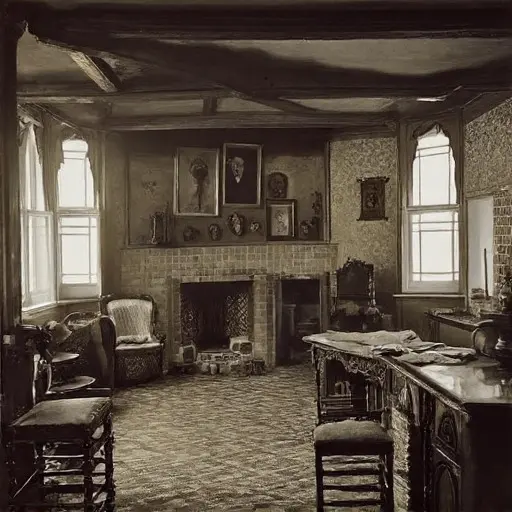
The Harrow family settled at Birch Crossing in 1896 after Jonathan Harrow inherited the property from his uncle, who had built the distinctive Stick style residence two decades earlier. Jonathan, his wife Emma, their three children, and Jonathan’s widowed mother shared the house while operating a successful wool and grain farm. Income from sheep, barley harvests, and contracts with a nearby textile mill supported regular repairs and seasonal improvements.
County tax records described the house as one of the area’s best-maintained homes, with its octagonal pavilion and curved porch carefully preserved throughout the family’s most stable years.
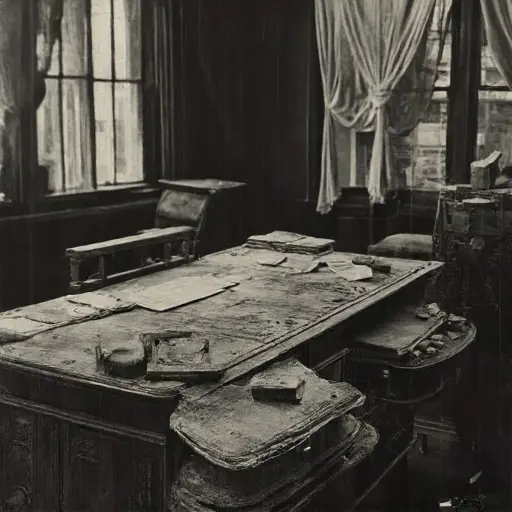
The first clear warning came in 1928 when an unpaid feed invoice remained pinned beside the kitchen ledger for months. Falling wool prices and the closure of the local textile mill sharply reduced family income, while two successive poor harvests exhausted their savings. Household help was dismissed, the upper guest rooms were closed to reduce heating costs, and repairs to the terracotta roof, chimneys, and porch were postponed. After Jonathan died in 1933, disagreements over inherited farmland delayed a sale. By the following year, overdue taxes and mortgage payments forced Emma and the remaining family members to leave Birch Crossing.
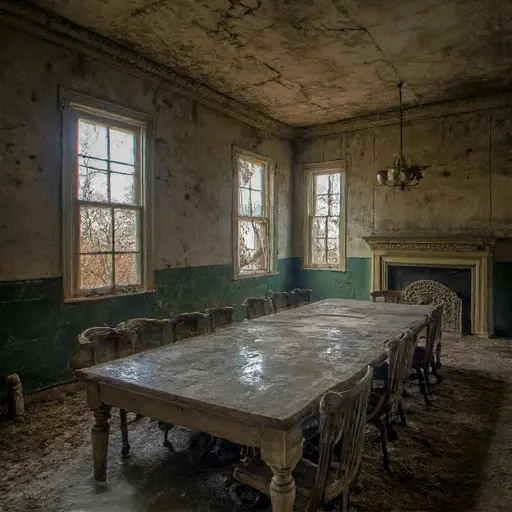
The Harrow House was abandoned in 1935 after foreclosure brought an end to years of declining farm income and unresolved inheritance claims. No restoration followed, and no member of the Harrow family returned to occupy the property. County ownership records changed several times, yet the house remained vacant throughout the following decades. Furniture, ledgers, and family papers stayed where they had been left. Weather, moisture, and neglect gradually weakened the timber, stucco, and roof structure. The Victorian house still stands at Birch Crossing, empty and steadily deteriorating with no confirmed plans for its future.