The Beaux-Arts Estate Behind the Wildflower Courtyard
Hidden beyond winding brick paths and towering plane trees, an abandoned Beaux-Arts Victorian estate remains quietly surrounded by moss-covered terraces, wildflower meadows, and forgotten garden spaces. The grand residence once represented elegance and ambition, but years of solitude have softened its formal appearance, allowing nature to slowly merge with the architecture.
The three-story family house was constructed from pale ivory limestone, deep wine-red granite columns, black iron detailing, and a weathered slate roof crowned with copper cresting that has transformed into a muted turquoise patina. The combination of refined stonework and aged metal creates a striking contrast between classical grandeur and the gentle effects of time.
The façade is centered around a grand rounded entrance pavilion, where sweeping curved staircases rise toward tall French-style windows framed by sculpted stone details.
Elegant balconies with carved limestone elements extend from the upper floors, while black iron accents provide delicate contrast against the pale masonry.
Attached to one side of the residence, a glass-domed conservatory adds a lighter architectural element to the imposing structure. Its transparent curves create a connection between the interior spaces and the secluded gardens beyond, where plants have gradually reclaimed the once carefully designed landscape.
Decades of abandonment have transformed the formal Beaux-Arts design into something more organic. The exterior walls have developed gentle bows, the central dome tilts slightly above the roofline, and uneven roof sections reveal the subtle movement of a structure aging with dignity. A broad veranda wraps around the secluded inner garden, creating a graceful transition between architecture and nature.
The surrounding estate grounds preserve traces of its former elegance. Moss-covered stone terraces lead through wildflower fields, while old brick paths disappear beneath layers of vegetation. The gardens have become a peaceful woodland environment where carefully planned landscaping now exists alongside untamed growth.
Beneath an ancient oak tree, a faded cream-colored garden carriage rests forgotten among fallen leaves and tall grasses. Its weathered wooden frame reflects the quiet history of the property, suggesting a time when the estate was filled with movement, visitors, and carefully maintained surroundings.
At the center of the overgrown courtyard, a cracked marble fountain sits filled with fallen leaves and small plants. Once a decorative centerpiece, it now serves as a symbol of the gradual transformation from private estate to natural sanctuary.
The soft overcast daylight reveals the subtle textures of the residence, from the aged limestone blocks and granite columns to the oxidized copper cresting and weathered ironwork. The documentary-style perspective captures the building as it exists today: elegant, imperfect, and slowly returning to the landscape.

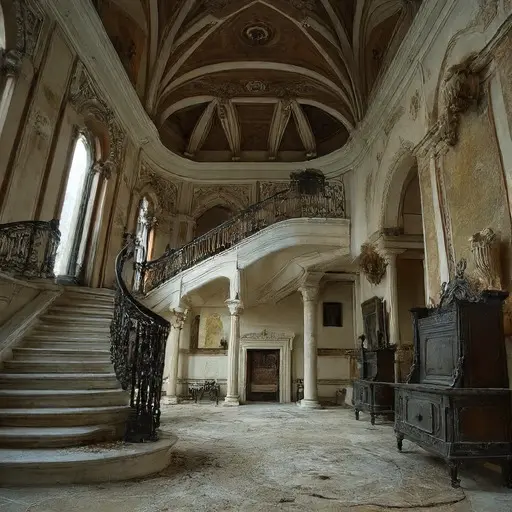
Inside, the mansion retains the spacious proportions and refined details associated with Beaux-Arts architecture. Large rooms, sweeping transitions, and carefully crafted decorative elements remain visible despite years of neglect and exposure.
The interiors reveal a mixture of luxury and decay. Dust-covered furnishings sit beneath tall French windows, faded wall finishes show traces of former color, and carved stone details continue to display the craftsmanship of the original builders.
The veranda and inner garden remain the heart of the estate, where the formal design of the house meets the wild growth surrounding it. The curved spaces create a sense of movement, guiding visitors through rooms and gardens that were designed as a continuous experience.

Today, the Beaux-Arts Estate Behind the Wildflower Courtyard stands as a remarkable reminder of architectural beauty shaped by time. Its ivory limestone walls, wine-red granite columns, turquoise copper details, and glass conservatory remain surrounded by a landscape that has grown around it.
Though abandoned, the estate still carries the atmosphere of its former grandeur. Beneath the plane trees and among the wildflowers, it exists as a place where human craftsmanship and nature have slowly become inseparable.