The Forgotten Château Beyond the Cedar Grove
Hidden along a quiet forest-edge lane, surrounded by towering cedar trees and silver birches, stands an abandoned Châteauesque Victorian family house whose dramatic silhouette still rises above the overgrown landscape. Once a symbol of elegance and permanence, the three-story residence now rests quietly among mossy paths, old hedgerows, and forgotten gardens where nature slowly merges with its architecture.
The house is constructed from pale grey limestone, blush pink granite corner stones, and dark blue slate roofing crowned with oxidized copper finials. The combination of cool stone tones and aged copper details creates a refined yet weathered appearance, giving the mansion a sense of faded grandeur. Its Châteauesque inspiration is revealed through steep conical turrets, ornate dormers, carved stone balconies, and a collection of dramatic asymmetrical wings extending outward from the central structure.
The façade carries the subtle marks of decades of settling. The central portion curves gently instead of remaining rigid, one turret leans slightly above the entrance, and the roof sections rise and fall at irregular heights. These imperfections give the residence an organic character, as though the building has slowly adapted to the landscape surrounding it.
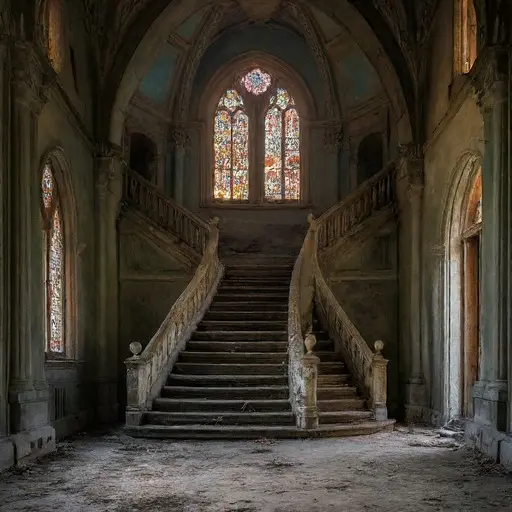
A sweeping veranda bends around the side garden beneath weathered stone arches, creating a graceful connection between the mansion and the grounds. The covered porch shows signs of long abandonment, with softened stone surfaces, aged railings, and traces of vegetation creeping into the corners. Despite its condition, the craftsmanship remains visible in every carved detail.
The surrounding property has become a quiet woodland retreat. Moss-covered stone paths disappear beneath fallen leaves, while old hedgerows and wild plants reclaim the garden spaces. The tall cedar and birch trees form a natural border around the estate, making the forgotten house feel isolated from the nearby residential world.
Near the entrance, a weathered rocking chair rests beneath the covered porch, frozen in place as a reminder of the family life that once filled the home. Beside an overgrown flower bed, a cracked marble garden statue stands covered in pale lichen, its worn surface blending into the surrounding greenery.
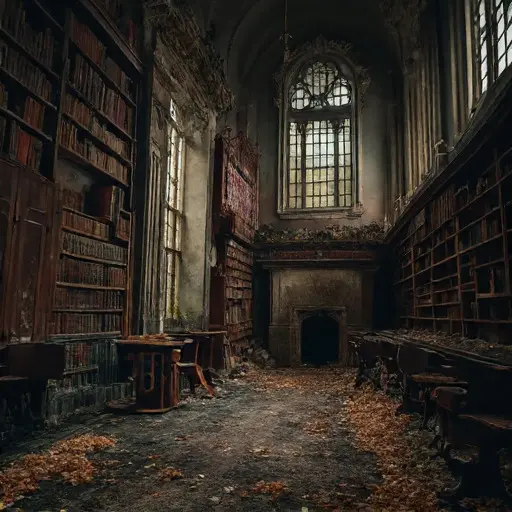
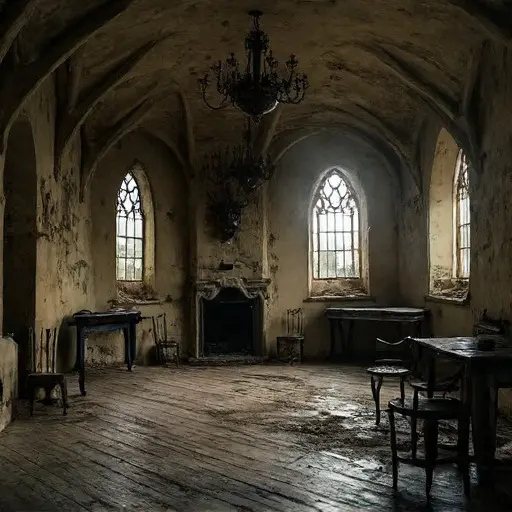
Inside, the mansion reveals the scale and elegance expected from a Châteauesque Victorian residence. Large rooms are shaped by high ceilings, elaborate stonework, and carefully designed architectural details. The interiors remain silent and untouched, with layers of dust and age covering the once-active family spaces.
The stained-glass windows, carved balconies, and ornamental finishes continue to show the ambition behind the original design. Even without inhabitants, the house maintains an atmosphere of refinement, where every hallway and chamber reflects the craftsmanship of another generation.
The Forgotten Château Beyond the Cedar Grove stands as a monument to Victorian imagination and architectural ambition. Its limestone walls, granite accents, and towering turrets remain surrounded by the quiet beauty of the forest, preserving a delicate balance between human creation and natural renewal.
Though abandoned, the residence continues to tell its story through weathered stone, faded craftsmanship, and the peaceful landscape that has slowly embraced it. The mansion remains a hauntingly beautiful reminder of the elegance that time can transform but never completely erase.