The Olive-Tinted Villa Beyond the Chestnut Trees
At the edge of a historic residential district, hidden within a quiet forest neighborhood, stands an abandoned Italianate Victorian family house whose elegant proportions have slowly blended with the surrounding landscape. The three-story residence rests behind moss-covered garden walls and winding stone paths, where chestnut trees and dense woodland vegetation create a secluded atmosphere around the forgotten property.
The villa is constructed from white marble-faced stone, giving the exterior a refined and luminous presence even beneath the soft overcast daylight. Deep olive-green painted wood accents frame the architectural details, creating a restrained contrast against the pale masonry, while the muted terracotta tile roof adds warmth to the aged façade.
The Italianate character of the home is expressed through its tall arched windows, carved limestone balconies, ornate cornices, and decorative brackets beneath the roofline.
Each element reflects the craftsmanship of a bygone era, with delicate detailing preserved despite years of abandonment and exposure to the changing seasons.
The structure has developed a gentle irregularity over time. The façade curves softly instead of remaining perfectly straight, the slender square tower has tilted slightly after decades of settling, and the alignment of the tall windows varies subtly across the exterior. These imperfections give the villa a naturally aged appearance while maintaining its original elegance.
A veranda wraps around the corner of the house, following the softened curves of the architecture. Beneath peeling trim and creeping vines, the covered walkway reveals traces of its former grandeur. Weathered wooden elements, faded paint, and stone surfaces softened by age create a quiet sense of history.
The square tower remains the defining feature of the silhouette, rising above the surrounding trees with faded copper edging that has developed a subdued patina. Its vertical form balances the broad horizontal movement of the veranda and curved façade, creating a distinctive Italianate profile.
The grounds surrounding the villa have become a peaceful woodland refuge. Tall chestnut trees spread above the property, their branches casting soft patterns across moss-covered garden walls and forgotten stone paths. Wild vegetation has grown freely around the house, merging the designed landscape with the surrounding forest.
Beside the porch, a weathered wicker chair remains in place beneath the faded trim, facing a garden that has long since returned to nature. Near the entrance, an old rusted bicycle leans against a cracked white stone wall, where ivy has slowly covered the surface and softened its edges.
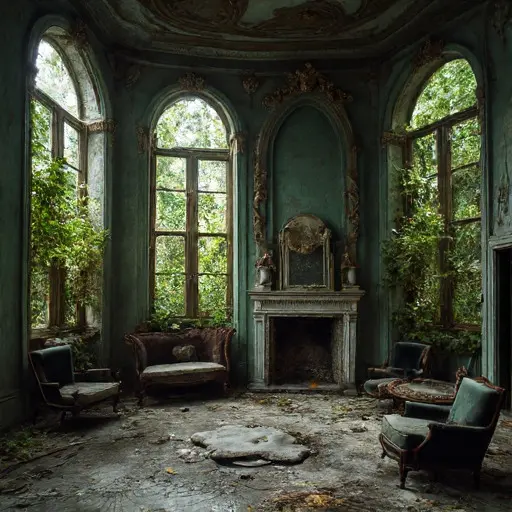
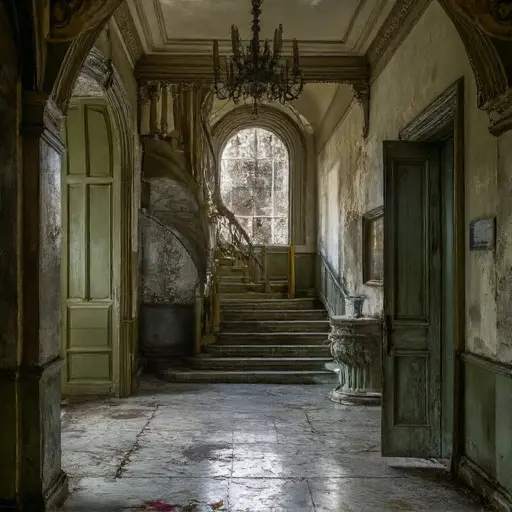
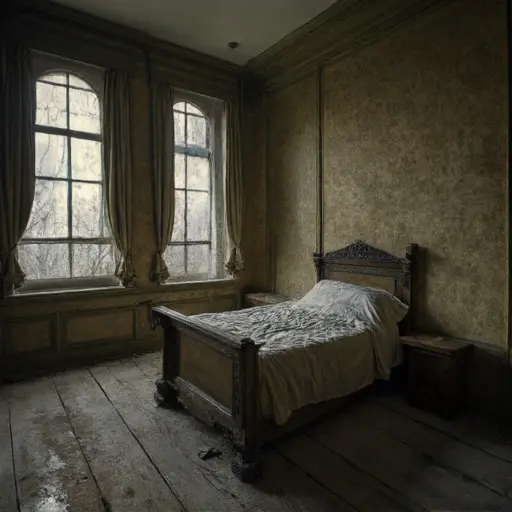
Inside, the villa preserves the atmosphere of a once-refined family residence. High ceilings, carved architectural details, and elegant proportions remain visible beneath layers of dust and decay. The rooms reveal a connection between classical Victorian design and the quiet effects of years without human presence.
The interior spaces reflect the same graceful irregularity found outside. Curved transitions, aged wooden features, and softened surfaces create a feeling of continuity between the house and the woodland environment surrounding it.
The Olive-Tinted Villa Beyond the Chestnut Trees stands as a preserved fragment of Victorian elegance slowly being reclaimed by the forest. Its marble walls, terracotta roof, aged copper details, and ivy-covered gardens tell the story of a home shaped not only by its builders but also by decades of quiet transformation.
Although abandoned, the residence retains its architectural identity. Every curved balcony, weathered bracket, and vine-covered stone surface reflects the passage of time, creating a timeless portrait of an Italianate Victorian house resting peacefully among the trees.