The Bone-White House of the Empty Canal Basin
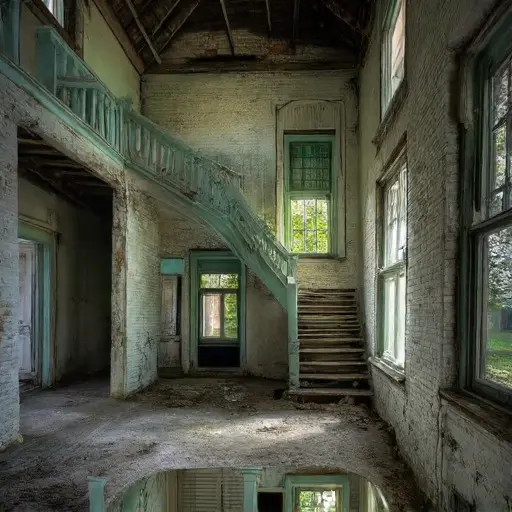
In an abandoned canal basin town where water once defined every street and channel, a Folk Victorian house stands quietly among dry stone locks and cracked towpaths. The structure is built from bone-white painted brick, accented with muted teal wooden trim and delicate spindlework that still carries traces of ornamental craftsmanship despite years of neglect.
The house has gently settled over time, causing the façade to bow slightly and the terracotta tile roof to ripple unevenly.
The overall form remains elegant, but it is softened by structural fatigue and long exposure to the damp, now-absent canal environment.
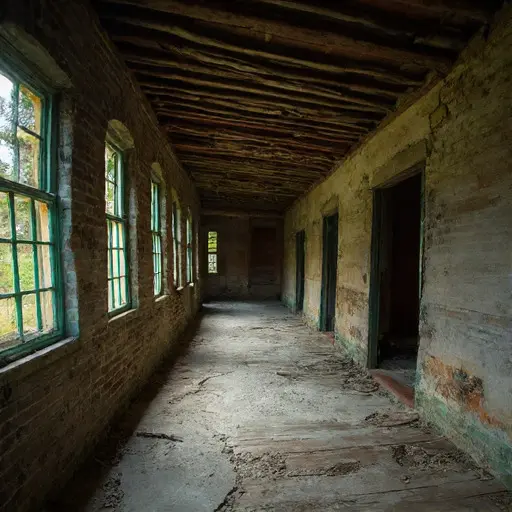
All windows are dark and lifeless, revealing no interior illumination anywhere in the structure. Light enters only as soft, diffused daylight through broken panes and open frames, emphasizing the stillness and abandonment of the home.
Outside, the canal basin town is dry and reclaimed by nature. Empty water channels are filled with reeds and tall grasses, while cracked stone locks and fractured towpaths trace the geometry of a once-functional water system now reduced to ruin.
In the yard, an overgrown sandbox filled with weeds sits near a sagging weathered wooden gate. Both objects suggest a domestic life long since vanished, now overtaken by vegetation and silence.
The house remains as a quiet remnant of canal life—once part of a flowing network of movement and trade, now frozen in place as the landscape slowly reclaims it.