The Viremont Italianate Mansion Left to Forest Encroachment
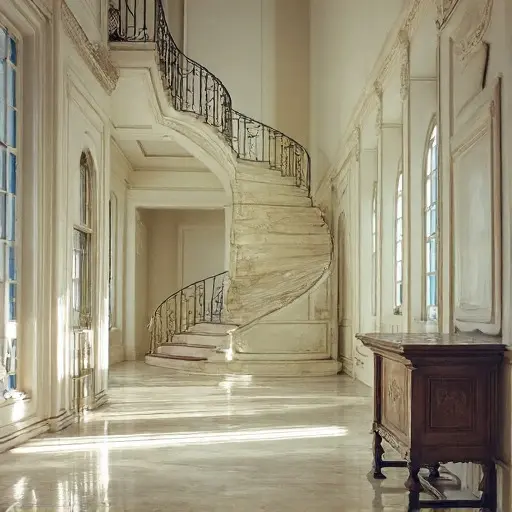
The Viremont Mansion was constructed in the late nineteenth century as a hybrid town estate for a prosperous merchant family seeking proximity to regional trade routes while maintaining a controlled retreat within the forest fringe. Designed in the Italianate tradition, the house emphasized vertical proportion, decorative restraint, and formal urban elegance expressed through bracketed cornices, arched windows, and a central projecting bay tower. The household consisted of parents, two children, and a small domestic staff responsible for maintaining both the interior order and the surrounding formal gardens.
Early life in the mansion was highly structured, with daily routines focused on correspondence, trade administration, and seasonal social gatherings. The property functioned as both residence and logistical hub, bridging urban commercial activity and rural isolation.
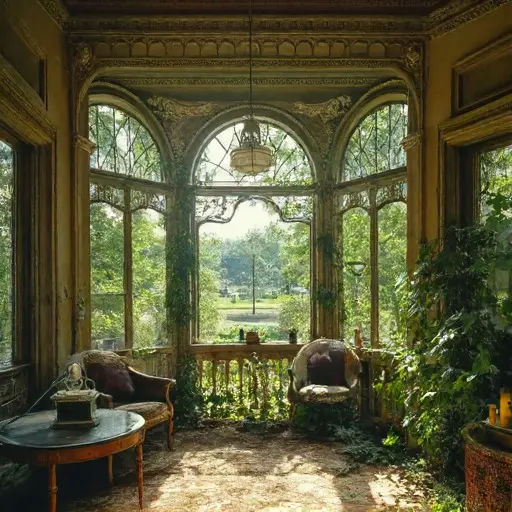
By the late 1920s, the Viremont household began to experience financial instability following shifts in regional trade routes and declining commercial returns. Maintenance costs associated with the mansion’s vertically emphasized façade, decorative cornices, and slate roofing system became increasingly difficult to sustain. Repairs were delayed, and portions of the residence were closed off to reduce operational expenses. Garden maintenance declined, allowing white marble steps, crimson rose hedges, and violet lilac bushes to grow increasingly unstructured and overgrown. Administrative correspondence slowed significantly, with unresolved financial obligations accumulating over time. The mansion gradually transitioned from a fully active urban estate to a partially maintained residence at the edge of the encroaching forest.
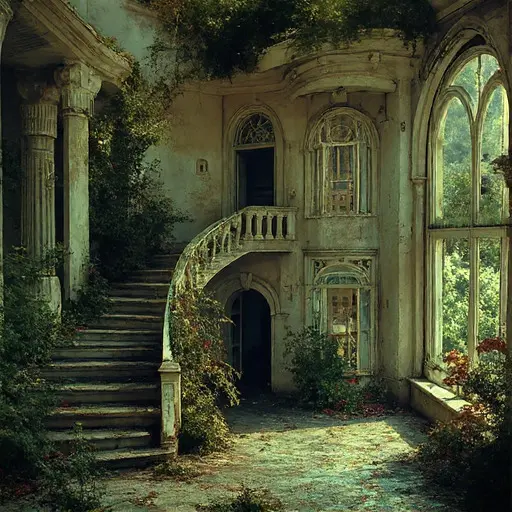
By the early 1940s, after prolonged financial decline and the dispersal of its remaining occupants, the Viremont Mansion was fully abandoned. No restoration or redevelopment efforts were undertaken, as ownership disputes and deterioration made intervention impractical. The estate remained standing at the forest edge, slowly weathering under seasonal conditions and progressive vegetation growth. Interior spaces were left in their final state of occupation, gradually transforming as ivy, moisture, and structural fatigue reshaped the Italianate architecture. The mansion persists as an unresolved architectural ruin, neither preserved nor repurposed, with its vertical façade quietly dissolving into the surrounding emerald forest.