The Ashgrove Eclectic Mansion Left to Forest Reclamation
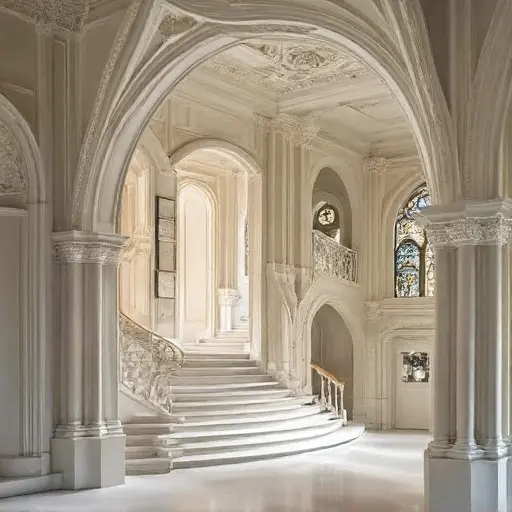
The Ashgrove Mansion was constructed in the final years of the nineteenth century for a family whose wealth derived from transatlantic trade and regional land investment. Designed as an Eclectic composition blending Queen Anne asymmetry with Neo-Gothic verticality, the estate was intended to showcase both cultural refinement and architectural ambition. The household consisted of parents, several children, and a rotating staff responsible for maintaining its complex rooflines, turrets, chimneys, and extensive formal gardens.
Early life within the mansion was highly organized, with daily routines centered around estate management, education, and social hosting in the grand hall and adjacent reception rooms. The property functioned as both residence and symbol of status, carefully maintained to reflect stability and continuity within a rapidly modernizing world.
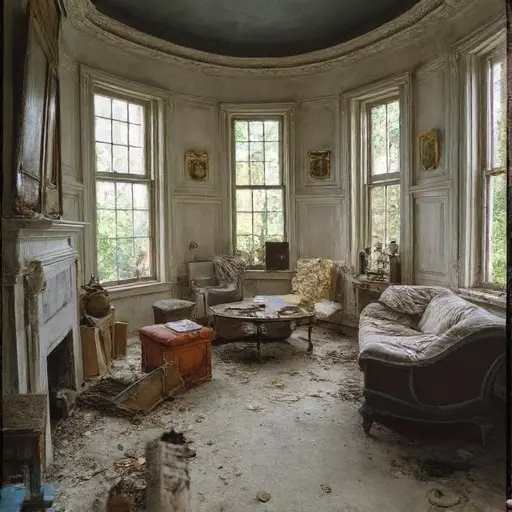
By the late 1920s, the Ashgrove household began to experience financial instability as shifting trade routes and increased maintenance costs placed strain on the estate’s resources. The complexity of its Eclectic architecture required constant upkeep, particularly across the intersecting rooflines, chimneys, and ornamental stonework. As revenues declined, repairs were delayed and sections of the mansion were closed off to reduce operational expenses. Entire wings saw reduced occupancy, while heating and staffing were limited to essential areas. Formal gardens of white marble terraces, crimson camellia hedges, and violet wisteria began to grow increasingly unruly as maintenance schedules were reduced. Administrative correspondence slowed significantly, with unresolved financial matters accumulating over time and contributing to a gradual decline in estate oversight.
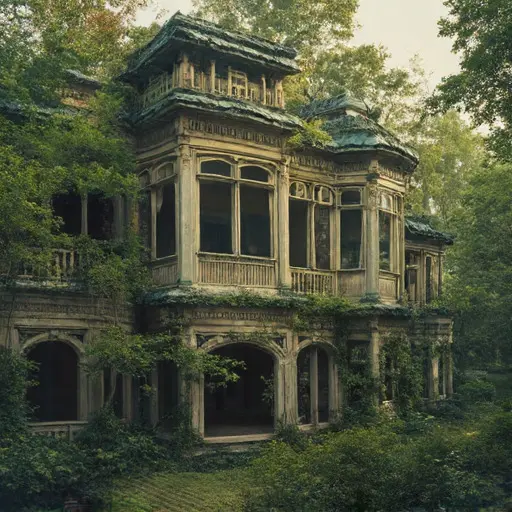
By the early 1940s, following prolonged financial decline and the dispersal of its remaining occupants, the Ashgrove Mansion was fully abandoned. No restoration or redevelopment efforts were undertaken due to the scale of deterioration and unresolved ownership conditions. The estate remained within the forest clearing, slowly deteriorating under seasonal weathering and progressive plant overgrowth. Interior spaces were left in their final state of occupation, gradually transforming as moisture, vegetation, and structural fatigue reshaped the intricate architecture. The mansion persists as an unresolved architectural ruin, neither preserved nor repurposed, with its Eclectic Victorian identity slowly dissolving into the surrounding forest environment.