The Windmere Queen Anne Mansion Left to Forest Bloom
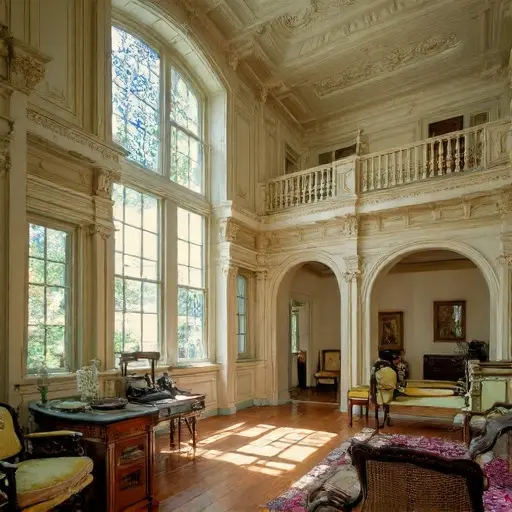
The Windmere Mansion was constructed in the late nineteenth century as a country estate for a prosperous regional merchant family seeking both social prominence and retreat from urban industrial centers. Designed in the Queen Anne tradition, the house emphasized asymmetry, ornamental complexity, and layered architectural expression. The household consisted of parents, three children, and a small domestic staff responsible for maintaining the extensive verandas, gardens, and interior detailing.
Early life in the mansion was structured around seasonal gatherings, correspondence, and estate management, with the wraparound verandas serving as both social and observational spaces overlooking the surrounding forest. The property functioned as a symbol of stability and cultivated refinement within a remote wooded landscape.
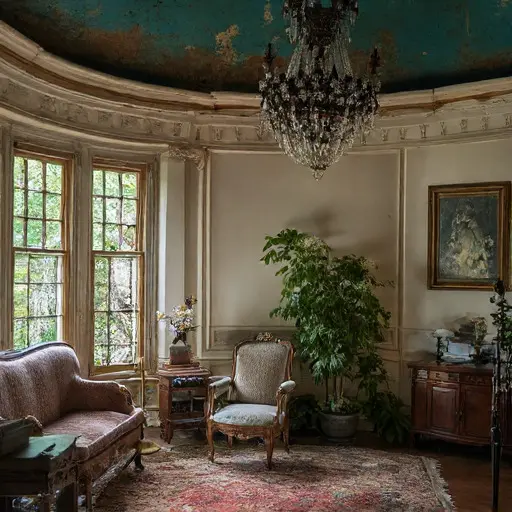
By the late 1920s, the Windmere household began to experience financial strain as regional trade fluctuations and rising maintenance costs placed pressure on estate operations. The intricate Queen Anne detailing required constant upkeep, particularly the spindlework, verandas, and multi-faceted roofing system. As resources diminished, repairs became irregular, and sections of the wraparound veranda were closed off due to structural weakening. Estate gardening was reduced to minimal upkeep, allowing hedges and flowering shrubs to grow more freely and unevenly. Administrative correspondence slowed significantly, with maintenance requests and supplier communications often left unanswered. Over time, the mansion transitioned from a fully active residence into a partially maintained structure marked by uneven care and early stages of abandonment.
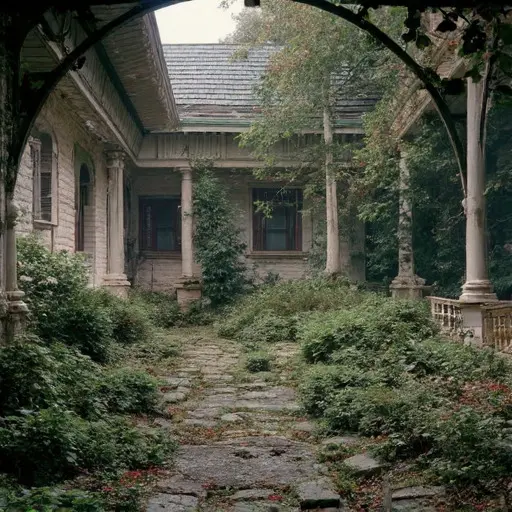
By the early 1940s, after prolonged financial decline and the dispersal of its remaining occupants, the Windmere Mansion was fully abandoned. No restoration or redevelopment efforts were undertaken, as the scale of deterioration and ownership uncertainty made intervention unfeasible. The estate remained standing within the dense forest, gradually weathering under seasonal conditions and plant overgrowth. Interior spaces were left in their final state of use, slowly transforming as vegetation advanced across terraces and into structural openings. The mansion persists as an unresolved architectural ruin, neither preserved nor repurposed, with its Queen Anne form quietly dissolving into the surrounding forest environment.