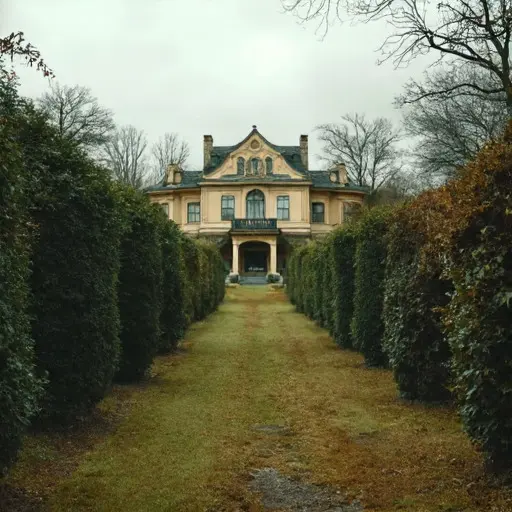
The abandoned Italianate villa and the garden that forgot its geometry
The villa was once described in estate records as “a horizontal palace of restraint,” an Italianate residence built during a period when industrial wealth briefly indulged in classical calm. It occupied a long parcel of land that stretched between orchard and woodland, designed to read as a continuous architectural gesture rather than a single object. From its earliest days, it was admired for balance—its symmetry so precise that even slight disrepair would later become visually obvious.
The first signs of abandonment appeared not in the building itself, but in the grounds. The estate gardeners were the first to be reduced, then reassigned, then gone entirely.
Without their constant trimming, the long axial clarity of the property began to loosen. Hedges lost their discipline. Gravel paths softened at the edges. The villa, still structurally intact, began to look slightly displaced within its own landscape.
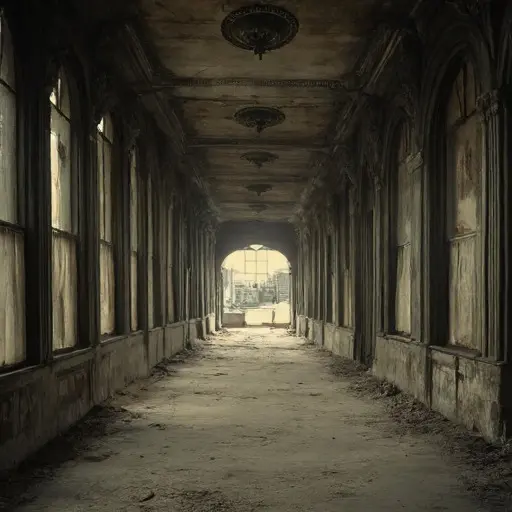
The family’s departure was gradual rather than sudden. Economic decline affected the surrounding region first, reducing the flow of labor and materials needed to maintain such a large residence. Rooms were closed one by one to conserve heat and effort. Eventually, entire wings of the house fell into seasonal disuse. The belvedere, once used for evening observation and quiet conversation, became too exposed and was sealed after a winter storm cracked several windowpanes.
When the final occupants left, they did not announce it formally. They simply stopped returning. The villa remained legally owned for years afterward, but no one came to reopen shutters or repair the shifting terrace stones. The building continued to age in full visibility, as if refusing to disappear quietly.
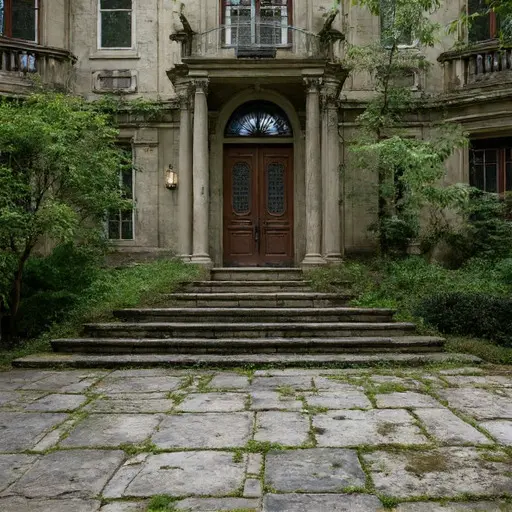
Time worked slowly but evenly across the property. The paired brackets beneath the eaves softened at their edges. Leaf carvings blurred into abstraction. The sandstone façade shifted in tone as mineral stains traced faint vertical paths down the walls. In the dry reflecting pool, wind carried leaves into circular patterns that echoed the geometry that once held water.
What remained striking was not collapse, but persistence of design intent. Even as nature intervened, the villa’s original order resisted full dissolution. The orchard still aligned in loose rows. The pergola still marked its intended axis, even when vines overwhelmed its structure. The estate became less a ruin than a negotiation between geometry and growth, where neither side fully surrendered.