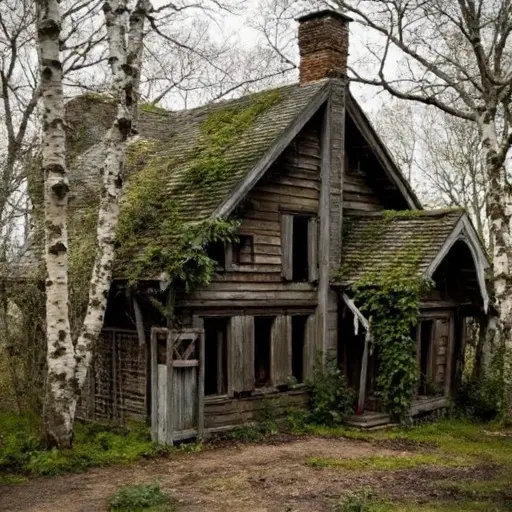
The abandoned Stick-style house and the forest that learned its lines
The house was never meant to disappear. Built in the late Victorian period as a demonstration of structural clarity and “truthful ornament,” it stood at the edge of a logging town that briefly believed permanence could be engineered through timber, geometry, and discipline. Its Stick-style façade was praised by visiting architects for how honestly it revealed its own framework, as if the building were not hiding its bones but proudly displaying them.
For the first decades, it functioned as a family residence for a mill engineer and his household. Life there followed the rhythm of industry below the ridge: saw blades in the valley, trains in the distance, and the constant smell of resin carried uphill on warm air.
The house was maintained carefully, almost obsessively, because its design punished neglect—every exposed joint and timber line made deterioration immediately visible.
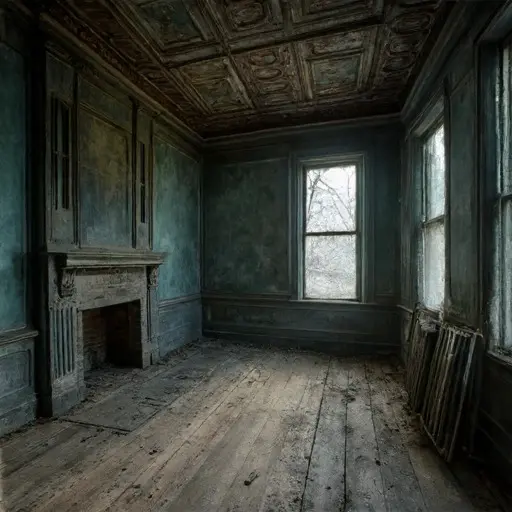
The abandonment began after the mill’s closure, when the economic system that sustained the house collapsed faster than the structure itself. The family remained for a short time, attempting to adapt to a life without industrial support, but the house demanded more maintenance than they could afford. Paint peeled faster than it could be replaced. Moisture began to collect in the roof joints where intersecting gables met. The chimney developed a slight lean that no one corrected.
Within a few years, the decision to leave was made not as a dramatic departure, but as a practical surrender. They did not sell the house at first, hoping conditions might improve, but distance slowly replaced intention. Doors were locked, then reopened during occasional visits, then left untouched entirely. Each return revealed a slightly different relationship between structure and surrounding forest.
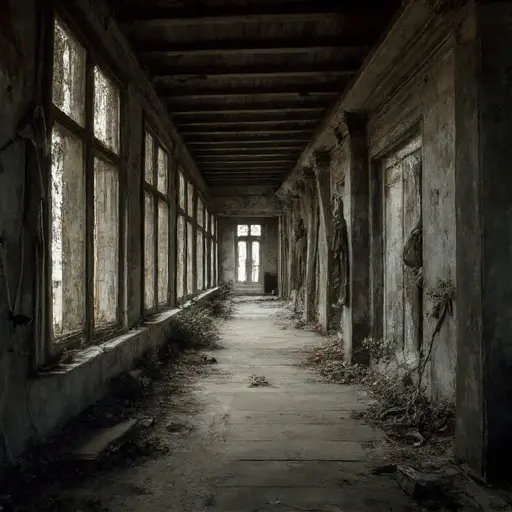
Nature did not overtake the house in a sudden way. Instead, it learned its pattern. The birch trees outside aligned themselves unconsciously with the vertical stickwork, echoing the building’s rhythm. Ivy traced the diagonal braces as if following instructions. The collapsed trellis near the entry became indistinguishable from the geometry of the façade, blurring the boundary between structure and growth.
Over time, the house ceased to read as abandoned in the traditional sense. It remained too legible, too structurally honest for that. Even in decay, it still communicated its original intent clearly: a disciplined framework slowly yielding to softer systems that had begun to understand its language.