When the Granite Began to Remember the Rain
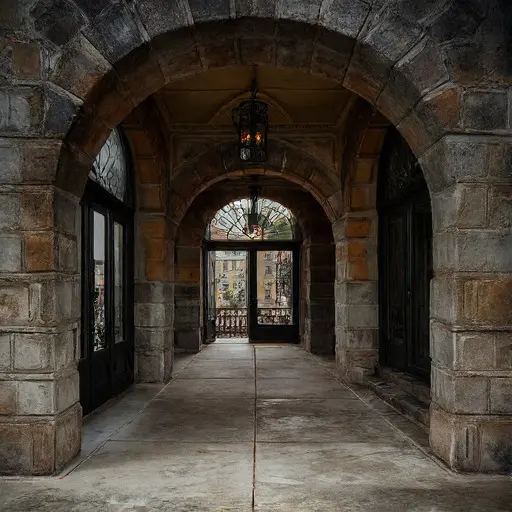
The Harridge Hill House was constructed in the late nineteenth century during a period of rapid urban expansion into steep hillside districts, where land value forced architects to prioritize vertical density and structural permanence. Designed in the Romanesque Revival style, the townhouse was intended to project stability and civic gravitas within a tightly packed residential street. Its heavy rusticated granite base anchored the building into the sloped terrain, while sienna sandstone accents articulated its monumental arches and framed the stacked vertical window groupings that defined its rhythmic façade.
A recessed entry loggia provided shelter from harsh weather, reinforcing the building’s emphasis on endurance over decorative lightness.
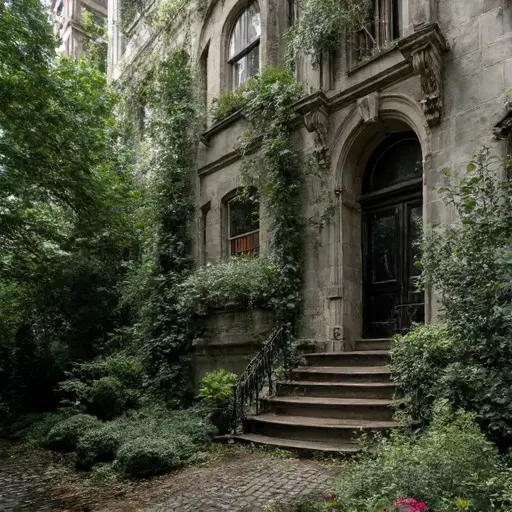
By the early 1920s, the Harridge Hill House entered a gradual phase of reduced occupancy as shifting urban demographics and changing residential preferences led its original family to relocate. Maintenance of the heavy masonry structure became increasingly sporadic, particularly in exterior cleaning, ironwork preservation, and terrace drainage management. The building’s robust construction prevented any immediate structural failure, but minor water intrusion began to affect upper stone joints and mortar lines. Interior rooms were progressively vacated, with upper floors closed first as heating and upkeep became less practical in a building of such thermal mass.
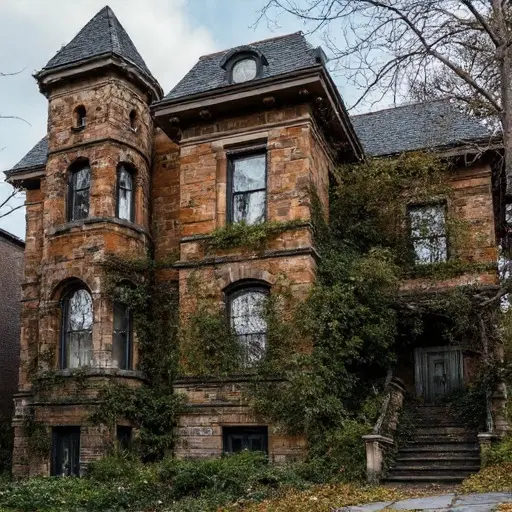
By the early 1930s, the Harridge Hill House was fully abandoned and removed from active residential use. No restoration was undertaken due to the high cost of maintaining its heavy masonry structure within a shifting urban neighborhood. Official records list the property as vacant and structurally stable but unoccupied. The building remains intact in its Romanesque form, overlooking the sloped cobblestone street in quiet permanence, slowly weathering under rain, ivy, and time without ever losing its monumental presence.