When the Sea Took Its Time Rewriting the Terrace Below
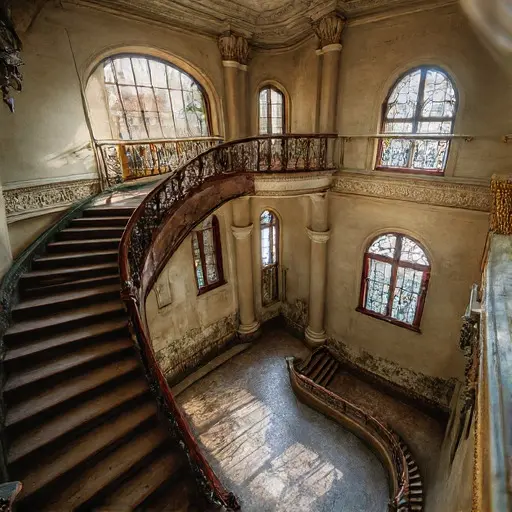
The Montclair Cliff Residence was completed in the late nineteenth century as a seasonal coastal family estate designed to express both refinement and control over an unstable maritime landscape. Perched directly above a steep ocean-facing escarpment, the house was conceived as a vertical composition, its French Second Empire form emphasizing height, surveillance, and visibility over the shifting shoreline. The steep mansard roof, clad in variegated slate and crowned with ornate iron cresting, was intended to mirror the layered horizon of sea and sky.
Beneath it, pale limestone ashlar walls and muted teal rusticated bands established a disciplined façade, punctuated by deep burgundy shutters and wrought-iron balconies that allowed controlled exposure to the coastal wind.
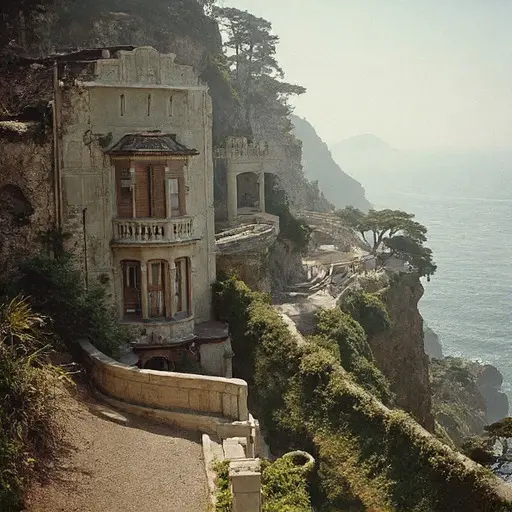
By the early 1920s, the Montclair residence entered a slow phase of functional decline as changing coastal conditions, increased storm intensity, and the reduced presence of its seasonal occupants made continued upkeep increasingly difficult. The cliffside setting, once considered a dramatic advantage, began to accelerate structural wear, particularly along exposed terraces and upper dormers. Maintenance of the slate mansard roof became sporadic, and minor failures in copper drainage elements allowed moisture intrusion into upper-level framing. Over time, sections of the property were closed off, beginning with seaward-facing rooms most affected by wind exposure, followed by secondary living quarters that required constant repair.
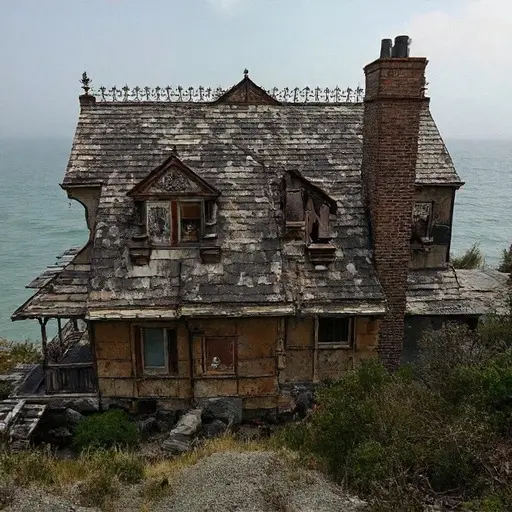
By the early 1930s, the Montclair Cliff Residence was permanently abandoned, its seasonal role no longer sustainable due to accelerating coastal erosion and the increasing cost of structural preservation. No formal restoration was pursued, and the estate was gradually removed from active property records. Since then, the house has remained intact on the edge of the cliff, its vertical Victorian silhouette continuing to face the sea in silence, as the terrace slowly shifts and the wind continues to shape everything around it except the memory of what once lived inside.