When the Forest Began Reclaiming the Corners of the Tower
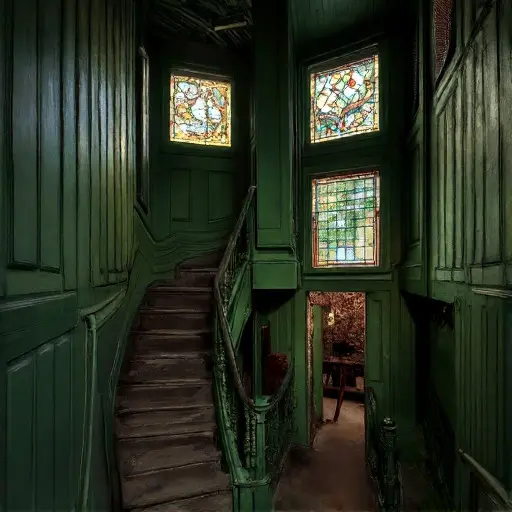
The Hawthorne Ridge House was built in the final decades of the nineteenth century as a remote forest-edge residence for a family tied to regional timber and rail expansion. Unlike urban Queen Anne homes of the same period, this structure was deliberately sited on a sloping ridge, where the terrain dictated its asymmetrical form. Multiple projecting gables and a polygonal corner tower were arranged to follow sightlines into the pine valley below, while a recessed wraparound veranda allowed seasonal observation of weather, forest movement, and distant transport routes.
The house’s layered exterior—deep forest-green clapboard on the lower levels and patterned slate-gray and burnt umber shingles above—reflected both available local materials and a desire to visually anchor the residence into its wooded surroundings.
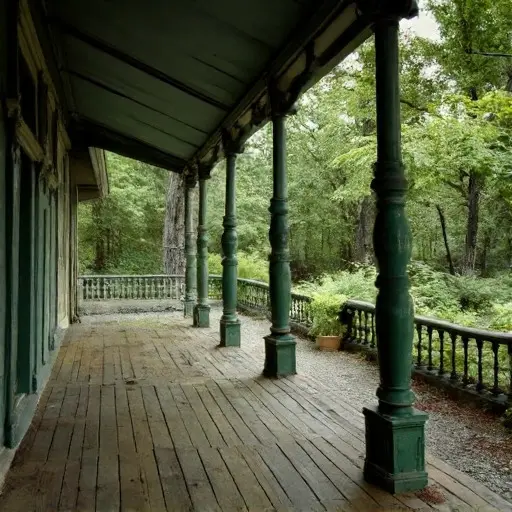
By the early 1920s, the Hawthorne Ridge House entered a gradual phase of abandonment following the decline of the family’s timber operations and the relocation of its remaining occupants to urban centers. Maintenance became intermittent, beginning with decorative elements and exterior woodwork, then extending to structural upkeep of roofs and drainage systems. The steeply pitched rooflines continued to shed snow and rain effectively for a time, but minor leaks began forming beneath the patterned shingles, particularly around gable intersections and the tower’s upper junctions. Interior rooms were progressively closed off, starting with upper-level bedrooms and auxiliary storage spaces, as the cost of heating and maintenance outweighed seasonal occupation.
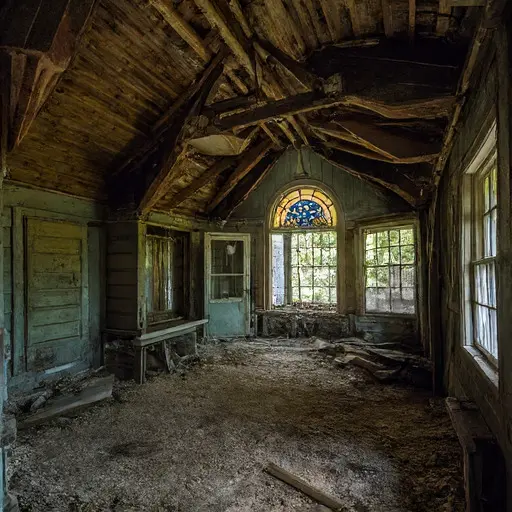
By the early 1930s, the Hawthorne Ridge House was fully abandoned and never reoccupied. No restoration efforts were undertaken due to its remote location and the steady degradation of access roads along the forest ridge. Official records simply list the property as vacated and structurally unstable, though no collapse ever occurred. The house remains intact in its asymmetrical Victorian form, weathering quietly under the canopy of pine and fir, where it continues to stand as a forest-edge relic that never fully disappeared, only slowly disappeared from use.