Where the Forest Holds the Stone in Its Quiet Balance
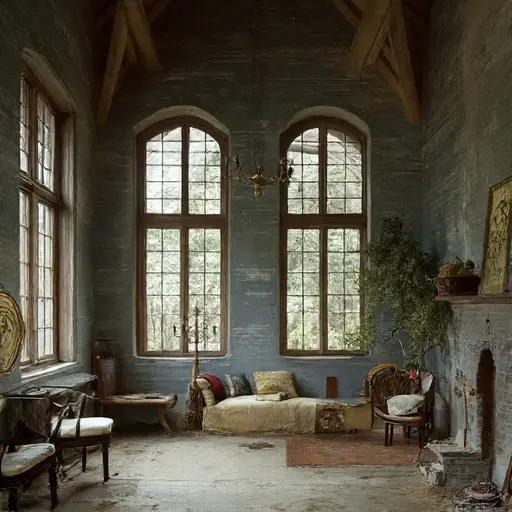
The house rests on a terraced slope where forest and valley meet, its late-19th-century Folk Gothic design shaped by necessity more than ornament. Built from limestone and plaster, it reads as an extension of the hillside itself, as though the structure had been assembled from the same materials that formed the terrain.
<img src=”https://beyondvisit.
com/wp-content/imagecontent/uploads/abandoned victorian house 88974163.webp” alt=”” />
Inside, the spatial arrangement follows the logic of the exterior massing—rooms shift subtly in alignment, ceilings rise and compress unexpectedly, and circulation feels guided by structure rather than symmetry. Light enters in controlled fragments, shaped by deep-set openings and the thickness of the masonry walls.
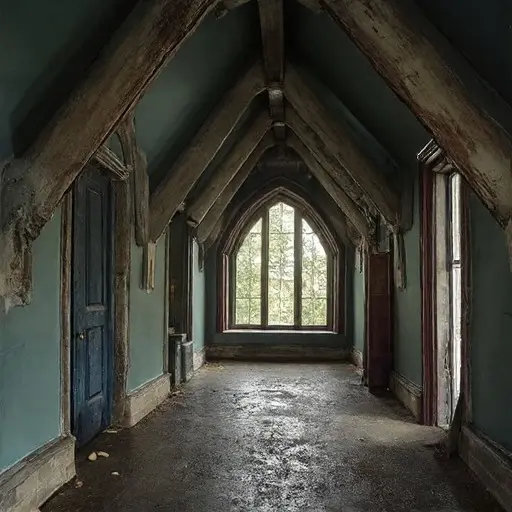
Outside, the terraced garden steps downward in irregular stone layers, merging gradually with the forest edge. Inside and outside remain visually intertwined, bound by material continuity and the quiet discipline of rural Victorian construction.