The House That Kept Its Steeples Facing the Pines
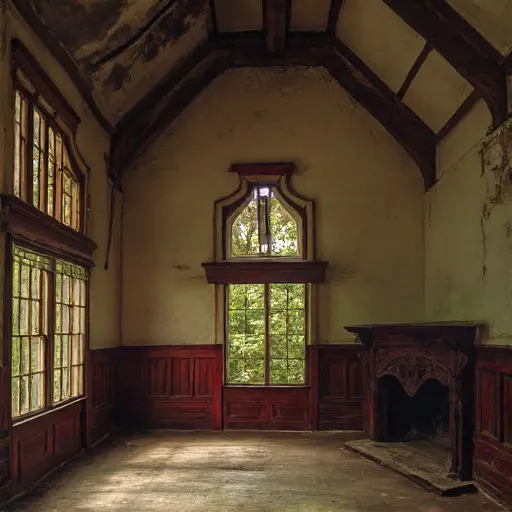
The house stands on an uneven ridge where the forest does not so much end as pause, as if reconsidering its boundary. Built in the late 1880s for a carpenter-turned-builder who specialized in ecclesiastical woodwork, the residence carried the language of Gothic churches into domestic scale. Its steep gables and carved vergeboards were not decorative indulgence but an expression of skill translated into shelter, a private architecture shaped by vertical ambition and hand-cut precision.
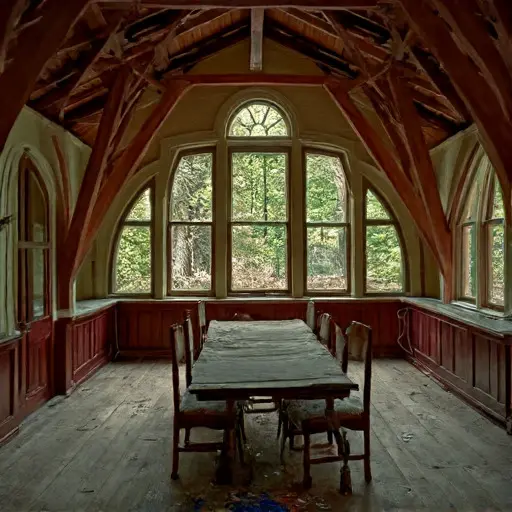
The decline began in silence, as mountain economies shifted and the carpenter’s trade diminished. Orders for specialized woodwork slowed, then stopped. The house, once a demonstration of craft, became increasingly difficult to maintain at its exposed ridge position. Repairs to the roof were delayed through multiple seasons, and moisture began to find its way into the upper gables. Rooms closest to the windward side were the first to be closed, their shutters left permanently latched.
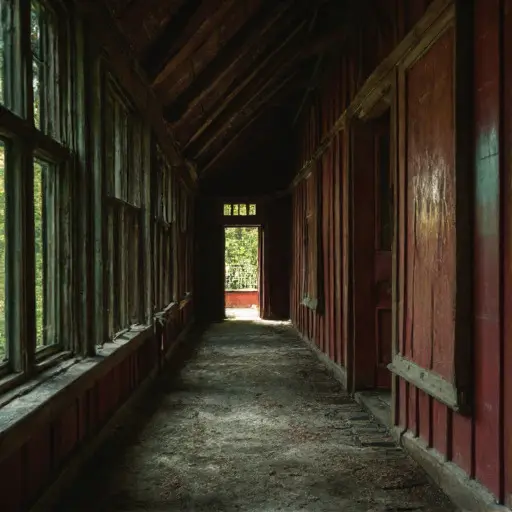
When the final departure came, it was not recorded in any formal way. There was no sale notice, no documented transfer. Objects were removed in stages until only fixed structure remained. The building was left intact, as if abandonment was a temporary condition that never resolved into return.
Today, the Carpenter Gothic house still stands on its ridge above the pines, its carved vergeboards weathering slowly, its steep gables unchanged, holding vertical silence while the forest continues to grow closer around its foundations.