The Merriweather Eastlake House Left in Ornamental Decay
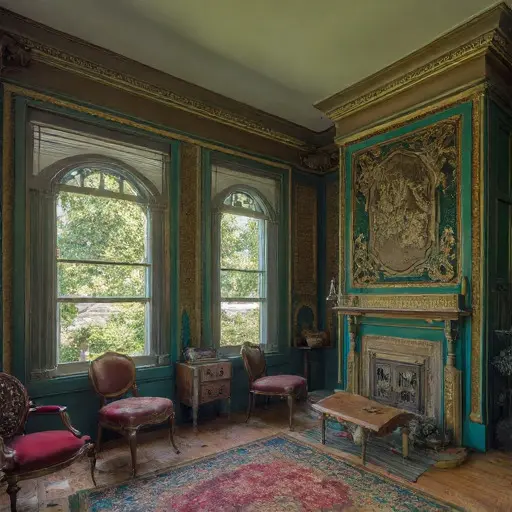
The Merriweather House was constructed in the late nineteenth century during the height of the Eastlake movement, when decorative woodworking became a defining feature of middle-class residential architecture. Built in a growing suburban district, the home reflected both craftsmanship pride and emerging domestic stability. The household consisted of a family of five supported by a skilled tradesman whose work in woodworking and furniture finishing influenced the house’s ornate detailing.
Early life in the residence was organized and disciplined, with each room serving a specific function and the richly detailed porch acting as a social threshold between private family life and the expanding neighborhood community.
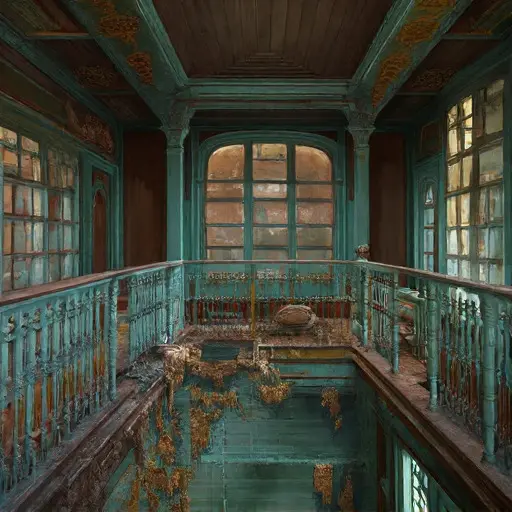
By the late 1920s, the Merriweather household began to experience financial difficulty as local trade opportunities declined and income from skilled craftsmanship became less stable. The intricate Eastlake detailing that defined the house required consistent maintenance, particularly repainting, structural tightening of spindlework, and protection against weather exposure. As resources became limited, repairs were delayed and selective, focusing only on essential structural needs. Upper rooms were used less frequently, and sections of the house were gradually closed off to reduce heating and maintenance costs. Over time, the home shifted from a carefully maintained showcase of craftsmanship to a structure slowly losing its ornamental clarity and functional consistency.
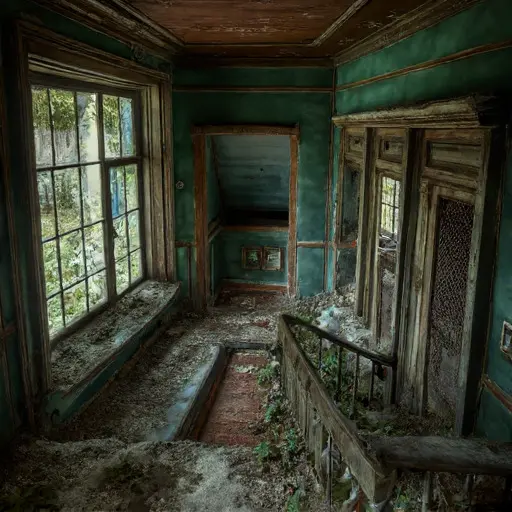
By the early 1940s, after the passing of the original occupants and the dispersal of remaining family members, the Merriweather House was fully abandoned. No restoration efforts were undertaken, as the property required specialized craftsmanship to maintain its highly detailed woodwork, which was no longer financially feasible. Official records eventually listed the house as unoccupied, with no further maintenance reported. The structure remained standing within its quiet residential setting, slowly deteriorating under seasonal weathering and time. Interior spaces were left in their final state of habitation, allowing dust, decay, and encroaching vegetation to gradually reclaim the Eastlake home, which persists as a quiet remnant of late nineteenth-century ornamental domestic architecture.