The Ellsworth Stick Style House Left to Weathered Silence
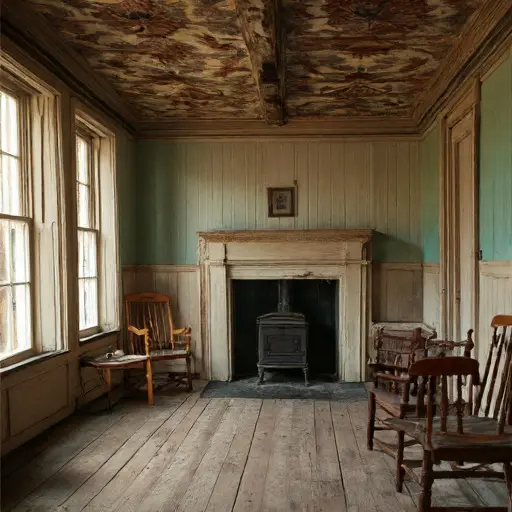
The Ellsworth House was constructed in the late nineteenth century in a growing residential district shaped by modest prosperity and expanding rail access. Designed in the Stick Style, the structure emphasized visible craftsmanship through exposed timber framing, angular cross-bracing, and restrained decorative detailing. The household consisted of a working-class family tied to local trade and clerical employment, maintaining a stable but carefully managed domestic life.
Early years in the home were defined by consistency and practical routine, with each room serving a specific purpose and the narrow porch acting as a transitional space between public street life and private domestic order. The house reflected both aspiration and restraint, embodying the architectural values of honest structure and functional design.
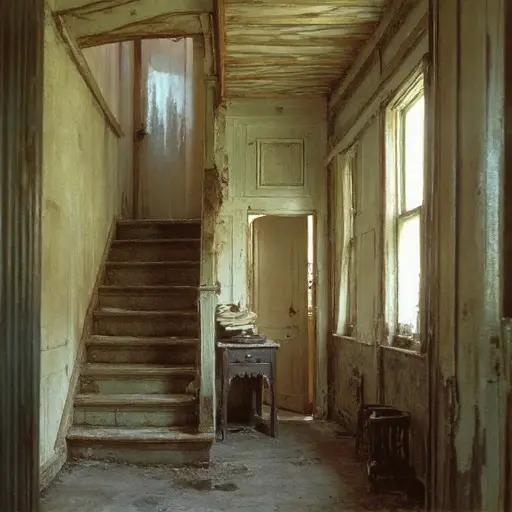
By the late 1920s, the Ellsworth household began to experience financial difficulty as local employment opportunities declined and wage stability weakened. Maintenance of the house became increasingly inconsistent, with repairs to woodwork, roofing, and exterior siding postponed due to cost constraints. The decorative yet structural timber framing required ongoing attention to prevent weathering damage, but such upkeep was gradually reduced to essential fixes only. Portions of the upper floor were used less frequently, and heating was limited during colder months. Over time, the household shifted from a fully occupied family residence to a partially maintained structure, reflecting broader economic pressures that slowly undermined its stability.
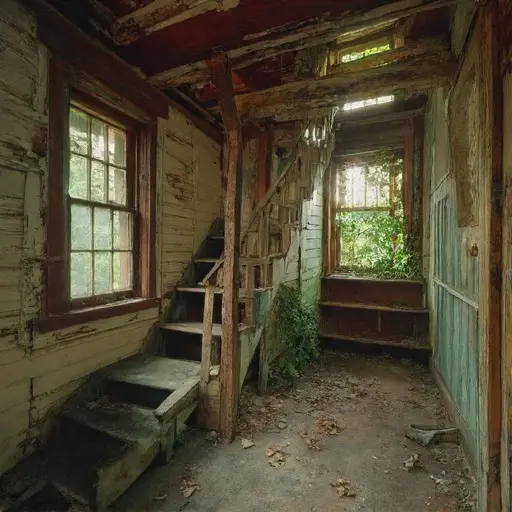
By the early 1940s, after the passing of the original occupants and the dispersal of remaining family members, the Ellsworth House was fully abandoned. No restoration or redevelopment efforts were undertaken, as the property held limited economic value and required repairs beyond the capacity of its heirs. Official records eventually listed the structure as unoccupied, with no further maintenance reported. The house remained standing within the quiet residential street, slowly deteriorating under seasonal weathering and time. Interior spaces were left in their final state of habitation, allowing dust, decay, and vegetation to gradually reclaim the modest Stick Style residence, which persists as a quiet remnant of late nineteenth-century domestic life.