The Whitmore Italianate House Left in Quiet Urban Decline
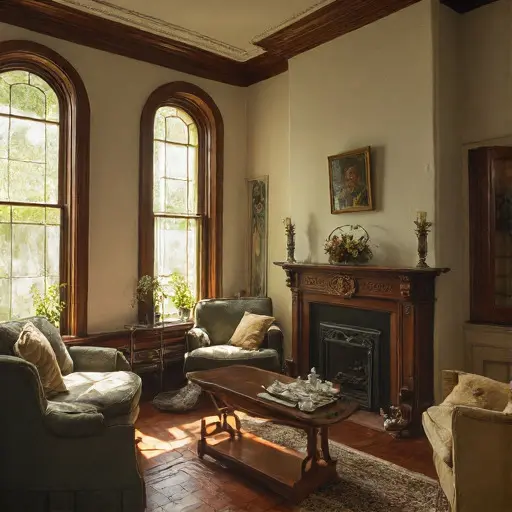
The Whitmore House was constructed in the late nineteenth century during a period of steady urban expansion, designed as a family residence for a mid-level civil clerk and his household. The two-story Italianate structure reflected the aspirations of stability and respectability common among the emerging professional class of the time. The family consisted of parents and three children, supported by a disciplined domestic routine centered on education, correspondence, and careful household management.
Early life in the home was marked by quiet consistency, with each room serving a clearly defined purpose and the modest front garden maintained as a symbol of civic pride and social standing within a growing residential district.
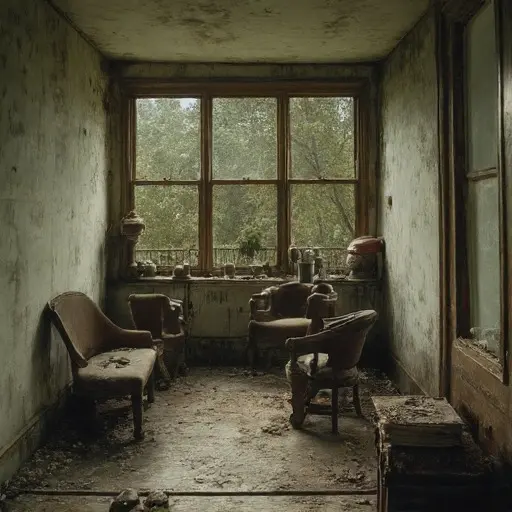
By the early 1920s, the Whitmore household began to experience financial pressure following the retirement of the primary wage earner and reduced income from clerical work. Maintenance of the house, though modest compared to larger estates, became increasingly difficult to sustain. Repairs to roofing, plasterwork, and wooden trim were postponed, leading to gradual visible deterioration. Portions of the upper floor were used less frequently, while heating was limited to the main living areas during colder months. The front garden, once carefully clipped, began to lose its precise structure as maintenance intervals lengthened. Over time, the household’s focus shifted from preservation to basic functionality, marking the beginning of a slow decline in the property’s condition.
By the early 1940s, after the passing of the remaining family members and the dispersal of heirs to other regions, the Whitmore House was fully abandoned. No restoration efforts were undertaken, as the property held limited commercial value and required repairs beyond the means of its inheritors. Official records eventually listed the house as inactive, with no further maintenance or occupancy reported. The structure remained standing within the quiet urban neighborhood, slowly deteriorating under seasonal weathering and time. Interior spaces were left untouched in their final state of use, allowing dust, moisture, and decay to gradually reclaim the modest Italianate residence, which persists as an unresolved fragment of late nineteenth-century domestic life.