The Buttercream House at Willow Lane
A wide three-quarter view from across a quiet village lane reveals an abandoned Victorian Queen Anne residence standing with quiet dignity, its graceful three-story silhouette framed by mature gardens and softened by decades of gentle weather. The asymmetrical composition is anchored by a tall octagonal tower rising above the entrance, balanced by stepped front gables, projecting polygonal bay windows, and a broad wraparound veranda extending across both visible façades. Soft buttercream clapboard siding provides a warm backdrop for rich oxblood-red trim, muted olive-green window sashes, and upper gables clad in dusty turquoise fish-scale shingles. Above, a roof of dark blue-gray slate is finished with naturally aged copper ridge caps whose subdued green patina hints at generations of changing seasons beneath a luminous overcast sky.
A low stone wall borders the property, broken only by an open wrought-iron gate that welcomes visitors toward a gently curving brick pathway.
Rather than appearing neglected, the cottage garden has matured into a layered tapestry of seasonal growth. Cream climbing roses weave themselves around veranda columns, while foxgloves and hollyhocks sway naturally beside the garden borders. An old pear tree stretches broad branches over a weathered wooden table where two mismatched chairs remain tucked neatly beneath, as though someone simply intended to return after an afternoon in the garden.
The house continues to reveal thoughtful domestic details at every turn. A narrow gravel driveway slips quietly alongside the residence toward a detached carriage house built in matching Queen Anne style, partially hidden behind flowering shrubs and mature hedges. Nearly every window retains its original flower box, now filled with lush ferns and self-seeded wildflowers spilling gently over the edges. The wraparound veranda, softened by climbing roses and polished by years of use, still conveys the welcoming character of a family gathering place rather than a forgotten structure.
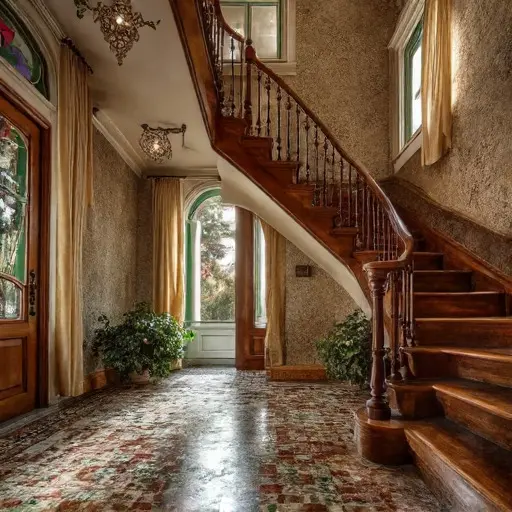
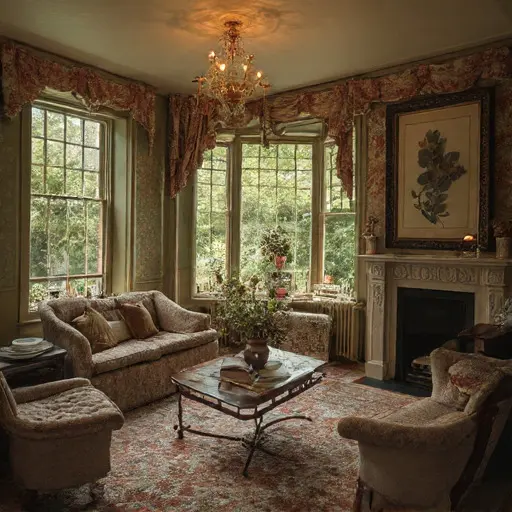
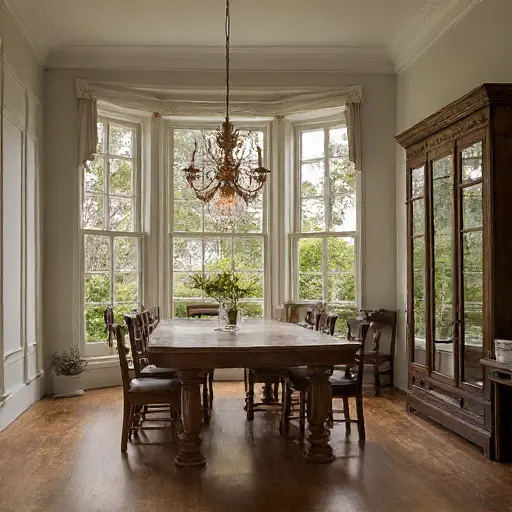
Inside the tall sash windows, pale linen curtains remain gently suspended, filtering the muted daylight into soft interior silhouettes. Nothing about the residence suggests dramatic decay; instead, every element speaks of a home that was deeply cherished, carefully maintained, and quietly left behind. The architecture, gardens, and lingering personal touches preserve an atmosphere where everyday conversations, shared meals, and slow village afternoons still seem to echo through the peaceful surroundings.