The Ravenshollow Romanesque Villa Lost in Fog Silence
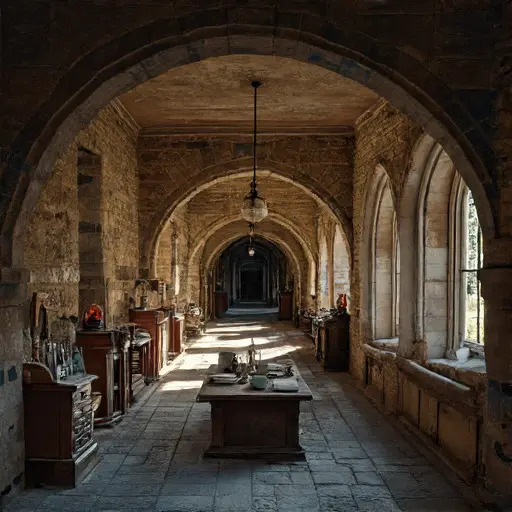
Ravenshollow Villa was constructed in the late nineteenth century as part of a hillside estate settlement designed for long-term residence rather than seasonal occupation. Built in the Victorian Romanesque Revival style, the structure emphasized permanence, weight, and architectural endurance, with rusticated sandstone walls and rounded arch arcades anchoring it firmly into the sloped terrain. The household was originally maintained by a landholding family involved in regional forestry oversight and estate management, supported by a small number of caretakers responsible for the terraced grounds and structural upkeep.
Life within the villa followed a steady rhythm shaped by weather, land management, and administrative correspondence, with the building serving as both residence and operational center for hillside property control.
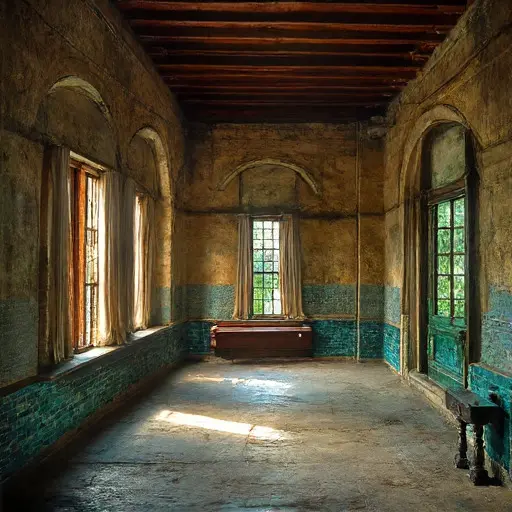
By the early 1920s, Ravenshollow Villa began to experience gradual administrative and financial strain as estate revenues declined and maintenance demands increased due to constant exposure to fog and hillside moisture. The terraced stone approach and retaining walls required frequent repair, yet upkeep became inconsistent. Moss spread more visibly across stone joints, and small wildflowers began emerging between structural cracks along the terraces. Portions of the villa, particularly the side passage and recessed courtyard, were used less frequently as access became more difficult during heavy fog cycles. Correspondence regarding property obligations accumulated without timely resolution, marking a slow transition from active estate management toward partial neglect.
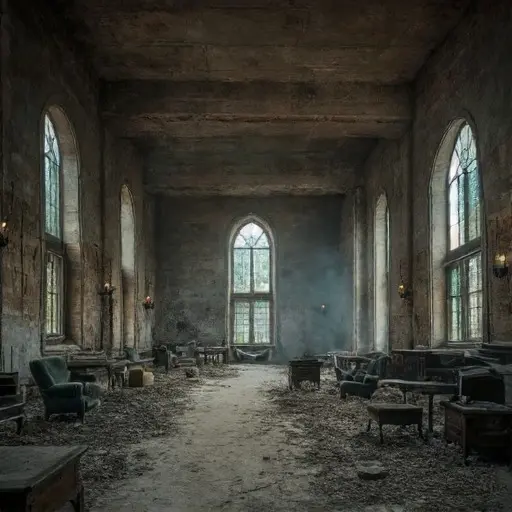
By the early 1940s, following prolonged administrative decline and the dispersal of the original estate family, Ravenshollow Villa was fully abandoned. No restoration efforts were undertaken, and its hillside position ensured continued exposure to fog, moisture, and seasonal erosion. The structure remained intact but slowly deteriorated as moss expanded across stonework and interior spaces accumulated dust and damp stillness. Curtains, furniture, and records were left in place, preserving the final state of occupation. The villa endures as an unoccupied Romanesque Revival residence in the fog-drenched hillside, gradually fading without return, renewal, or resolution.