The Marrowind Cliffside Italianate Mansion Left in Sea Quiet
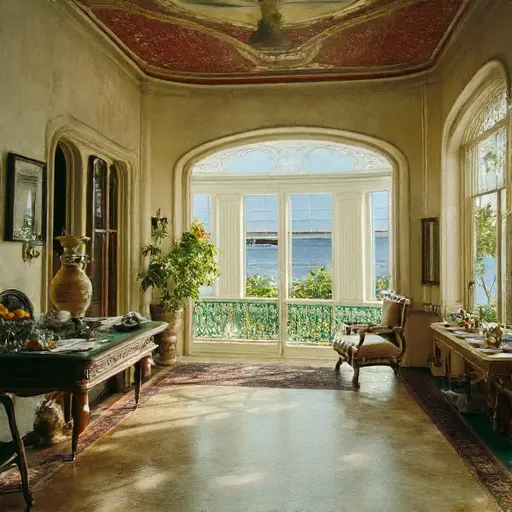
The Marrowind Mansion was constructed in the late nineteenth century on a dramatic coastal cliff by a family involved in maritime logistics and regional trade routes. Designed in the Italianate style, the residence emphasized horizontal extension, rhythmic window placement, and controlled ornamentation that balanced elegance with environmental exposure. The household consisted of two generations supported by a small staff responsible for maintaining both the villa and its exposed terrace gardens.
Daily life was closely tied to ocean conditions, with schedules shaped by shipping arrivals, weather patterns, and seasonal winds. The pergola and terrace served as extensions of the living space, allowing the family to inhabit the edge of land and sea in a continuous domestic rhythm.
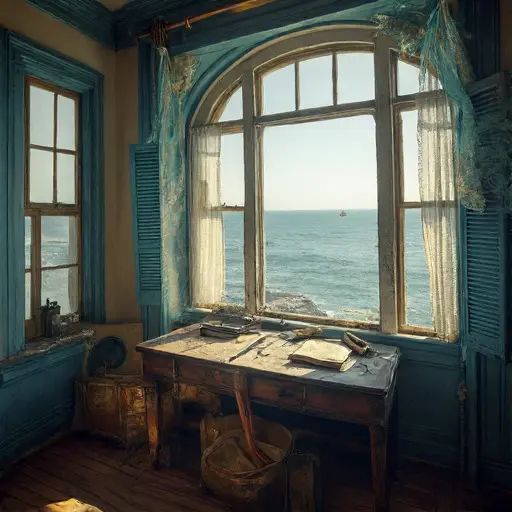
By the late 1920s, the Marrowind estate began to experience financial strain as maritime trade routes shifted and larger ports drew commerce away from smaller coastal operations. Maintaining the mansion’s limestone stucco, terracotta tile bands, and copper eaves became increasingly difficult under constant exposure to salt air and wind. Sections of the house were used less frequently during storm seasons, and maintenance of the terrace and pergola declined. Planters containing citrus saplings and hardy shrubs were left unattended for longer intervals, allowing natural coastal vegetation to encroach. Correspondence related to trade and property management became irregular, reflecting a gradual withdrawal from active oversight as economic pressures mounted.
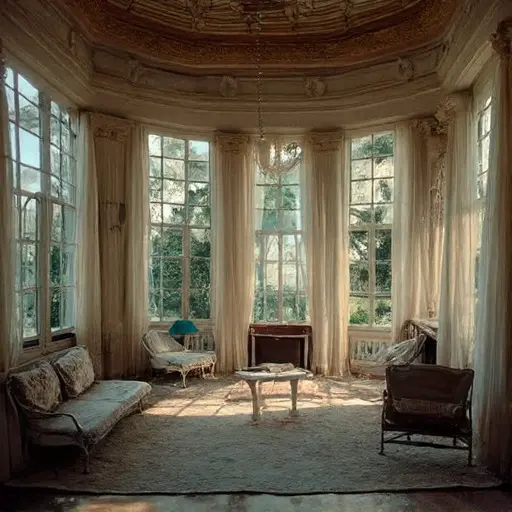
By the early 1940s, following prolonged economic decline and unresolved inheritance disputes, the Marrowind Mansion was fully abandoned. No restoration or redevelopment efforts were undertaken, and ownership complications prevented any coordinated intervention. The structure remained perched on the cliff but deteriorated slowly under salt air, wind exposure, and lack of maintenance. Interior spaces were left in their final state of use, preserving furnishings, documents, and domestic objects beneath layers of dust and sea moisture. The mansion endures as an unoccupied coastal residence, quietly overlooking the ocean, gradually weathering without return, renewal, or resolution.