The San Ortega Folk Gothic House Left at the Desert Edge
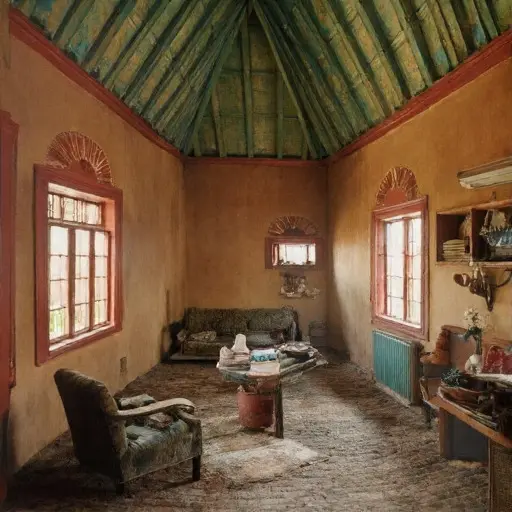
The San Ortega House was constructed in the early twentieth century at the threshold between cultivated settlement and open desert, built by a family of itinerant craftsmen who specialized in small-scale masonry and woodwork. Its Folk Gothic design reflected both practical necessity and expressive individuality, combining steep rooflines and asymmetrical extensions with brightly painted trim that stood out against the muted desert palette. The household consisted of parents and two children, supported by seasonal labor and small repair commissions from nearby ranches and roadside travelers.
Daily life revolved around adaptation to climate, water scarcity, and irregular work, with the home serving as both shelter and workshop. The structure evolved gradually over time, with additions and repairs reflecting necessity rather than formal architectural planning.
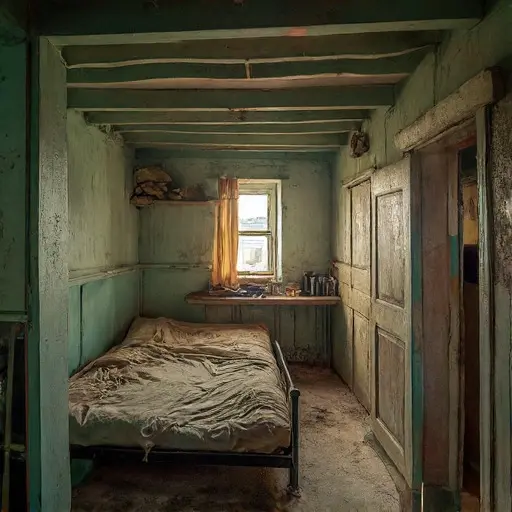
By the late 1920s, the San Ortega House began to experience financial strain as seasonal labor opportunities diminished and regional trade routes shifted away from the desert edge. Maintaining the stucco exterior, painted woodwork, and copper roofing became increasingly difficult under limited resources and harsh environmental conditions. Portions of the house were used less frequently to conserve water and reduce maintenance effort, leading to gradual abandonment of certain rooms and extensions. The surrounding desert vegetation remained resilient, but human care of planted areas declined, allowing some cultivated sections to revert toward natural growth patterns. Household correspondence became sporadic, and routine upkeep slowed, reflecting a steady withdrawal from structured domestic life.
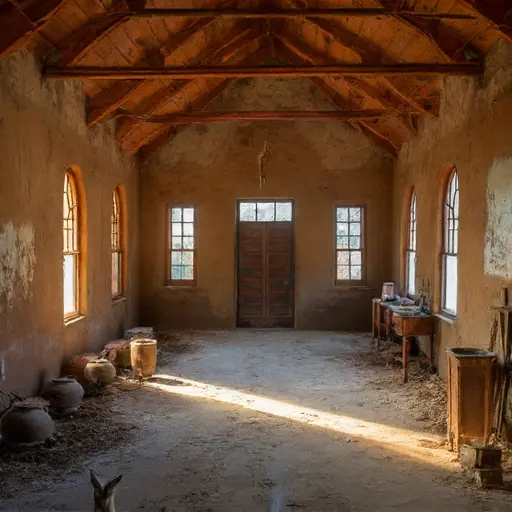
By the early 1940s, following prolonged economic hardship and the dispersal of the family after repeated seasonal instability, the San Ortega House was fully abandoned. No restoration efforts were undertaken, and ownership became unclear as the remaining occupants relocated to more stable inland settlements. The structure remained at the desert edge but deteriorated slowly under wind exposure, heat, and lack of maintenance. Interior spaces were left intact in their final state of use, preserving everyday objects and architectural details beneath layers of dust. The house persists as an unoccupied Folk Gothic structure, gradually merging with its desert surroundings while retaining the quiet imprint of a life once carefully adapted to a harsh environment.