The Mansion That Drank in Afternoons Like Light
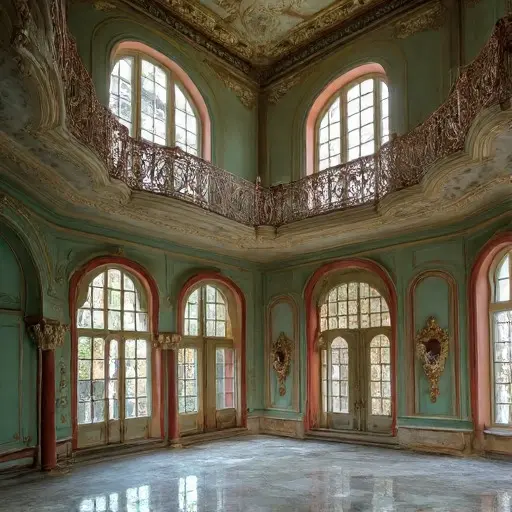
The mansion sits with a calm precision that makes its abandonment feel almost ceremonial rather than accidental. Its symmetry holds steady against the soft overcast sky, as if the building is still maintaining the posture of reception—ready for guests who no longer arrive. Every arch and balcony seems measured, not for display, but for the pacing of movement through lived time.
It belonged to the Moretti household, remembered less for singular events and more for the way time behaved inside its rooms. Afternoons stretched unusually long here. Tea was never rushed. Conversations tended to drift from one veranda to another, following the light as it shifted across mint-green stucco and gold railings.
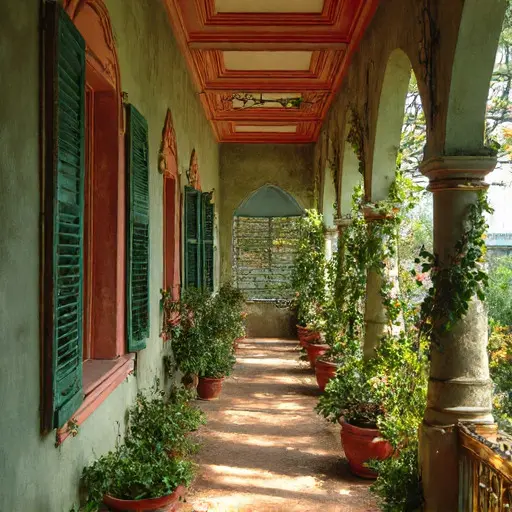
The garden reads like a continuation of that same measured rhythm. The curved gravel drive does not cut through the landscape but loops gently, as if refusing to interrupt anything. Magnolias bloom in heavy white clusters, while violets and marigolds arrange themselves in deliberate, almost conversational groupings.
At the center, the turquoise-and-jade fountain holds still water that reflects not the sky, but the sense of waiting. The black wrought-iron pergola above it is dense with grapevines that hang too low to suggest neglect—only abundance that was never redirected.
Even now, the abandoned tea table on the side veranda feels staged for a pause that never ended. Porcelain cups remain aligned with quiet care. And the house, in its mint-green stillness, continues to behave as though someone will eventually return and resume exactly where they left off.