The House That Learned the Wind’s Rhythm
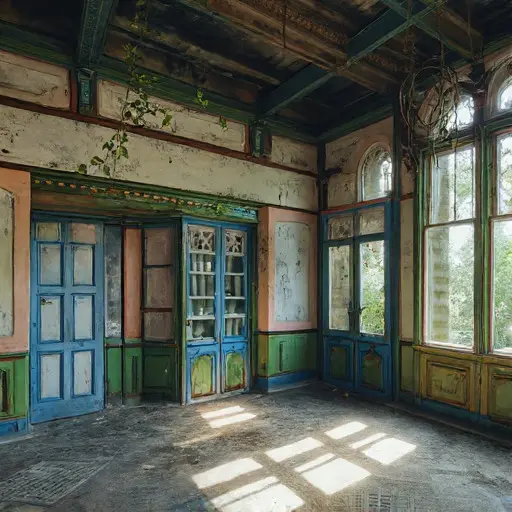
The manor stood with the kind of clarity that made it feel less built and more assembled from intention. Every gable and bracket seemed placed with a specific emotional weight, as if the house had once been tuned to the presence of its occupants. Even now, under the bright overcast sky, it did not look abandoned so much as momentarily unattended.
It belonged to the Calder family, known for their habit of turning ordinary evenings into small gatherings of music and craft. The veranda was where conversations stretched late, suspended between the scent of magnolia and the soft creak of the swing bench. Guests would linger without noticing the passing of hours, as if the house itself adjusted time to accommodate them.
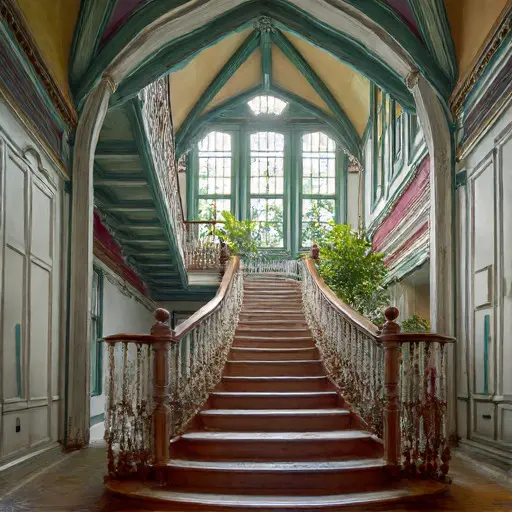
The garden outside followed the same philosophy as the house—less designed than composed. The oval lawn did not feel imposed on the land so much as coaxed into a gentle shape. Camellias, roses, and lavender did not compete for space; they flowed in coordinated arcs that mirrored the rhythm of the architecture.
Locals sometimes said the Calder home never truly fell silent—it simply changed the kind of sound it allowed. Where once there had been music and conversation, there is now only the faint suggestion of movement in the trees and the slow shift of light across painted wood.
Even now, the house holds that softness of intent. The swing beneath the magnolia still moves slightly in the wind. The stained glass still catches color as if expecting footsteps to return. And the veranda, with its carved brackets and spindlework, still feels like it is waiting for the next arrival, not mourning the last one.