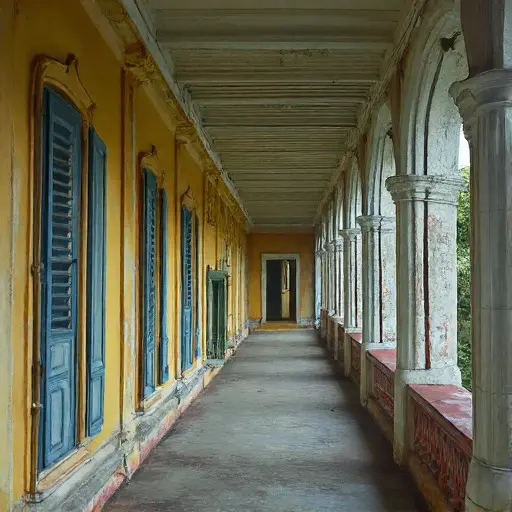
The Villa Where the Fountain Still Remembers Music
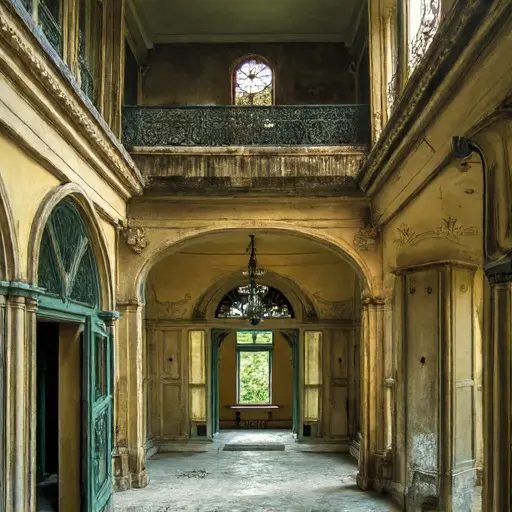
The villa stood with the kind of balance that felt intentional even in absence, as if symmetry itself had once been a guiding philosophy of its daily life. Two and a half stories rose with calm confidence, crowned by a central cupola that watched over the grounds like a quiet memory rather than an architectural feature.
It had belonged to the Moretti household, known in their time for hosting evening salons where music drifted through open windows and conversations stretched long past midnight.
Guests often arrived late and left later still, and the house seemed designed for that rhythm—tall arched windows for watching arrivals, wide interior galleries for gathering, and gardens arranged like stages for lingering departures.
Even now, that sense of gathering remains embedded in the structure. The iron balconies feel less like ornament and more like places where someone once leaned to listen to laughter below. The cream-yellow stucco holds light differently depending on the hour, as though still adjusting to the presence of guests who no longer arrive.
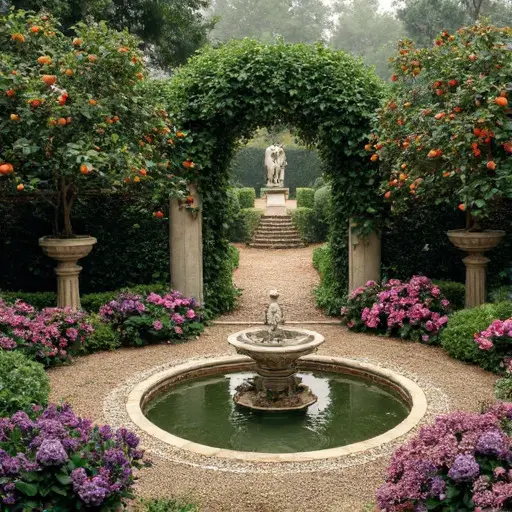
The garden feels carefully composed rather than wild, even in its quiet. Every plant seems to remember its place within a larger arrangement, and even the grape arbor still frames the entry path as if expecting movement to pass beneath it at any moment.
Locals once described the Morettis as people who treated their home like an instrument—something to be played through gatherings, conversations, and seasonal celebrations. When they left, there was no clear final evening, only a gradual thinning of sound until the villa was left to its own resonance.
What remains is not decay, but continuity without participation. The fountain still holds its circular logic. The statue still holds its dance. And the windows, softened by lace curtains that no longer change, still suggest that someone might be watching from within.