The Lantern That Kept Waiting in the Italianate House
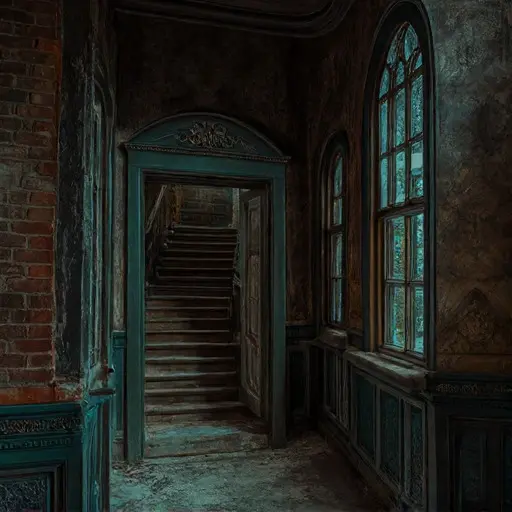
The street outside had already slipped into dusk when the townhouse became indistinguishable from shadow and structure. It stood narrow and upright, like a formal gesture left unfinished, its arched windows watching the street without offering anything back. The building did not feel neglected so much as paused, as if it had simply stopped mid-breath.
It belonged once to the Bellandi household, a small family known for evening gatherings that never quite ended at the expected hour. Music often drifted from the upper floors, soft piano lines echoing through open windows that looked down onto the quiet street. Neighbors remembered the lantern at the entrance being lit early, even before sunset, as if anticipating guests who were always slightly late but never unwelcome.
The architecture held that habit of expectation even now. The recessed stone portal still framed arrival like a ceremony, and the cracked marble steps carried the faint memory of repeated footsteps, worn unevenly by years of return rather than departure.
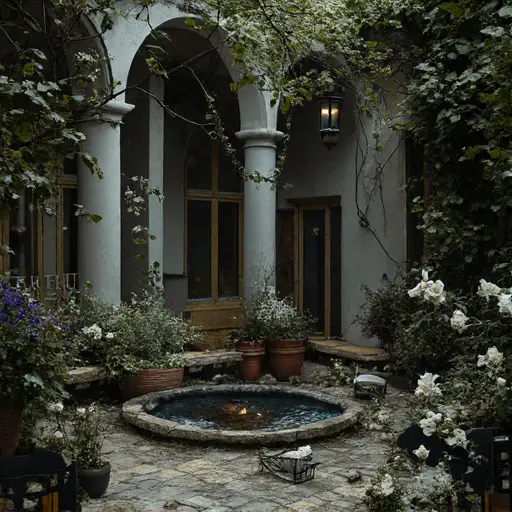
The courtyard was the emotional center of the house, though it was never formally designed as such. It became that way over time, through repetition: shared meals, quiet talks, and the habit of sitting outside long after daylight faded. The fountain, once lively with circulating water, had slowed in its final years until only stillness remained.
When the Bellandis stopped hosting gatherings, the house did not immediately change. It continued to hold the shape of expectation—chairs left near benches, lanterns still maintained, windows occasionally opened as if to invite a breeze that no longer came for anyone.
Even after the family left, nothing about the arrangement felt disrupted. The courtyard remained composed, as though its occupants might return at any moment and resume exactly where they had paused.
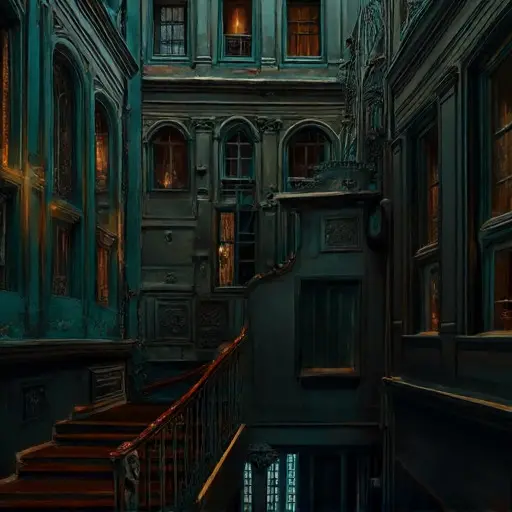
No record confirms the exact moment the townhouse was left empty. There was no sale, no formal departure—only a gradual thinning of presence. The lantern remained hung, the fountain remained centered, and the door remained capable of opening, as if continuity itself had been carefully preserved.
In the years that followed, the house settled into its role as an unanswered invitation, still composed for life but no longer receiving it, holding dusk in its walls long after the street had moved on.