The Marigold Annex House Where Winter Light Stayed Too Long
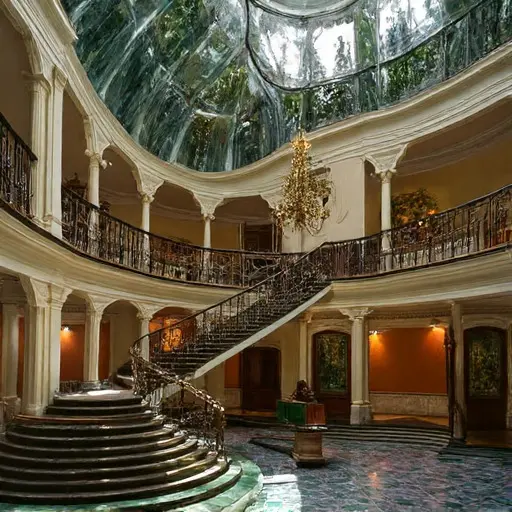
The Marigold Annex House stood at the bend of a wide valley floor where river mist settled each morning before lifting slowly into the hills. Built during the late Second Empire period, it was never symmetrical in the traditional sense; instead, it expanded like a series of decisions made over time, each annex responding to need, habit, or simply the desire for more light.
It belonged to the Delacroix family, merchants who split their time between trade routes and seasonal residence.
Henri Delacroix, the father, designed the central mansard core as a declaration of permanence, while his wife Elise insisted on additions that softened the structure—winter gardens, angled galleries, and side wings that bent toward the orchard and river rather than the road.
Their life was defined by cycles of arrival and departure. Suitcases were never fully unpacked. Rooms shifted purpose depending on who was home: the winter gallery became a reading space during colder months, then a greenhouse overflow during spring, and finally a resting corridor for plants and luggage alike when travel resumed.
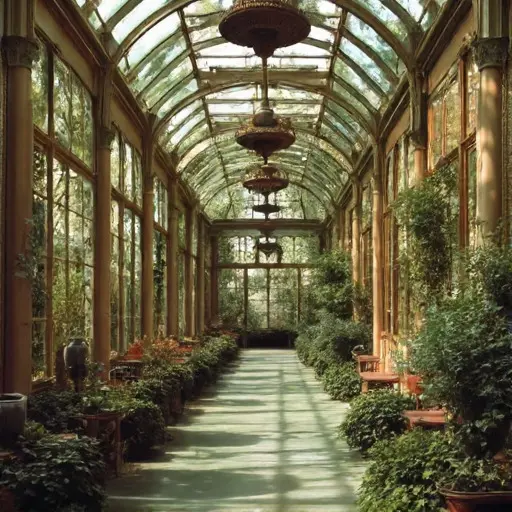
The decline began quietly, as all changes in the house seemed to do. Trade routes became unstable, and Henri’s travels grew longer and less predictable. What once required a month abroad stretched into seasons. Elise remained in the valley longer each year, tending the gardens alone, writing letters that often returned unanswered.
Maintenance became irregular. Sections of the winter gallery were sealed during storms, then never reopened. The annexes, once lively with movement and seasonal rotation, grew quieter. Furniture stayed in place longer than intended. Fabrics faded where sunlight no longer shifted through cleaned glass.
Still, the estate did not feel abandoned at first. It felt paused.
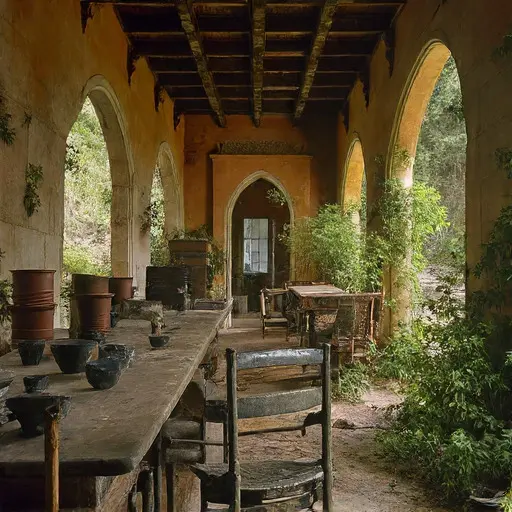
By 1950, the Marigold Annex House was fully abandoned. Elise left first after Henri’s final absence became permanent, relocating to distant relatives with only a few personal belongings. No formal inheritance dispute followed, and the property was left unresolved in legal terms, its complexity mirroring the structure itself.
No restoration was ever attempted. The orchard expanded unchecked into the irrigation channels, the greenhouse tilted further into collapse, and the dining terrace became indistinguishable from the garden that overtook it. Yet the house never lost its sense of routine. Even now, it feels as though something inside it might still be waiting for the next scheduled arrival that never came.