The Briarcross Queen Anne House Waiting for One More Spring
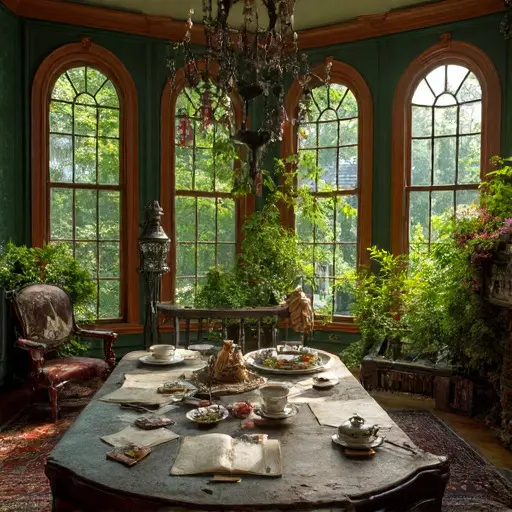
The Briarcross House stood where two narrow woodland roads crossed before disappearing into farms and orchards beyond the valley. Built in 1905, it ignored rigid geometry, allowing its octagonal rooms, rounded stair towers, and sweeping verandas to follow the shapes of mature trees already rooted on the property. Rather than forcing the landscape to adapt, the house curved gently around it.
Its owners, Thomas and Eleanor Ashcombe, believed homes should grow with the lives inside them. Thomas designed furniture by hand for nearby families, while Eleanor devoted herself to cultivating flowers, herbs, and fruit throughout the gardens surrounding the residence. They never considered the greenhouse or vegetable beds separate from the house itself. Every path, flower border, and climbing vine felt like another room where ordinary life unfolded.
Each spring they planned new beds together, carrying watering cans from the greenhouse while discussing where coral dahlias or climbing jasmine might flourish. Evenings often ended beneath the vine-covered arbor where Eleanor sketched future garden layouts as Thomas quietly repaired tools nearby. Their happiest hours required little conversation because both understood the rhythm of the other’s work without explanation.
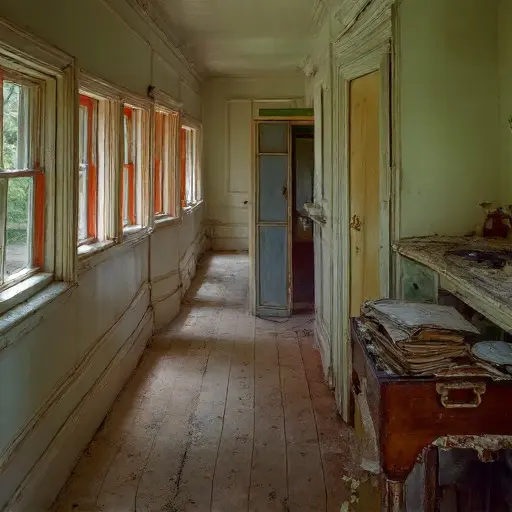
The hardships arrived quietly rather than dramatically. After the economic downturn reduced commissions for handcrafted furniture, Thomas struggled to maintain steady work. Repairs that once would have been completed immediately were postponed. Roof tiles remained unreplaced after storms, and sections of the veranda began to sag where damp timber waited too long for attention.
Eleanor continued tending the gardens despite worsening finances, insisting that flowers deserved care even when little else could be afforded. Yet the greenhouse slowly changed. Empty seed trays remained stacked longer each season, colorful watering cans stayed on their shelves, and flower pots gathered beside the porch instead of finding their place in fresh soil.
When illness confined Thomas indoors, entire rooms upstairs were closed to reduce heating costs. Their lives contracted naturally into the kitchen, morning room, and small sitting room overlooking the gardens they had once shaped together. They still believed another spring would restore what had been lost.
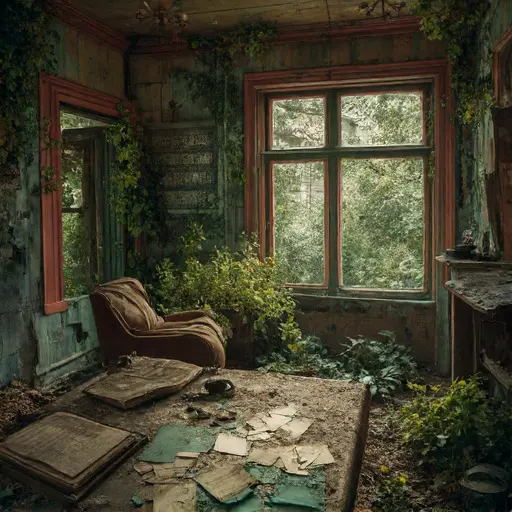
By 1946, the Briarcross House stood entirely abandoned. Thomas had passed away after a prolonged illness, and Eleanor left the property soon afterward to live with distant relatives, intending to return once legal matters were settled. She never did. Probate remained unresolved, maintenance ceased altogether, and no new occupants claimed the residence.
The woodland gradually folded around the house without violence. Garden paths disappeared beneath herbs and flowers that no longer recognized their borders. The bicycle remained beneath its flowering arbor, the picnic blanket stayed folded across the porch railing, and empty pots waited through seasons that came and went without hands to fill them. No restoration followed, and the house still stands quietly at the woodland crossroads, preserving the gentle impression that someone simply stepped away for the afternoon and never found the road back.