The Marisel Moorish Townhouse Beside the Quiet River
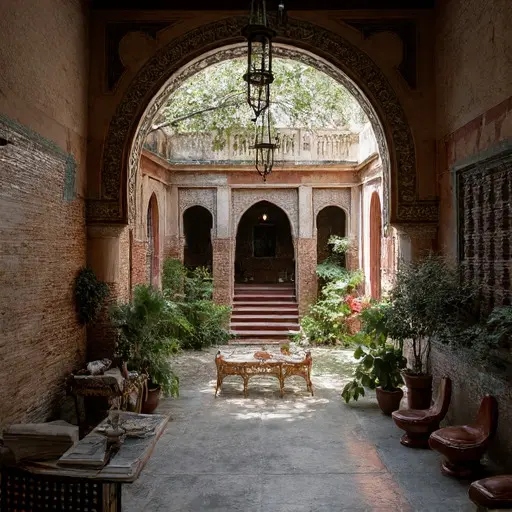
The Marisel Townhouse was completed in 1908 along a quiet bend of the river where modest homes overlooked narrow gardens and slow-moving water. Although inspired by Moorish Revival architecture, its design departed from strict symmetry. Twin towers rose at different heights, corridors curved gently around a shaded courtyard, and every window seemed positioned according to light rather than mathematical order.
The house belonged to Amir and Celia Navarro, who purchased it shortly after their wedding. Amir managed river freight accounts while Celia taught music to neighborhood children from a bright room overlooking the courtyard. Their home never became known for wealth. Instead, it earned quiet affection because its doors were always open to relatives, neighbors, and friends who stayed for tea long after lessons or work had ended.
The rear garden reflected the same spirit. Mint grew beside the tiled water channel, grapevines climbed the pergola each summer, and evenings often ended around the weathered outdoor table where conversations lingered well after sunset. They dreamed of raising children there, but after years of hoping, it became only the two of them, filling the silence with shared routines instead of disappointment.

Economic hardship reached the river district gradually after the First World War. Freight traffic declined, Amir’s work became irregular, and repairs that would once have been completed immediately were postponed month after month. The tiled water channel clogged more frequently as fewer afternoons were spent maintaining the garden. Clay pots cracked where frost settled unnoticed. The pergola leaned under the growing weight of untended vines.
Celia continued teaching for as long as possible, though fewer families could afford lessons. She closed the upper music room to save on heating and eventually moved her piano into the smaller sitting room downstairs. Their evenings became quieter. Letters between them remained affectionate even when Amir traveled for temporary work, filled with promises that the difficult years would soon pass. Those promises slowly became less certain, though neither stopped writing them.
By the late 1930s, unpaid taxes accumulated alongside repair notices. Entire sections of the upper floor were shut to conserve fuel, curtains remained drawn through winter, and household routines contracted into only a handful of familiar rooms. The house still felt lived in, but only barely.
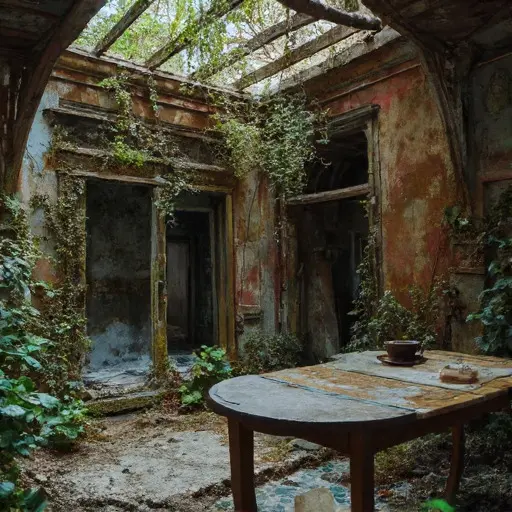
By 1944, the Marisel Townhouse stood completely empty. After Amir’s death from illness and Celia’s departure to live with distant relatives, no one returned to reclaim the property. Probate proceedings remained unresolved for years, leaving repairs undone and ownership uncertain. The river continued its slow course beside the house while vines crossed thresholds once swept each morning. No restoration followed, no new family arrived, and the quiet routines that had shaped the building simply faded into stillness. Today the townhouse remains standing above the riverside garden, slowly weathering beneath its towers, holding the ordinary traces of a life interrupted rather than erased.