The Brackenridge Second Empire Townhouse Beneath the Slate Mansard Sky
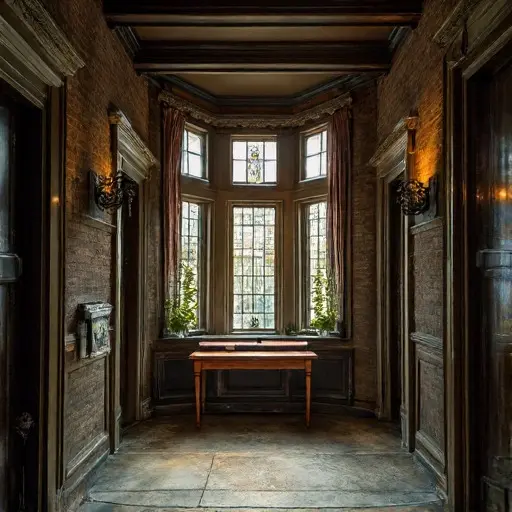
The Brackenridge townhouse was constructed in 1884 during a period when the Second Empire style signified both civic ambition and domestic permanence. Commissioned by the Larrimore family, the building was designed to reflect stability and prosperity through its four-story elevation, symmetrical façade, and imposing mansard roof clad in patterned slate. The household included two parents, three children, and a resident caretaker responsible for maintaining both the interior structure and the formal front garden.
Daily life followed a structured rhythm centered on the ground-floor reception rooms, upper-floor private chambers, and rear-facing service spaces. The garden functioned as both ornament and extension of domestic order, carefully aligned with the architectural symmetry of the house itself.
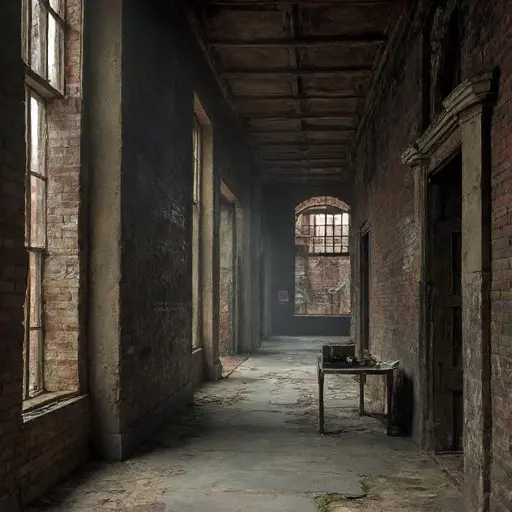
By the early 1930s, the Larrimore family faced increasing financial strain as regional commerce slowed and maintenance costs for the large Second Empire structure escalated. The complexity of the building’s design—particularly its mansard roof, dormer windows, and multi-level masonry—required continuous upkeep that became progressively unsustainable. Repairs to drainage systems and exterior stonework were repeatedly delayed, allowing moisture to spread through upper floors and weaken interior finishes. The front garden began to lose its formal structure as hedges overgrew their boundaries and wild white roses spread along the gravel path. The grape arbor along the side of the house sagged under its own weight, its wooden supports weakened by rot and unchecked vegetation. Household activity gradually contracted into fewer rooms, signaling a slow retreat from full occupation.
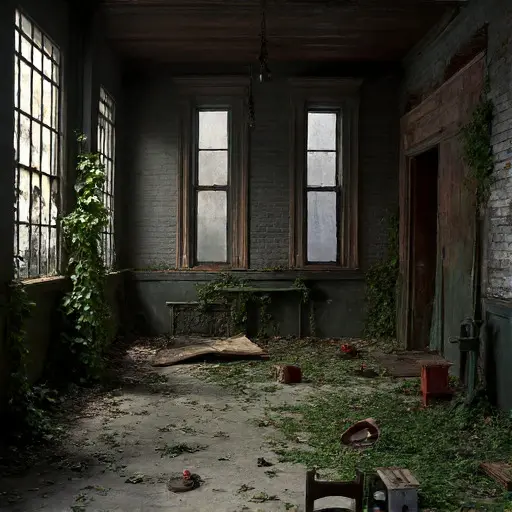
By the mid-1940s, following foreclosure proceedings and the final departure of its remaining occupants, the Brackenridge Second Empire Townhouse was permanently abandoned. No restoration efforts were undertaken, and ownership disputes left the property unresolved for decades. The front garden slowly dissolved into overgrowth as gravel paths disappeared beneath moss and encroaching hedges. The broken pergola and marble statue remained in place but became increasingly obscured by vines and wild roses. The grape arbor collapsed further, its dried clusters still clinging to sagging beams. Inside, all belongings were left exactly as they were at the moment of abandonment. The townhouse still stands today beneath a heavy overcast sky, its Second Empire silhouette fading gradually into weather, vegetation, and silence.