The Ravensmoor Stick-Eastlake Townhouse Above the Overgrown Slope
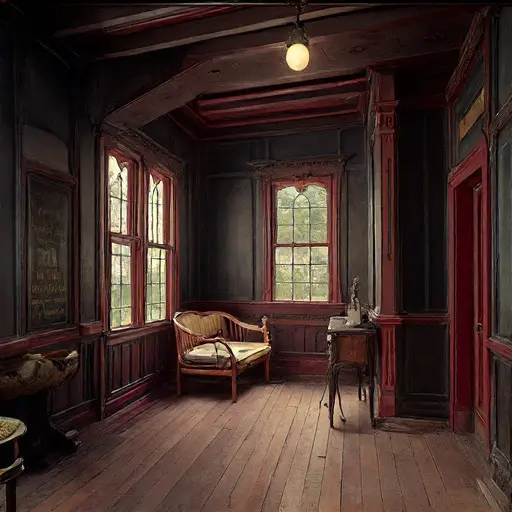
The Ravensmoor townhouse was constructed in 1889 during a period of hillside residential expansion, when the Stick-Eastlake style was favored for its expressive woodwork and visible structural ornamentation. Commissioned by the Ellery family, the house was intended as both a permanent residence and a modest status marker overlooking the developing hillside district. The household consisted of a married couple, their two children, and a live-in caretaker responsible for maintaining both the intricate woodwork and the terraced garden below.
Life in the home was closely tied to seasonal rhythms: repairing timberwork in spring, maintaining the grape arbor in summer, and preparing the interior for damp hillside winters. The front garden served as both aesthetic display and informal gathering space, carefully tended despite the challenges of the sloped terrain.
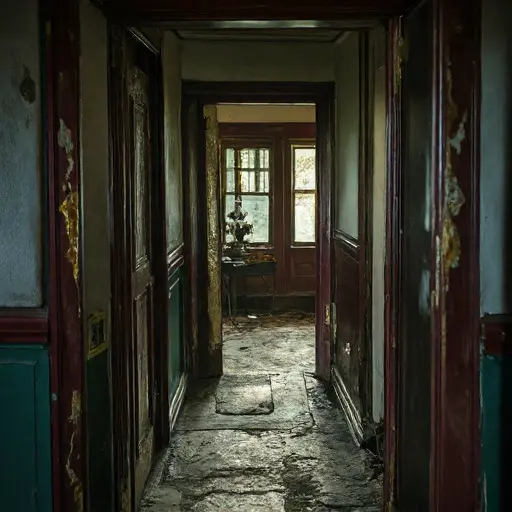
By the early 1930s, the Ellery family faced increasing financial strain as hillside property maintenance costs rose and the surrounding district’s growth slowed. The complexity of the Stick-Eastlake design, with its exposed timber framing, spindlework, and intersecting gables, required continuous upkeep that became progressively unsustainable. Repairs to the roof and porch structure were delayed, allowing moisture to infiltrate upper floors and weaken interior finishes. The front garden began to lose its careful structure as lilies, asters, and wild poppies spread beyond defined borders. The grape arbor, once carefully maintained, began to collapse under its own weight, while the porch swing remained unused for extended periods. Household activity gradually concentrated into fewer rooms, signaling a quiet retreat from full occupation of the home.
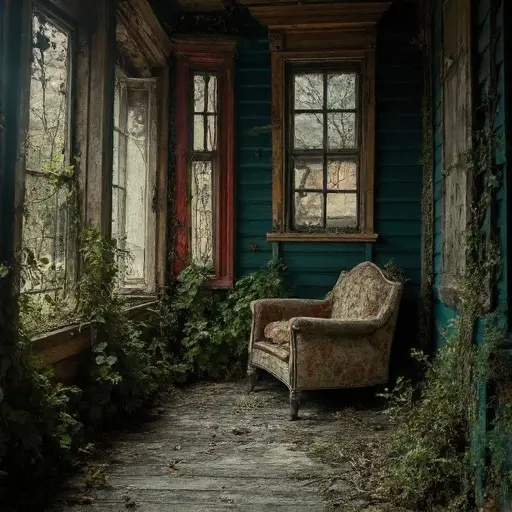
By the mid-1940s, following foreclosure and the final departure of its remaining occupants, the Ravensmoor Stick-Eastlake Townhouse was permanently abandoned. No restoration efforts were undertaken, and the property remained unresolved in ownership, leaving it untouched for decades. The front garden fully merged with the hillside vegetation as the stone path disappeared beneath overgrowth and the grape arbor collapsed completely into tangled vines. The iron gate remained slightly ajar, while terracotta pots fractured and filled with moss and soil. Inside, all belongings were left exactly as they were at the moment of abandonment. The townhouse still stands above the slope today, its Stick-Eastlake silhouette slowly fading into weather, vegetation, and silence.