The Ashborne Gothic Revival Townhouse in Courtyard Silence
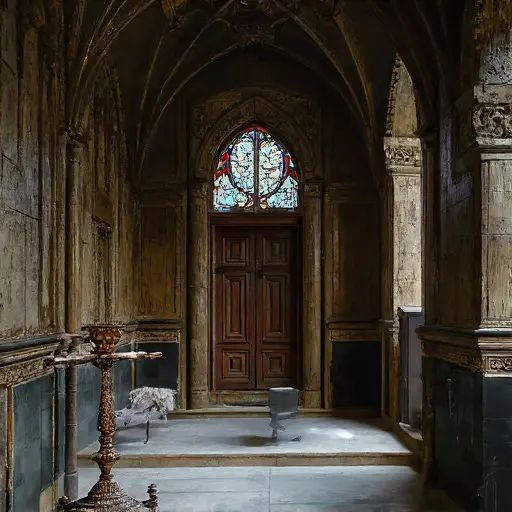
The Ashborne Townhouse was constructed in 1894 during a period of renewed interest in Gothic Revival domestic architecture, when affluent families sought residences that combined medieval stylistic references with modern urban convenience. Commissioned by the Halstead family, the house occupied a narrow courtyard plot within a growing residential district and was designed to maximize vertical space while preserving a sense of enclosed privacy. The household consisted of two parents, three children, and a live-in governess who managed education and domestic scheduling.
The courtyard functioned as the emotional and practical center of the home, hosting morning routines, small gatherings, and seasonal planting arranged in carefully maintained ceramic planters. For several decades, the townhouse operated as a stable domestic environment shaped by routine, order, and close attention to architectural upkeep.
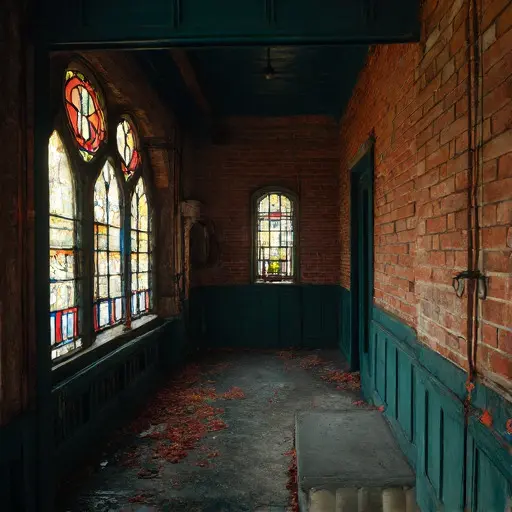
By the early 1930s, the Halstead family experienced sustained financial decline following changes in employment and rising costs associated with maintaining the townhouse’s complex masonry and roofing systems. The steep gables, stained-glass windows, and decorative stonework required specialized maintenance that was increasingly postponed. Water ingress began affecting upper floors during seasonal storms, leading to selective room closures and reduced heating usage. The courtyard, once meticulously planted, began to show signs of neglect as rose bushes grew uncontrolled and ceramic planters cracked under frost exposure. Household activity gradually concentrated into fewer rooms, while correspondence regarding repairs, taxes, and debts accumulated without resolution. The decline was gradual, marked not by sudden departure but by steady withdrawal from full use of the property.
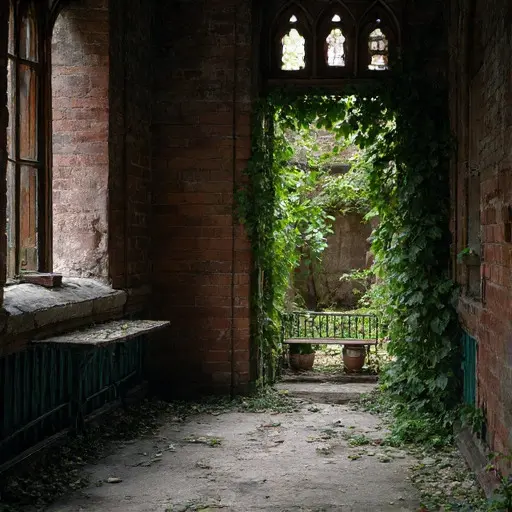
By the mid-1940s, following financial foreclosure proceedings and the death of the last remaining occupant, the Ashborne Townhouse was permanently abandoned. No restoration was attempted, and ownership disputes prevented any redevelopment of the property. The courtyard remained intact but increasingly overgrown, with rose vines climbing the façade, the stone well filling with debris, and ceramic planters overtaken by wild mint and ivy. Inside, furniture, documents, and personal effects were left in place, untouched since departure. The townhouse continues to stand in a state of quiet suspension, its Gothic Revival structure slowly yielding to weather, vegetation, and time without resolution or return.