The Valemont Second Empire Townhouse Left in Midday Stillness
The Valemont Townhouse was built in 1889 during a period of rapid urban expansion, when narrow plots between older buildings were developed into vertical family residences for the emerging professional class. The house was commissioned by the Duvall family, who operated a small import brokerage and required both living space and proximity to the commercial district. Designed in the Second Empire style, the townhouse emphasized vertical hierarchy through its mansard roof, ornate dormers, and projecting central bay with iron balcony.
The household consisted of two parents, three children, and a live-in domestic assistant who managed the herb garden, laundry system, and food preservation routines. The side yard, though narrow, was intensively used, serving as both utility space and small-scale cultivation area that supported daily meals and household continuity.
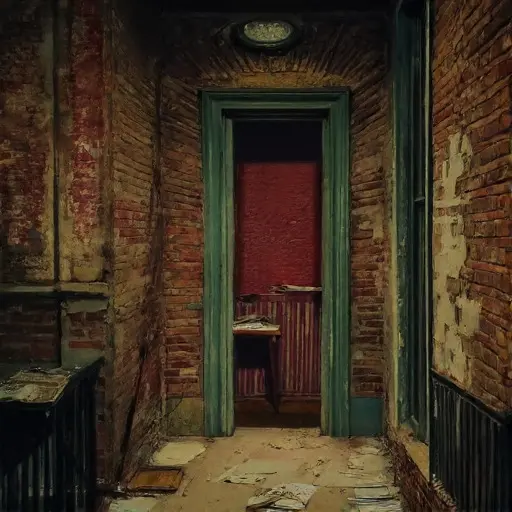
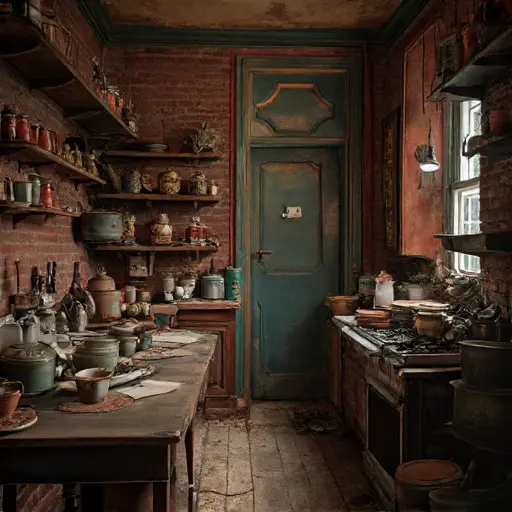
By the early 1930s, the Duvall household faced sustained financial contraction following the closure of the import business and the loss of secondary income sources. Maintenance of the townhouse, particularly its steep roof, dormer windows, and intricate trim, became increasingly difficult to afford. Repairs were deferred, allowing minor water ingress to spread into upper floors during seasonal storms. The household gradually reduced its spatial footprint, concentrating daily life in the kitchen, ground-floor sitting room, and a single maintained bedroom. The herb garden in the side yard became overgrown as routine cultivation ceased, and laundry practices became irregular. What had once been a fully active multi-level residence slowly transitioned into a partially used structure marked by deferred care and shrinking occupation.
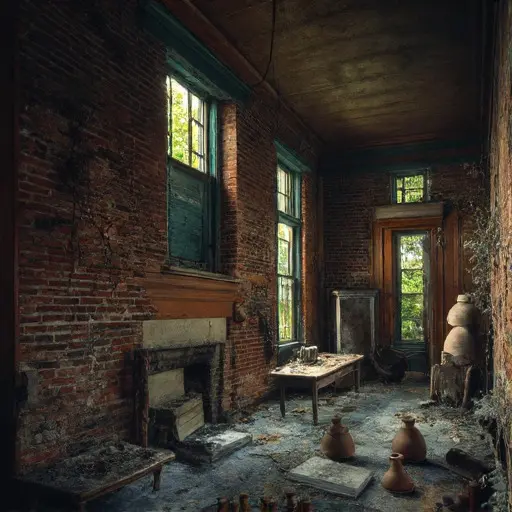
By the mid-1940s, following financial foreclosure proceedings and the final departure of remaining occupants, the Valemont Townhouse was permanently abandoned. No restoration efforts were undertaken, and legal disputes over ownership prevented redevelopment for decades. The side yard continued its slow collapse into vegetation: the broom remained leaning against the wall, the iron gate stayed half-latched, herbs grew wild through cracked flagstones, and the rain barrel overflowed seasonally without intervention. Inside, furniture, documents, and household objects were left in place, preserved in the exact arrangement of departure. The townhouse still stands today in a state of quiet suspension, its Second Empire silhouette slowly weathering under persistent overcast skies.