The Alderwick Queen Anne Cottage Left Behind in the Garden
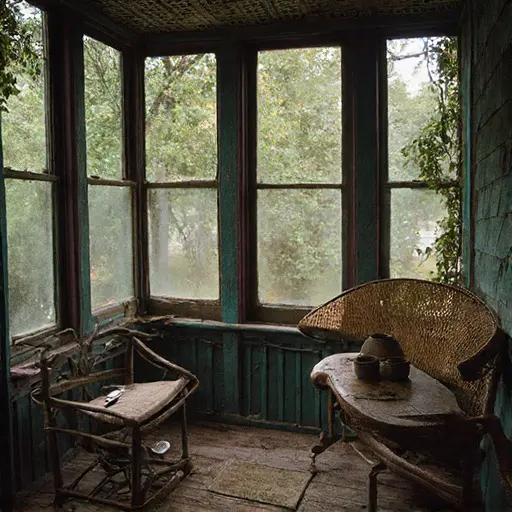
The Alderwick Cottage was built in 1896 for the Hensley family, who moved from a dense urban district seeking quieter surroundings and more space for gardening and outdoor living. Designed in the Queen Anne style, the house emphasized complexity and domestic warmth, with intersecting gables, a corner turret, and an enclosed sun porch that functioned as the emotional center of the home. The household consisted of two parents, three children, and a rotating series of seasonal lodgers who contributed to maintenance and garden work.
Life was structured around the backyard, where meals were taken outdoors under the pergola, children played across the stone paving, and greenhouse cultivation provided much of the household’s food. The architecture supported this rhythm of shared domestic activity, blending ornamental design with practical family use.
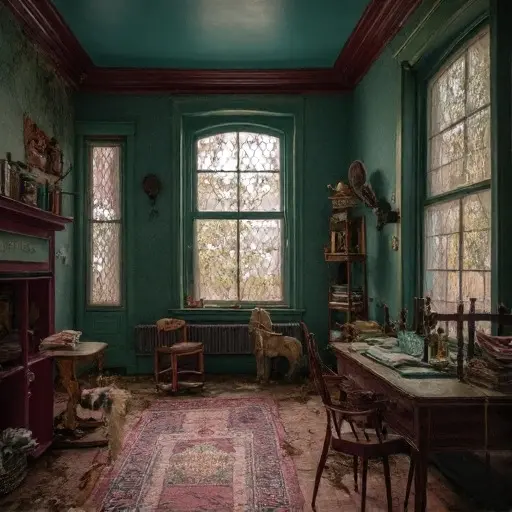
By the late 1920s, the Hensley family began experiencing gradual financial strain caused by rising maintenance costs and reduced household income following the father’s business downturn. The Queen Anne structure, with its complex roof geometry, decorative spindlework, and extensive glass surfaces, required constant upkeep that became increasingly difficult to sustain. Repairs to the greenhouse and sun porch were delayed, allowing moisture to enter structural joints and weaken wooden framing. Sections of the house were closed off to conserve heating, while daily life became concentrated in a smaller set of rooms near the kitchen and central staircase. The backyard, once carefully maintained, began to transition into a partially wild landscape as gardening routines diminished and outdoor structures fell into disrepair.
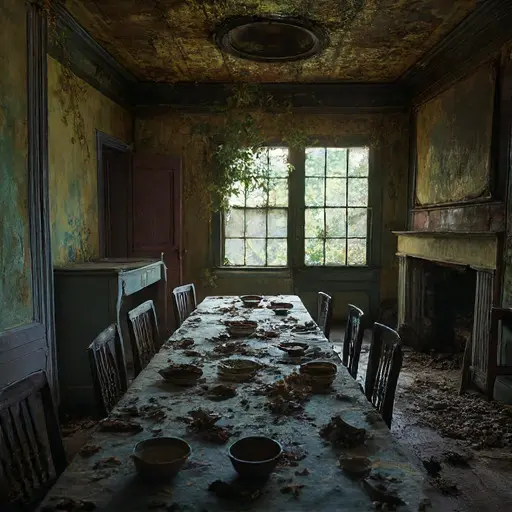
By the early 1940s, following a combination of inheritance disputes, mounting repair costs, and the departure of the remaining family members, the Alderwick Cottage was permanently abandoned. No restoration efforts were initiated, and ownership remained unresolved for decades. The backyard continued its slow transformation: the pergola collapsed under grapevine weight, chalk drawings disappeared beneath cracked stone erosion, the greenhouse filled with uncontrolled tomato vines and climbing roses, and laundry lines decayed where they hung. Inside, furniture, documents, and household objects were left exactly as they were at the time of departure. The house still stands today, gradually being reclaimed by vegetation and weather, preserving the quiet memory of a family life that ended without abruptness, only gradual retreat.