The Montelupo Italianate Villa Left in the Courtyard Stillness
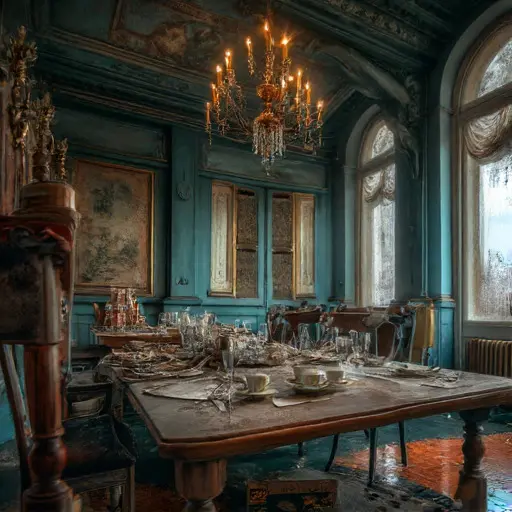
The Montelupo Villa was constructed in the late nineteenth century for the Moretti family, who settled in the region after relocating from a coastal trading town affected by shifting maritime commerce. Designed in the Italianate style, the house combined vertical elegance with restrained ornamentation, featuring a central stair tower, arched windows, and a formal courtyard intended to serve as the emotional and functional core of daily life. The family consisted of parents, two children, and a long-term housekeeper who maintained the courtyard garden, fountain, and household records.
Meals were traditionally taken outdoors whenever weather permitted, with the stone table acting as both dining surface and workspace for correspondence, accounting, and seasonal planning. For many years, the villa functioned as a stable domestic environment shaped by predictable routines and careful stewardship.
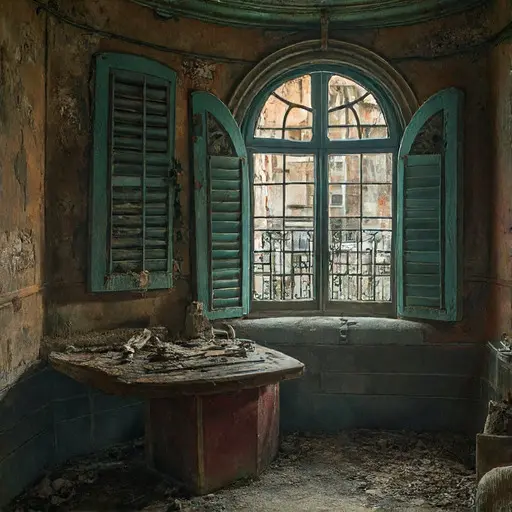
By the late 1920s, the Montelupo family began to experience sustained financial decline due to reduced trade income and increasing property maintenance costs. The villa’s ornate materials, while durable, required consistent upkeep that gradually became unsustainable. Repairs to shutters, stucco surfaces, and courtyard drainage were delayed, allowing moisture to accumulate within walls and weaken interior finishes. The family gradually reduced their use of upper floors, concentrating daily life in fewer rooms around the courtyard level. The grape arbor, once carefully pruned, was left to grow unchecked, and the fountain began to clog with seasonal debris. Over time, correspondence with creditors increased while household maintenance decreased, shifting the villa from an actively managed residence into a partially neglected estate shaped by quiet financial strain.
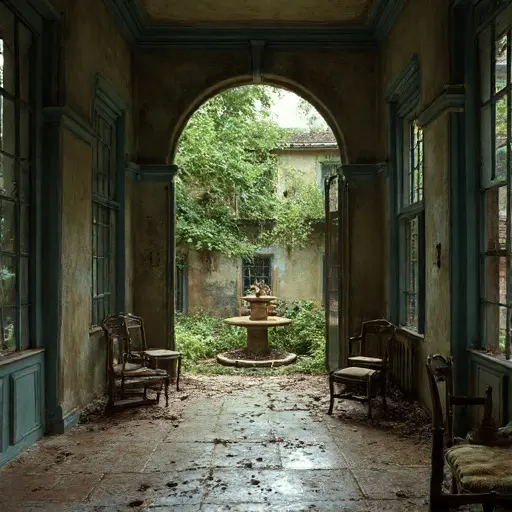
By the early 1940s, following the death of the last primary occupants and unresolved inheritance complications, the Montelupo Villa was permanently abandoned. No restoration efforts were initiated, and legal entanglements prevented sale or redevelopment of the property for decades. The courtyard continued its slow transformation as vines overtook the arbor, water stagnated in the fountain, and garments remained suspended on the sagging laundry line until they disintegrated. Inside, furniture, documents, and household objects were left untouched in their final positions. The villa remains standing in a state of quiet dissolution, its courtyard preserved as a layered memory of domestic life gradually surrendered to weather, time, and vegetation.