The Rabenwald Brick Gothic Townhouse Left at the Forest Edge
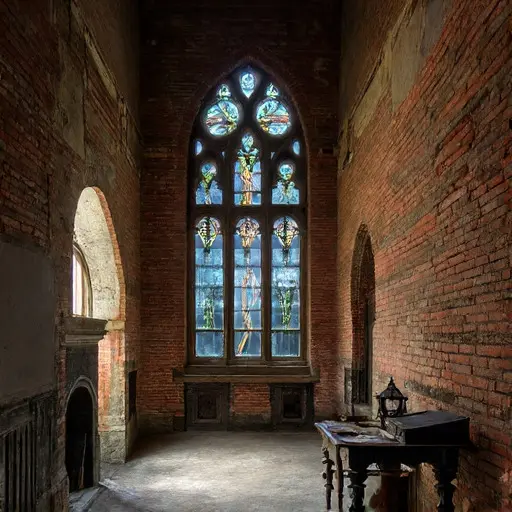
The Rabenwald townhouse was constructed in the early twentieth century on the outskirts of a dense northern forest settlement by a family of municipal administrators and small-scale merchants whose livelihoods depended on regional trade, forestry taxation, and civic recordkeeping. Designed in the Brick Gothic tradition, the structure emphasized verticality and compact efficiency, resulting in a tall, narrow footprint with stepped gables and tightly ordered window rhythms. The household consisted of two generations living within the confined structure, supported by a single domestic worker responsible for cleaning, cooking, and garden upkeep.
Daily life centered on the ground-floor hall and upper living quarters, where financial records, civic correspondence, and household planning were managed with consistent regularity. Despite its modest scale, the townhouse remained stable for many years, sustained by predictable income and careful maintenance that preserved its compact architectural integrity.
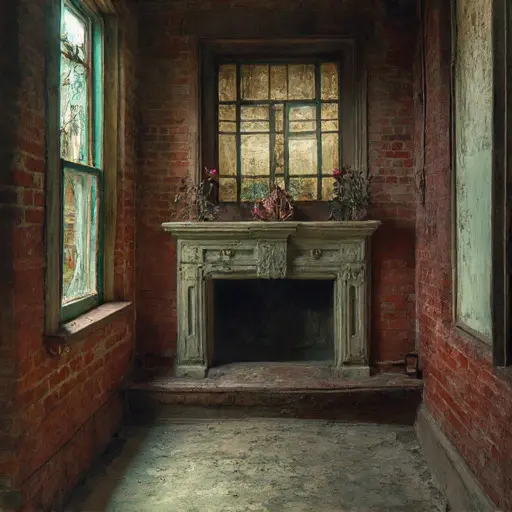
By the late 1920s, the Rabenwald townhouse began to experience financial strain as municipal administrative restructuring reduced private compensation and forestry-related revenues declined. Maintenance costs for its tightly integrated Brick Gothic façade rose steadily, particularly for roof drainage systems, masonry joints, and stained glass preservation. Portions of the upper floors were used less frequently to conserve heating, resulting in a gradual consolidation of daily life into fewer rooms. Household upkeep became irregular as staffing levels were reduced, and minor repairs were postponed indefinitely. Correspondence accumulated without response, while emotional attachment to the property persisted even as practical capacity to maintain it weakened. Over time, the townhouse shifted from a fully active residence into a partially maintained structure marked by quiet, progressive neglect.
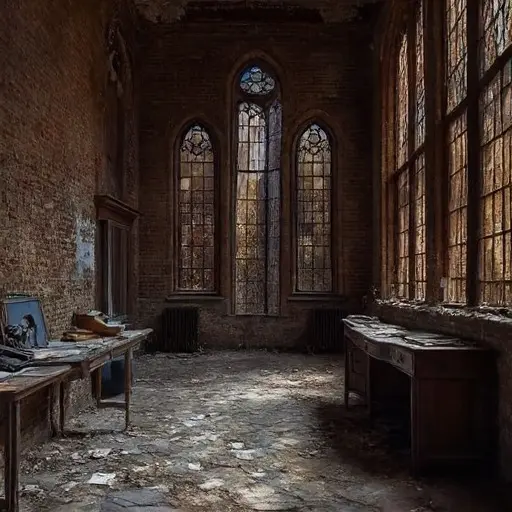
By the early 1940s, following prolonged financial decline and unresolved inheritance complications, the Rabenwald townhouse was fully abandoned. No restoration efforts were undertaken, and legal uncertainties prevented any sale or redevelopment of the property. Forest vegetation gradually encroached upon the garden and cobblestone path, while moisture and seasonal weather accelerated structural decay. Interior furnishings and documents remained in place, preserving the final years of decline in quiet detail. No residents returned, and the townhouse continues to stand empty at the forest edge, slowly being reclaimed by time while its narrow vertical silhouette remains faintly visible among the trees.